

TL;DR: Ahmedabad land investment has drawn real attention due to genuine infrastructure catalysts. The Mumbai-Ahmedabad Bullet Train corridor, proximity to GIFT City, and a solid industrial base anchored by hubs like Sanand all play a role. Prime land in established growth corridors has gotten expensive. That’s part of why structured, fractional participation models have gained interest. None of this guarantees returns. The same general risks that apply to any growth-corridor investment, infrastructure delays, legal verification, liquidity, apply here too.

Ahmedabad Land Investment: What’s Actually Driving Growth
Ahmedabad has moved well beyond its old reputation as a quiet trading town. Real infrastructure investment, genuine industrial growth, and proximity to a major financial hub have all contributed to real interest in land across the city’s growth corridors. Worth being clear from the start, though: real growth catalysts don’t automatically mean guaranteed returns. Ahmedabad land investment deserves the same careful evaluation as any other growth-corridor opportunity.
What’s actually driving interest in Ahmedabad specifically?
A few concrete, verifiable catalysts are behind the city’s growth story.
Infrastructure investment. Ahmedabad’s metro rail network has been expanding. The Mumbai-Ahmedabad Bullet Train corridor is a genuine, government-backed infrastructure project, not just a proposal. Ring road widening has also continued around the city’s periphery. Better connectivity tends to support land value in the areas it touches. Execution timelines for large infrastructure projects can run longer than initially announced, though.
Industrial growth. Ahmedabad’s industrial base includes real automotive manufacturing activity centered around Sanand, along with a established pharmaceutical sector. Industrial activity tends to generate housing and commercial demand in surrounding areas as employment concentrates there.
GIFT City proximity. GIFT City (Gujarat International Finance Tec-City) is India’s first operational International Financial Services Centre, located near Ahmedabad. Its presence has genuinely contributed to demand for residential and commercial land in surrounding areas. Financial services employment and supporting infrastructure both keep growing there.
Why has direct land purchase in these corridors gotten harder for retail investors?
As these growth catalysts have become more visible, prime land prices in the most established corridors have risen substantially. In some cases, the entry cost now requires very large capital to access directly. That price appreciation is itself a sign the market has already priced in a meaningful amount of the growth story. Worth keeping in mind: a corridor that’s already expensive carries different risk and return characteristics than one that’s still genuinely early-stage.
How does fractional participation actually change the math here?
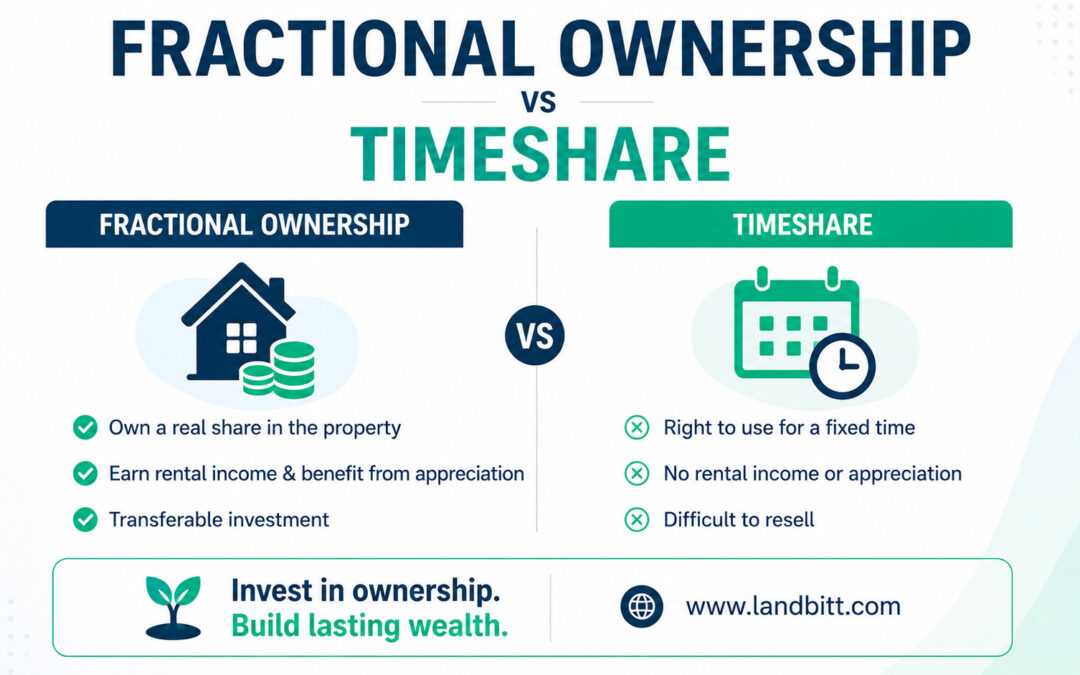
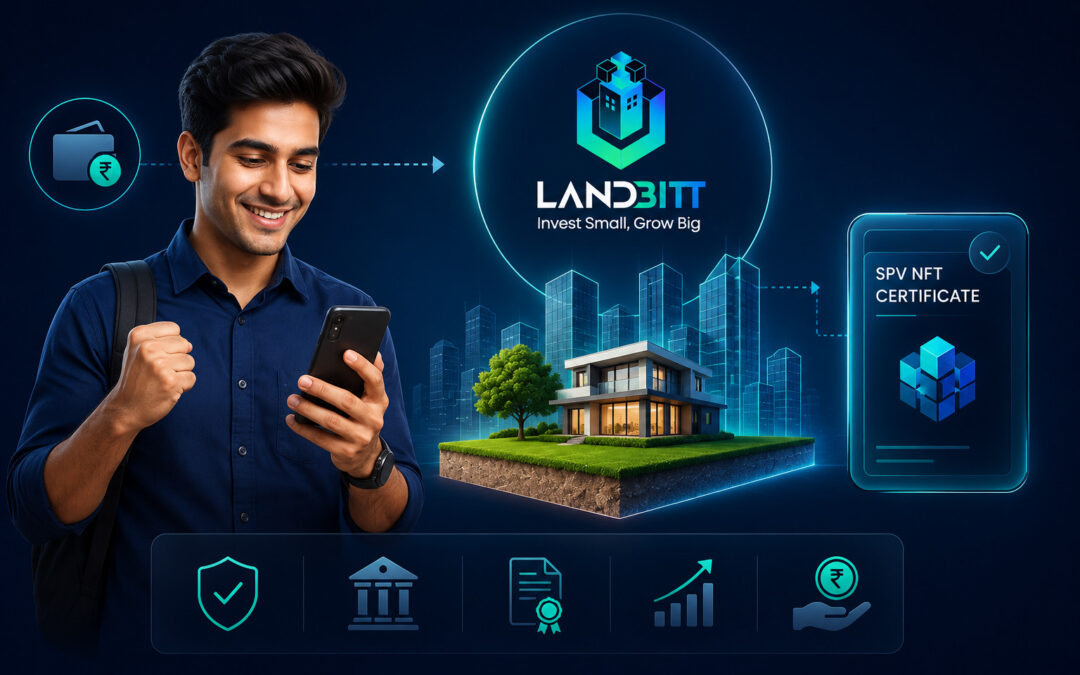
Structured platforms, including Landbitt, let investors hold a proportional interest in a specific verified land parcel. There’s no need for the full purchase price of an entire plot. In practice, this works through a defined legal structure, typically a Trust or SPV that holds the underlying asset. Investors hold a beneficial interest in that structure rather than direct title. That’s a meaningfully different and more precise description than calling investors “shareholders in a company,” since the actual legal mechanism is a trust-based beneficial interest, not corporate shares. For the full mechanics, see our guide on real estate tokenization in India.
How does blockchain recordkeeping actually factor in?
Ownership records for fractional participation can be tracked on a blockchain network. That makes the record harder to quietly alter after the fact, and it keeps transaction history visible. That’s a genuine transparency benefit. It’s worth being precise about its limits too: blockchain recordkeeping strengthens transparency around a transaction history. It doesn’t, by itself, change the underlying market risk of the asset. It also isn’t yet treated as fully conclusive legal proof of title in Indian courts, a limitation that applies to blockchain-based land records generally, not specifically to any one platform.
What are the real risks specific to Ahmedabad’s growth corridors?
The same general risk categories that apply to any growth-corridor land investment apply here. It’s worth naming them directly rather than assuming Ahmedabad is an exception.
- Infrastructure execution risk — large projects like the Bullet Train have faced timeline extensions before, and announced timelines aren’t guarantees
- Price-in risk — the most established corridors have already appreciated significantly, which means much of the easy upside in those specific areas may have already happened
- Liquidity risk — exiting a land position, fractional or direct, still depends on finding a buyer or counterparty
- Legal verification — title clarity and documentation quality vary by specific parcel and area, regardless of which corridor it’s in
How should an investor actually evaluate a specific opportunity here?
Rather than treating “Ahmedabad is growing” as sufficient justification on its own, look at the specific parcel: its actual proximity to confirmed (not just announced) infrastructure, the legal documentation behind it, and whether the price already reflects most of the growth story or still has genuine room relative to comparable, more established corridors elsewhere in India.
Frequently Asked Questions
Q: Is Ahmedabad a good location for land investment? A: It has genuine, verifiable growth catalysts, infrastructure investment, industrial activity, and GIFT City proximity, but like any growth corridor, it requires evaluating the specific parcel rather than assuming the city-level story guarantees returns on any given plot.
Q: What is GIFT City, and how does it affect nearby land values? A: GIFT City is India’s first operational International Financial Services Centre, located near Ahmedabad. Its presence has contributed to demand for nearby residential and commercial land as financial services activity grows in the area.
Q: How does fractional ownership actually work for land in Ahmedabad? A: Investors hold a proportional, beneficial interest in a specific parcel through a Trust or SPV structure, rather than buying the entire property outright or holding shares in a company.
Q: Does blockchain recordkeeping make these investments risk-free? A: No. It improves record transparency and tamper-resistance, but it doesn’t eliminate market risk, and it isn’t yet treated as fully conclusive legal proof of title under current Indian law.
Q: What should I check before investing in a specific Ahmedabad land opportunity? A: The parcel’s actual proximity to confirmed infrastructure, its legal documentation and title clarity, and whether the price already reflects most of the area’s growth story.