
TL;DR: Inflation vs real estate in India comes down to a genuinely useful but imperfect hedge. Property values and rental income both tend to rise with inflation, which protects purchasing power better than cash sitting idle. But inflation also pushes up interest rates and construction costs, so the relationship isn’t purely one-directional — real estate helps against inflation, it doesn’t fully neutralize it.

Inflation vs Real Estate in India: Why Property Gets Called a Hedge
Inflation does something quietly damaging: it erodes what your money can actually buy, even while the number in your account stays exactly the same. Real estate has long been the go-to answer for Indian investors trying to protect against that erosion. The relationship is genuinely useful, but it’s worth understanding exactly where it holds up and where it has real limits, rather than treating “property beats inflation” as an unconditional rule.
What is inflation actually doing to your money?
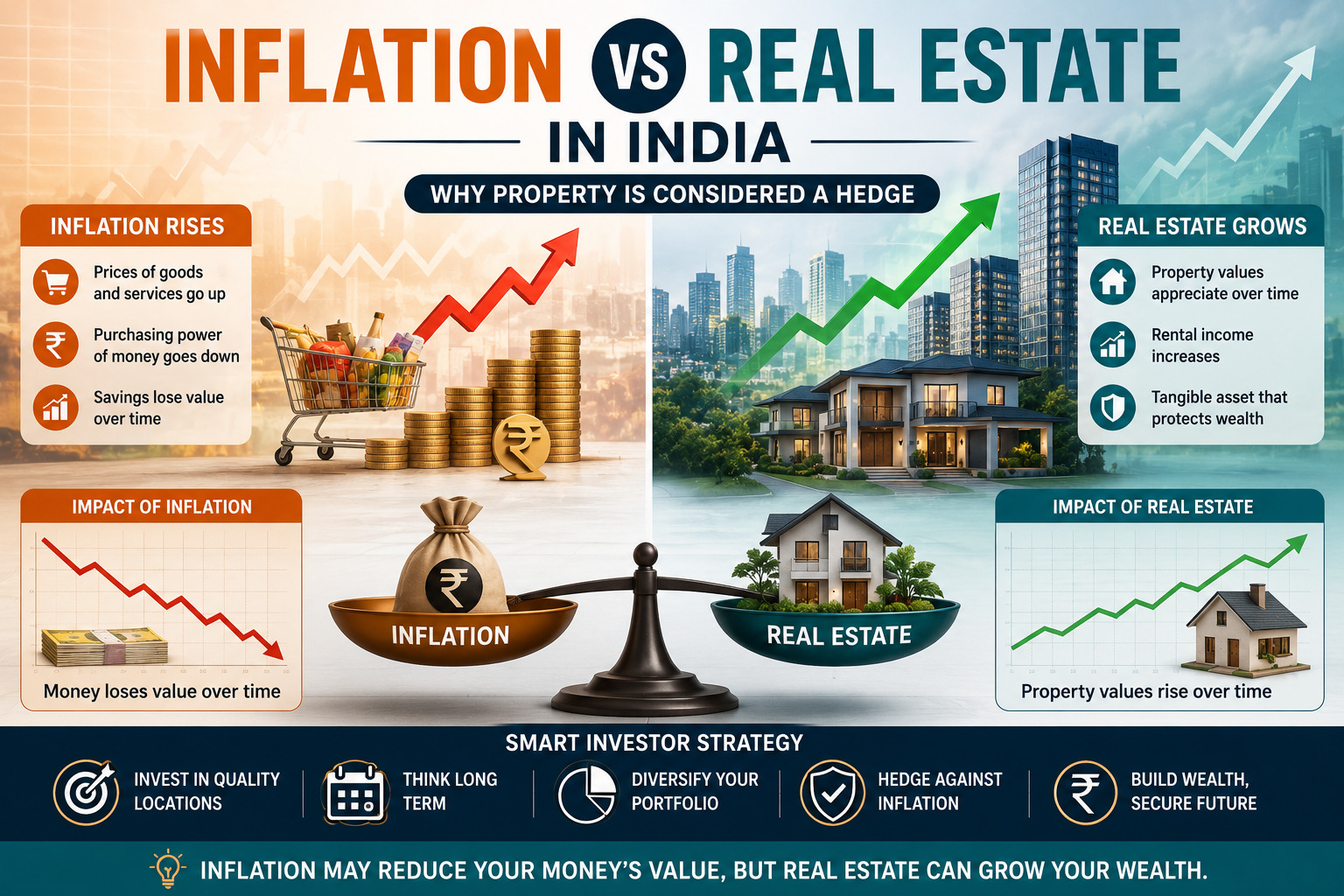
Inflation is the gradual rise in the price of goods and services over time, which means the same rupee buys a little less each year it sits idle. It affects savings, investments, and day-to-day purchasing power alike — and it’s exactly why holding cash alone, without anything growing alongside it, is a slow way to lose real value even if the number never goes down.
How does real estate typically respond to inflation?
Real estate tends to respond differently than purely financial assets, for a few concrete reasons:
Property prices tend to rise alongside inflation. As construction costs, land demand, and broader economic activity increase, property values usually move up with them rather than staying fixed.
Rental income often adjusts upward too. Landlords typically raise rents during inflationary periods, which helps preserve the real value of rental income rather than letting it quietly shrink.
Land specifically tends to hold up well. Because land is finite and can’t be manufactured to meet rising demand, it tends to be more resilient than assets whose supply can expand to match inflation.
Why does this make real estate a genuine inflation hedge?
The core logic is straightforward: real estate is a tangible asset with intrinsic value, unlike cash or many financial instruments whose value is purely a number on a screen. That tangibility tends to help it preserve value better over inflationary periods, through a combination of:
- Long-term appreciation that tracks broader price levels
- Income generation through rent that can adjust as prices rise
- Wealth preservation that doesn’t depend entirely on a single financial system holding steady
Does inflation always actually help property investors?
No — and this is the part the “real estate always wins” narrative tends to skip. Inflation also pushes up:
- Interest rates, since central banks typically raise rates to fight inflation, which increases borrowing costs for anyone financing a purchase
- Construction costs, which can squeeze margins on new development and slow the supply response that might otherwise ease prices
- Loan expenses, for investors carrying debt against their property
This is exactly why disciplined, well-timed investing matters more than just assuming real estate is automatically inflation-proof. The hedge is real, but it isn’t unconditional.
How should investors actually prepare for inflation?
Experienced investors tend to lean on a few consistent habits rather than any single trick:
- Diversification across asset types, so no single inflation-sensitive cost (like rising interest rates) can derail the whole portfolio
- Long-term holding, since short-term price movements during inflationary spikes can be noisy and misleading compared to the multi-year trend
- Choosing genuinely high-growth locations, where demand fundamentals support appreciation independent of the inflation story alone
Does land specifically play a particular role here?
Land tends to stand out within real estate as a long-term inflation hedge, partly because it requires lower ongoing maintenance than built structures, and partly because it benefits directly from infrastructure growth in a way that’s somewhat independent of broader inflation cycles. Structured platforms can make this kind of land exposure more accessible — see our fractional land investment guide for how that works in practice.
What mistakes do investors commonly make during inflationary periods?
Making emotional decisions. Inflation headlines can create urgency that leads to rushed purchases without proper evaluation.
Ignoring long-term trends in favor of short-term noise. A single inflationary spike doesn’t necessarily change the multi-year fundamentals of a specific location.
Overleveraging. Taking on debt to chase inflation protection can backfire badly if rising interest rates increase your borrowing costs faster than your asset appreciates.
Frequently Asked Questions
Is real estate a good hedge against inflation in India?
Generally yes — property values and rental income both tend to track rising prices reasonably well, which helps preserve purchasing power better than idle cash.
Does land perform well during inflation specifically?
Yes, often better than built structures, since it requires less maintenance and benefits from genuine scarcity alongside infrastructure-driven demand.
Can inflation actually push property prices higher?
Yes — rising construction costs and demand both tend to push prices up during inflationary periods, which is part of why real estate tracks inflation reasonably well.
What are the real risks during inflationary periods?
Higher interest rates increasing borrowing costs, rising construction costs squeezing development margins, and the general market uncertainty that comes with any inflationary cycle.
Is rental income affected by inflation?
Usually yes, in a positive direction — rents tend to adjust upward over time during inflation, helping preserve the real value of rental income.