
TL;DR: How smart cities are changing real estate in India comes down to real, structural factors. Improved digital infrastructure, transportation connectivity, and sustainable urban planning all genuinely affect land and property demand. They do this in the specific areas they touch. The label “smart city” alone doesn’t guarantee appreciation, though. Investors should evaluate actual project execution and infrastructure delivery instead. The designation alone shouldn’t be the reason to invest.

How Smart Cities Are Changing Real Estate in India
How smart cities are changing real estate in India is a genuinely useful question. It requires getting specific about what “smart city” actually means in practice. Treating the term as a marketing label that automatically signals a good investment misses the point.
What does “smart city” actually mean?
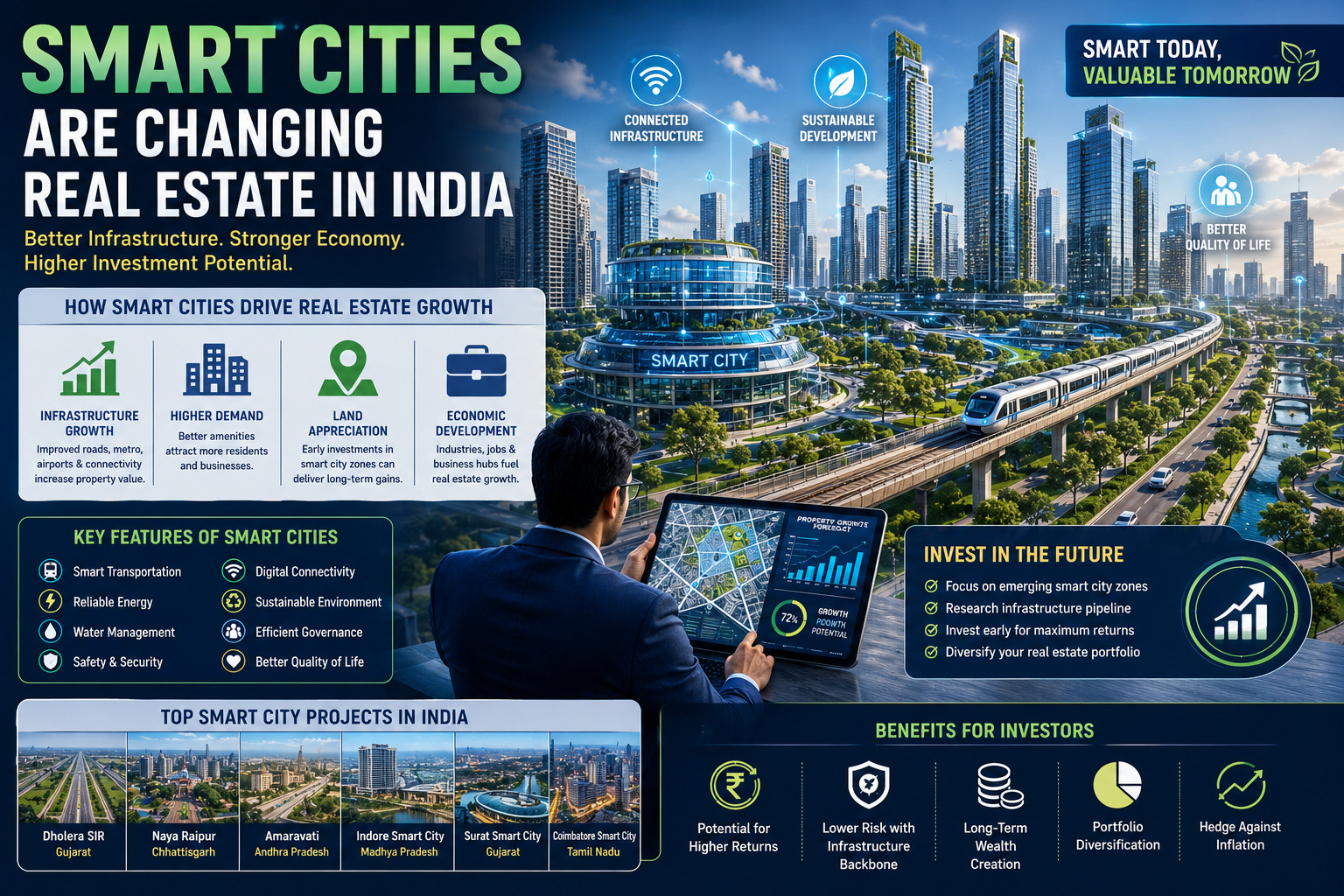
Smart cities use technology, infrastructure, and deliberate planning to improve urban living and economic efficiency. In practice, this generally focuses on a few concrete areas. These are digital infrastructure, efficient transportation systems, sustainable urban planning, and improved public services. The specific mix varies by project. That’s exactly why it’s worth checking what a given “smart city” designation actually includes. Don’t assume it’s a uniform standard across every project.
Why does this actually matter for real estate investors?
Infrastructure growth genuinely tends to increase demand for residential, commercial, and land investment in the areas it touches. As connectivity and urban development improve, property values in those specific areas can rise over time. That effect depends entirely on actual execution, though, not on the smart city label itself.
How does smart city development actually impact property markets?
Increased land demand. Developing smart city zones often creates real demand for nearby land as infrastructure expansion attracts both residents and businesses.
Improved connectivity. Better transportation systems increase accessibility, which tends to support both economic activity and property demand in the connected areas.
Commercial growth opportunities. Business expansion and technology-sector activity around smart city projects can support commercial real estate growth specifically, beyond just residential demand.
What’s the long-term investment case here, and what are the real risks?
Smart city projects are generally long-term development initiatives. This creates a genuine opportunity for investors with a matching long-term horizon. Land appreciation and infrastructure-driven growth matter more here than quick returns. For how that connects to broader inflation-hedging considerations, see our guide on inflation vs. real estate in India.
The risks are real too, and worth naming directly.
- Project execution delays — announced smart city timelines often run longer than initially projected
- Regulatory changes — planning frameworks and approvals can shift over a project’s multi-year timeline
- Speculative pricing risk — prices in areas branded as future smart cities can run ahead of actual infrastructure delivery, which means buying purely on the label carries real downside if execution lags
Research and genuine due diligence on the specific project’s actual progress remain essential. Don’t treat any smart city designation as sufficient justification on its own.
How does technology actually support smart city development itself?
Modern smart city projects increasingly rely on AI-powered systems, data analytics, and smart infrastructure management. These tools help plan and operate cities more efficiently. For how that same technology shows up on the investment-analysis side, see our guide on AI in real estate investing in India.
Why are investors watching Tier 2 and Tier 3 cities specifically?
Many emerging smart city projects are located in cities outside the established metro corridors. That can create real opportunities for investors seeking earlier-stage growth potential. That said, the same execution-risk caveat applies here as anywhere else. A project being announced in a Tier 2 or Tier 3 city doesn’t guarantee delivery on the announced timeline. It also doesn’t guarantee demand materializes as projected.
Frequently Asked Questions
Q: What are smart cities in India?
A: Urban development projects focused on technology, sustainability, and infrastructure efficiency, though the specific scope varies meaningfully by project.
Q: How do smart cities actually affect real estate values?
A: Through genuine infrastructure improvements, connectivity, and economic activity in the areas they touch, though the effect depends on actual execution, not the designation alone.
Q: Is land investment near a smart city project a good idea?
A: It can be, for investors who verify actual project progress and documentation, rather than buying purely on the smart city label itself.
Q: Are smart city investments risky?
A: Yes, like any real estate investment. Execution delays, regulatory changes, and speculative pricing that runs ahead of actual delivery are all real risks specific to this category.
Q: Why are Tier 2 and Tier 3 cities getting more attention for smart city development?
A: Many new smart city projects are located there, which can offer earlier-stage growth potential, though the same execution risks that apply to any infrastructure project apply here too.