
Dholera Data Centre Investments: What ₹4 Lakh Crore Means for Real Estate Investors
India’s real estate market is evolving. Traditionally, investors focused on residential apartments or commercial office spaces. However, today a new asset class is gaining attention: data centres.
Recent reports suggest that Dholera data centre investments could exceed ₹4 lakh crore over time. This is not just an infrastructure headline. It signals a structural shift in how industrial land and commercial real estate are positioned in India.
For long-term investors, this development deserves careful attention. Infrastructure-led growth often reshapes surrounding property markets. However, participation requires discipline, structure, and risk awareness.
The rapid expansion of technology infrastructure is strengthening investment interest in Dholera. Many investors exploring infrastructure-driven corridors are also evaluating opportunities around Dholera SIR investment zones.
Understanding Dholera’s Strategic Importance
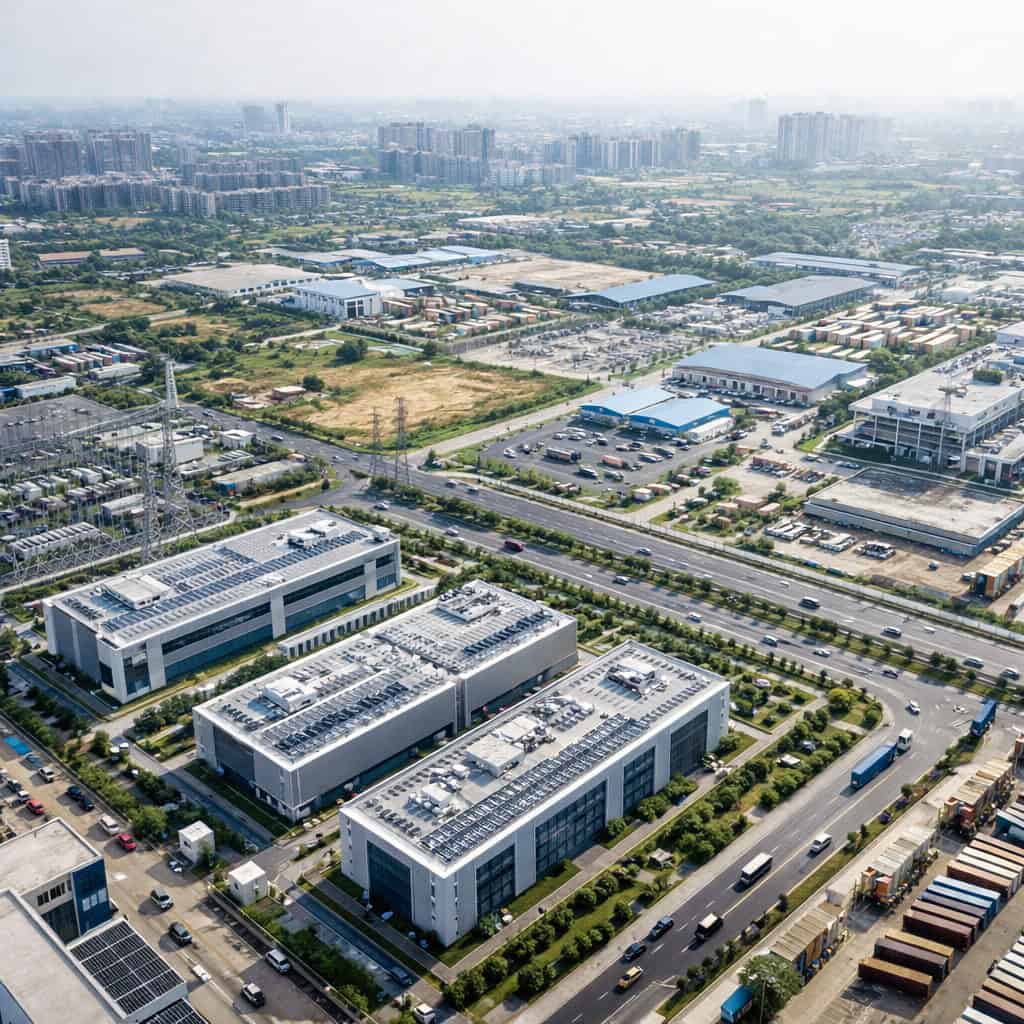
Dholera is part of the Delhi Mumbai Industrial Corridor and has been planned as a smart industrial city. Unlike unplanned expansion zones, Dholera is being developed with zoning clarity, infrastructure mapping, and long-term industrial intent.
Data centres require:
- Reliable power supply
- Large contiguous land parcels
- High-speed digital connectivity
- Regulatory clarity
- Disaster-resilient infrastructure
Dholera’s planning model supports these requirements. As a result, Dholera data centre investments are emerging as a credible long-term infrastructure theme rather than a speculative narrative.
Why Data Centres Are a High-Impact Real Estate Asset Class
Although data centres are part of digital infrastructure, they are fundamentally real estate assets. They occupy large land parcels and operate from built structures leased to enterprise-grade tenants.
This creates key investment characteristics:
- Long-term lease agreements
- Institutional tenants
- Stable rental frameworks
- Capital-intensive construction
When projected Dholera data centre investments reach large capital levels, it indicates long-term operational commitment. Institutional capital typically enters only when policy and infrastructure visibility are strong.
However, investors must remember that returns depend on demand stability, power economics, and policy continuity.
Why Dholera Data Centre Investments Matter Today
India’s digital economy is expanding rapidly. Cloud computing, fintech, artificial intelligence, and enterprise digitization are increasing domestic data storage needs.
Additionally, data localization policies strengthen the case for infrastructure within India. This provides a policy tailwind to Dholera data centre investments.
At the same time, Gujarat’s industrial ecosystem and power infrastructure improve feasibility. Therefore, the opportunity today is linked to structural demand rather than short-term trends.
Still, infrastructure-led corridors evolve in phases. Early-stage entry may offer growth potential, but it also carries execution risk. Hence, structured participation models are often more suitable than direct speculation.
How LandBitt Enables Structured Participation
Direct industrial land investment often requires large capital, extensive due diligence, and long holding periods. Liquidity can also be limited.
LandBitt offers structured fractional ownership models that enable investors to participate in real estate assets through legally compliant frameworks.
The platform focuses on:
- Investor-first documentation
- Transparent asset structuring
- Compliance-focused legal models
- Long-term real asset backing
As Dholera data centre investments develop surrounding ecosystems, structured fractional participation can provide measured exposure without concentrated risk.
Benefits of Fractional Ownership in Emerging Corridors
Lower Entry Barrier
Instead of deploying significant capital into a single property, investors can allocate smaller amounts across diversified assets.
Diversification
Fractional ownership enables exposure to multiple property types, reducing concentration risk in a single micro-market.
Professional Oversight
Operational management and documentation are structured, reducing administrative burden for investors.
Transparency
Clear reporting frameworks enhance investor visibility, which is critical in developing zones influenced by Dholera data centre investments.
Direct Land Investment vs Fractional Ownership
| Factor | Direct Land Purchase | Fractional Ownership |
|---|---|---|
| Capital Requirement | High | Moderate |
| Liquidity | Low | Structured exit options |
| Due Diligence | Investor-managed | Platform-managed |
| Diversification | Limited | Possible |
| Operational Oversight | Self-managed | Professionally managed |
In corridors shaped by Dholera data centre investments, structured participation may align better with passive investors seeking long-term exposure.
Risks Investors Should Consider
Every investment carries risk. Infrastructure-driven themes are no exception.
- Policy changes
- Infrastructure delays
- Power cost volatility
- Digital demand fluctuations
- Liquidity constraints
Returns depend on market conditions and execution timelines. Therefore, disciplined allocation and diversification are essential.
The Long-Term Outlook for Dholera
Industrial corridors evolve in stages:
- Policy and land allocation
- Anchor investor commitments
- Ecosystem development
- Market maturity
Current announcements around Dholera data centre investments indicate movement into the anchor investment phase. If implementation aligns with planning, long-term industrial real estate demand may strengthen.
However, investors should maintain realistic expectations. Infrastructure growth is gradual and dependent on multiple variables.
Conclusion
Dholera data centre investments reflect a significant infrastructure theme in India’s evolving real estate landscape. While projections suggest large capital commitments, disciplined participation remains critical.
Structured real estate investment models, including fractional ownership, provide a practical way to gain exposure without concentrated risk. As always, outcomes depend on policy stability, market demand, and execution quality.
A measured, long-term approach remains the foundation of sustainable wealth creation in infrastructure-led corridors.
Frequently Asked Questions
1. What are Dholera data centre investments?
They refer to projected large-scale capital commitments toward building data centres in Dholera, Gujarat.
2. Why are data centres important for real estate investors?
They create long-term land demand and support surrounding industrial and commercial ecosystems.
3. Is direct land investment in Dholera advisable?
It depends on risk tolerance and expertise. Direct ownership involves legal, liquidity, and holding risks.
4. How does fractional ownership reduce risk?
It allows diversification, structured documentation, and professional oversight, reducing concentration risk.
5. Are returns from such investments guaranteed?
No. Returns depend on market conditions, infrastructure execution, and broader economic factors.