

TL;DR: Real estate investment options in India fall into a few distinct categories: established developers building for direct purchase, and structured platforms offering fractional or tokenized participation. Each serves a different purpose. Large developers suit buyers who want a complete property and full capital deployment. Structured platforms suit investors who want smaller entry points and diversified exposure. Many experienced investors use both, rather than treating it as an either-or choice.

Real Estate Investment Options in India: Developers vs. Structured Platforms
A decade ago, investing in real estate meant picking a developer and buying a complete property. That’s still a real, valid path today, and it’s also no longer the only one. Structured platforms now offer fractional and tokenized participation alongside it. That shift changes the real question. It’s no longer “which single company is best,” but “which category of option actually fits what you’re trying to do.”
What does the traditional developer route actually offer?
India has several large, established developers building residential and commercial projects across major cities. This route suits buyers who want:
- Full ownership and control of a complete, specific property
- A home to live in, not just an investment
- The capital available to deploy a large sum at once
- Direct, hands-on decision-making over the asset
Established developers vary by region and specialty. Some focus on luxury residential towers in specific metro markets. Others build large-scale townships, or commercial office and retail space. The right developer for a given buyer depends heavily on location and budget. It also depends on whether the goal is a primary residence or a pure investment.
What does a structured participation platform actually offer?
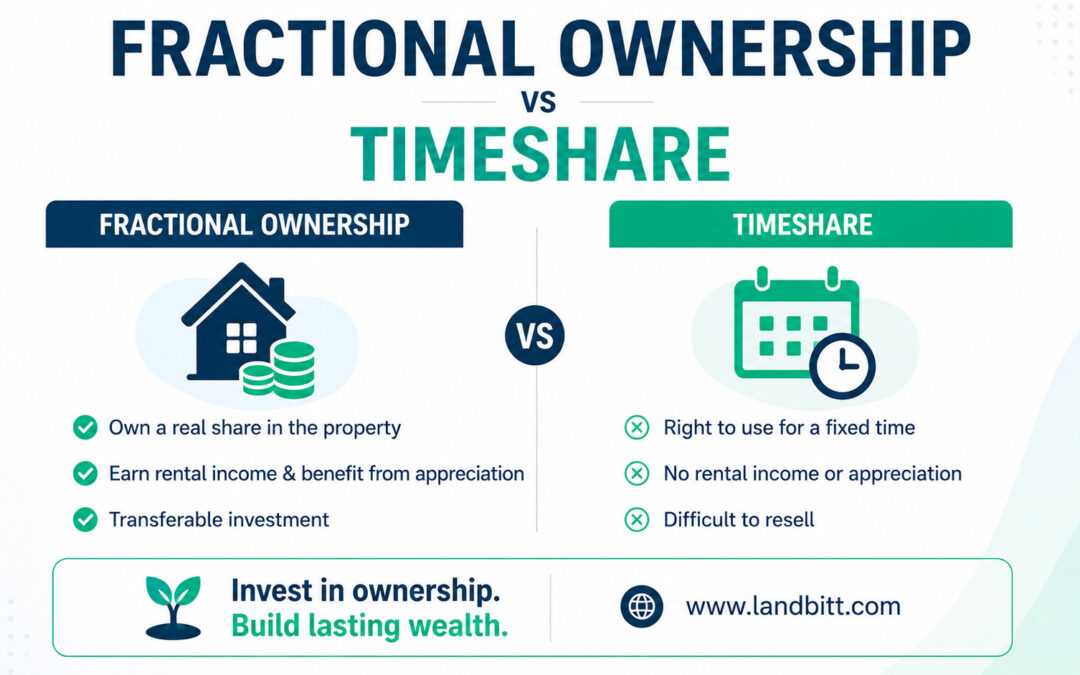
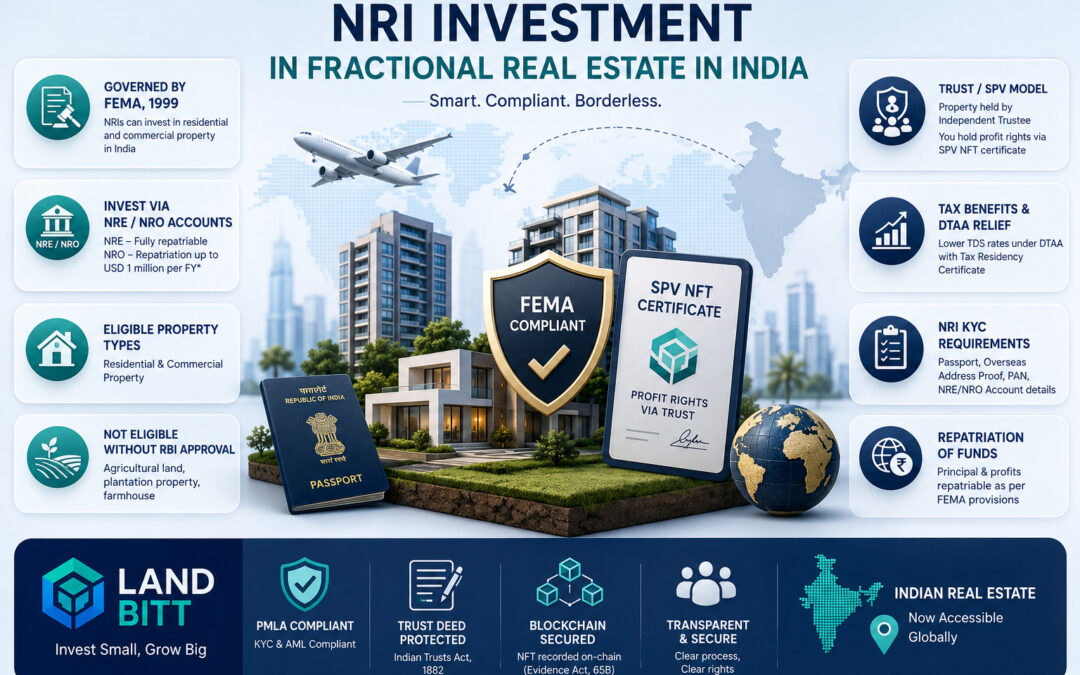
Structured platforms, including Landbitt, work on a different model entirely. Instead of buying a whole property, you hold a fractional, proportional interest in one. A Trust or SPV structure typically defines investor rights upfront. This suits investors who want:
- A lower capital commitment to start
- Exposure across multiple properties or locations, rather than one concentrated bet
- Less hands-on involvement in property management
- Documented governance and transparent reporting
For the mechanics of how this structure actually works, see our guide on real estate tokenization in India.
How should you actually compare these two categories?
Rather than ranking specific companies against each other, it’s more useful to evaluate what each category is actually built for:
| What matters to you | Established Developers | Structured Platforms |
|---|---|---|
| Capital required | High | Lower, scalable |
| Control | Full | Shared, governed by agreed terms |
| Best suited for | A specific home or large single asset | Diversified, smaller-scale participation |
| Liquidity | Depends on finding a buyer directly | Often more structured, though still not instant |
| Governance | Self-managed | Documented Trust/SPV framework |
Does one category make a specific company the objectively “best” investment?
No, and any list claiming to rank specific named companies against each other as a definitive “best” should be read skeptically. Real estate outcomes depend on the specific asset, location, and timing. They depend on your own goals too, not on which company sits at the top of someone’s list. A large, well-established developer can be the right choice for one buyer’s primary residence. The same developer can be a poor fit for another investor’s diversification goals. A structured platform can be exactly right for someone wanting smaller, distributed exposure. It can also be a poor fit for someone who specifically wants to own and control a single physical property outright.
Can these two approaches actually work together?
Yes, and many experienced investors do combine them rather than picking one exclusively. A common pattern: buy a primary residence or one larger asset through a traditional developer, for stability and personal use. Then use structured platforms to diversify smaller amounts of capital across multiple properties or locations. That kind of spread would otherwise require far more capital to access directly.
What should you actually verify, regardless of which category you choose?
For developer purchases, check project approvals, RERA registration, and construction timelines. Look at the developer’s actual delivery track record on past projects too. For structured platforms, check the specific legal structure — ideally a documented Trust or SPV. Review the KYC and compliance processes, and look for transparent documentation on the specific asset, rather than just platform-level marketing claims.
Frequently Asked Questions
What are the main real estate investment options in India?
Broadly, direct purchase through established developers, and structured or fractional participation through platforms that use a Trust or SPV model.
Is fractional ownership better than buying from a developer directly?
Neither is universally better. They suit different goals. Direct purchase gives full ownership and control at a higher capital cost. Fractional models lower the entry cost, in exchange for a smaller, shared stake.
Can I invest through both approaches?
Yes. Many investors use a traditional developer purchase for a primary residence or a single larger asset, and structured platforms to diversify smaller amounts across multiple properties.
What should I check before buying from a developer?
RERA registration, project approvals, construction timelines, and the developer’s track record on previous project deliveries.
What should I check before investing through a structured platform?
The platform’s actual legal structure, its KYC and compliance processes, and the specific documentation for the asset you’re considering, rather than general marketing claims about the platform.