


This guide will explain how beginners can invest in land in India with simple and actionable steps. In fact, understanding how beginners can invest in land in India is essential for successful property acquisition.
Land has long been viewed as a stable and tangible asset in India. Many investors associate it with long-term wealth preservation and capital growth. However, for someone just starting out, the process can feel unclear. Pricing varies widely, documentation can be complex, and risks are not always obvious. For those curious, learning how beginners can invest in land in India helps streamline the journey.
This guide simplifies land investment for beginners in India. It explains how to evaluate land, what legal checks matter, how returns are generated, and when structured options such as fractional ownership may make sense.
Infrastructure-led growth often influences land investment decisions.
Why Land Investment Attracts First-Time Investors
Land is a real asset with limited supply. Unlike apartments, it does not suffer structural wear and tear. In addition, holding costs are usually lower because there is no building maintenance.
Moreover, infrastructure expansion across India continues to shape demand. Highway construction and industrial corridors influence land prices over time. Updates from the
National Highways Authority of India highlight ongoing road projects that may impact regional growth.
However, appreciation depends on location quality and market conditions. Therefore, beginners should approach land with patience and clear expectations.
Start With a Clear Investment Objective
Before investing, define your purpose. Are you targeting long-term capital appreciation? Do you intend to build in the future? Or are you adding land as part of portfolio diversification?
Your objective will influence:
- Budget size
- Location preference
- Holding period
- Liquidity needs
Because raw land typically does not generate rental income, it suits investors who can hold the asset for several years.
Location Strategy in Land Investment for Beginners in India
Location remains the single most important factor. Even experienced investors prioritize connectivity and infrastructure over short-term discounts.
When evaluating land, focus on:
- Proximity to highways and metro routes
- Industrial and logistics parks
- Urban expansion corridors
- Government-approved development plans
Reliable information can be reviewed through
Invest India and state planning authorities. Avoid decisions based on speculation alone.
Legal Due Diligence: The Foundation of Safe Land Investment
Clear documentation is essential. Many property disputes arise due to incomplete title verification.

Thorough legal due diligence is essential before investing in land in India.
Before purchasing land, verify:
- Clear title ownership
- Encumbrance certificate
- Zoning classification
- Local authority approvals
- Access and road rights
If financing is involved, review guidelines from the
Reserve Bank of India. In addition, consult a qualified property lawyer to minimize legal exposure. Also, knowing how beginners can invest in land in India includes legal compliance steps such as proper documentation and approvals.
Direct Land Purchase vs Fractional Ownership
Beginners often compare full ownership with structured models.
Direct Ownership
This approach provides full control. However, it requires significant capital and full responsibility for legal compliance and resale.
Fractional Ownership Models
Alternatively, structured models allow multiple investors to participate in one land asset through a legal entity. This approach lowers the capital requirement and introduces governance rules.
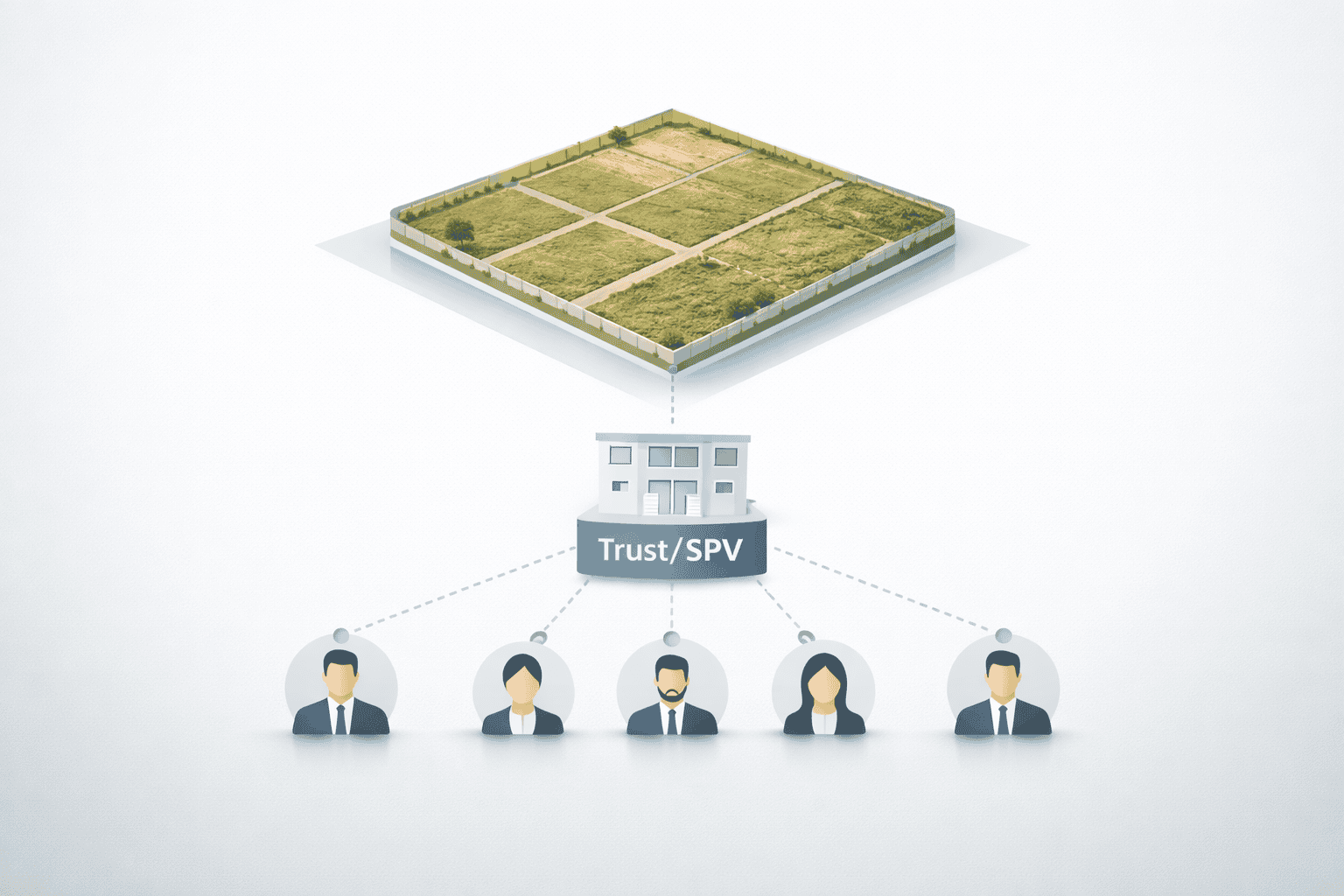
Fractional land ownership structures allow multiple investors to participate in a single land asset through a legally defined model.
If you are comparing options, review this detailed breakdown:
Fractional Ownership vs Buying Land: A LandBitt Guide.
For a broader overview of the concept, explore
Fractional Land Investment in India: The Complete Guide.
Fractional ownership structures centralize land title while defining investor rights.
Additionally, you may read how structured models enable passive participation in land assets here:
Fractional Land Ownership: The Smart Way to Invest in Property.
The Role of Technology in Modern Land Investment
Technology is improving transparency in real estate transactions. Structured platforms now use digital documentation and reporting systems to improve investor clarity.
To understand how distributed ledger systems are being explored in property markets, refer to:
Blockchain in Real Estate: A Technical Guide.
While technology supports governance, the underlying asset remains physical land. Therefore, legal due diligence and market research remain critical. As a result, knowing how beginners can invest in land in India is enhanced by using reliable technology-driven solutions.
Understanding Returns in Land Investment
Land typically generates returns through capital appreciation. Value may increase due to:
- Improved infrastructure
- Urban expansion
- Commercial development
- Industrial activity
However, returns depend on entry price, holding period, and market demand. There are no guaranteed outcomes.
Key Risks Beginners Must Evaluate
Market Risk
Land prices may grow slowly if development is delayed.
Liquidity Risk
Land transactions can take time, especially in non-prime areas.
Legal Risk
Improper documentation can lead to disputes.
Speculative Risk
Purchasing based on rumors instead of verified plans increases uncertainty.
Therefore, disciplined research and structured governance are essential.
Conclusion
Land investment for beginners in India requires preparation and clarity. While land remains a respected asset class, success depends on verified information and realistic expectations.
By focusing on infrastructure-backed locations, completing legal checks, and considering structured ownership models where appropriate, beginners can approach land investing with greater confidence and balance.
Frequently Asked Questions
1. Is land suitable for new investors?
Yes, if approached with proper research and a long-term investment horizon.
2. What is the minimum capital required?
Direct ownership requires higher capital. Fractional ownership models may allow lower entry amounts.
3. How long should land be held?
Typically several years, depending on infrastructure growth and market demand.
4. Is fractional ownership safer than direct purchase?
Each model has different risks. Structured governance may reduce administrative complexity but does not remove market risk.
5. Can technology reduce real estate risk?
Technology improves transparency and documentation, but asset performance still depends on market fundamentals.