

TL;DR: A land investment platform in India organizes participation through a defined legal framework, typically a Trust or SPV holding the underlying asset, with KYC verification and structured governance built in. What actually separates a credible platform from a risky one is asset-specific structuring, transparent documentation, and a defined exit framework, not marketing claims about returns. No platform can guarantee outcomes; what it can offer is a documented, verifiable process.

How to Choose a Land Investment Platform in India
Searches for a land investment platform in India have grown for a clear reason. Investors are tired of informal deals, unclear documentation, and having to trust a broker’s word over actual paperwork. Land has always been a trusted asset in India, but traditional land buying demands large capital, detailed paperwork, and deep local knowledge most retail investors don’t have. Structured platforms exist to change that equation, but not all of them are built the same way, and the differences matter more than the marketing.
Why has land investing traditionally been so difficult?
Direct land buying involves real complexity. Investors need to verify the title chain, confirm zoning classification, check for encumbrances, and manage registration and documentation themselves. High capital requirements compound the problem, since most retail investors simply can’t deploy the capital a worthwhile plot demands. That combination, capital barriers plus administrative complexity, is exactly why structured platforms have gained real attention.
What does a land investment platform actually do?
A land investment platform organizes participation within a defined framework instead of leaving everything to informal arrangement. In practice, this usually means:
- The platform identifies and verifies specific land parcels through legal due diligence and valuation checks
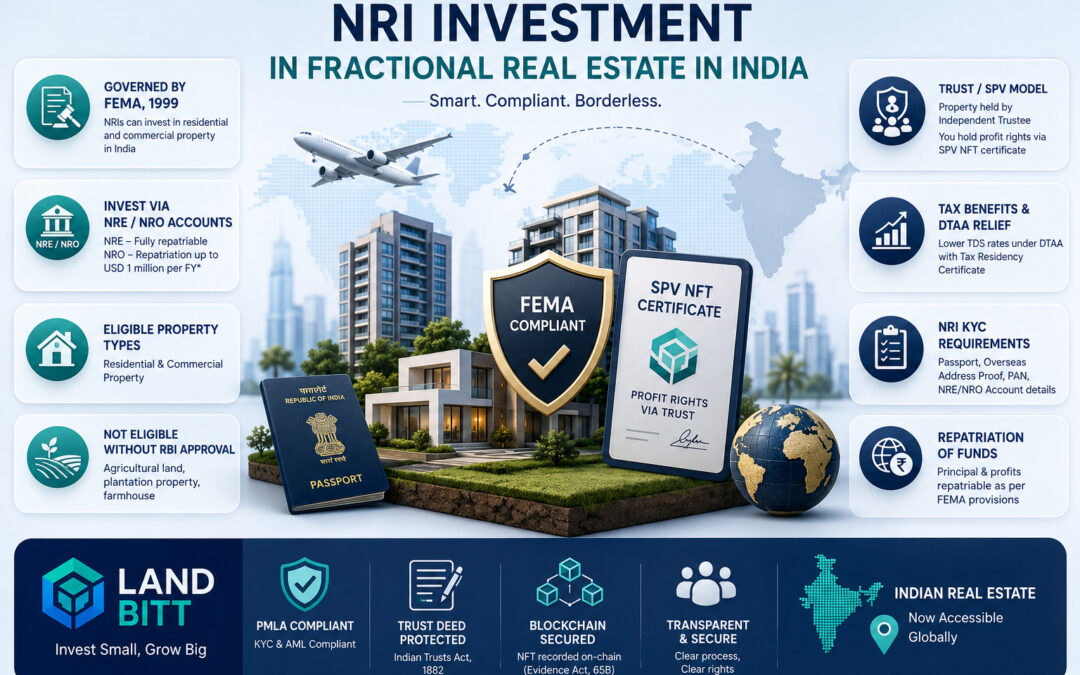
- A defined legal structure, typically an SPV or Trust, gets created to hold the asset
- Investors complete KYC and AML verification before participating
- Participation gets organized proportionally, with clear documentation of who owns what
- Reporting stays transparent throughout the holding period
The goal isn’t replacing traditional ownership entirely. It’s modernizing access and recordkeeping while keeping regulatory discipline intact.
What actually separates a good platform from a risky one?
Not every platform claiming to be “the best” actually earns that distinction. A handful of structural details matter far more than marketing language.
Asset-specific structuring. Each land parcel should stay independent. Cross-pooling between unrelated assets increases confusion about exactly what you own and where your risk actually sits.
Transparent documentation. You should be able to access agreements, title records, and compliance disclosures before committing capital, not after. Without that visibility upfront, trust has nothing real to stand on.
Mandatory KYC and AML compliance. A credible platform verifies every participant, which keeps the whole system aligned with regulatory expectations and reduces systemic risk for everyone involved.
A defined exit framework. Clear communication about holding periods and transfer mechanisms, stated upfront, matters more than vague promises about liquidity.
Infrastructure-focused asset selection. Marketing promises don’t drive returns. Infrastructure growth, connectivity, and employment expansion do. For the deeper mechanics of how this kind of structuring actually works, see our guide on real estate tokenization in India.
How does this compare to direct land buying?
| What matters to you | Direct Land Purchase | Structured Platform Participation |
|---|---|---|
| Capital required | High upfront | Flexible, smaller entry possible |
| Paperwork | Handled independently | Centralized documentation system |
| Risk exposure | Single, concentrated | Proportional, often diversified |
| Exit process | Self-managed | Defined transfer framework |
Both models can work. Structured systems generally reduce the administrative friction that trips up first-time land investors specifically.
What should beginners specifically watch for?
First-time investors tend to underestimate land’s complexity. Before committing, take time to understand zoning laws, development plans, and realistic infrastructure timelines for the specific area, not just the general region. Assess your own holding-period capacity honestly too. Structured platforms simplify documentation access, but informed decision-making on your part still matters. For a deeper beginner-focused walkthrough, see our step-by-step guide to investing in land in India.
What are the real risks no platform can eliminate?
No investment is risk-free, and a credible platform won’t pretend otherwise.
- Market risk — land values fluctuate with demand cycles, regardless of platform quality
- Infrastructure risk — development projects can face delays beyond anyone’s control
- Liquidity risk — exits depend on finding a buyer, even with a structured resale process
- Regulatory risk — compliance frameworks for this space continue to evolve
For regulatory awareness specifically, SEBI’s official resources are worth reviewing directly.
Why does location strategy matter as much as platform choice?
Land performance depends heavily on location, regardless of which platform facilitates the investment. Worth analyzing: industrial corridor expansion, highway and freight connectivity, smart city planning, employment growth clusters, and government infrastructure allocation. Emerging zones like Dholera have drawn real attention specifically because of semiconductor and manufacturing investment activity. See our Dholera SIR investment guide for the specifics.
Does diversification actually matter here?
Yes, genuinely. Most Indian investor portfolios concentrate heavily in equities or fixed deposits. Land introduces real-asset exposure that moves differently from those. Structured platforms make gradual allocation considerably more practical than direct purchase does. Some investors pair this with SIP-style land investing specifically to maintain capital discipline over time.
Who should actually consider a structured land investment platform?
- Retail investors who want flexible entry without the full capital burden of direct purchase
- NRIs exploring Indian growth corridors without needing a physical presence
- Long-term wealth builders comfortable with land’s typically slower appreciation timeline
- Portfolio diversifiers looking for a real-asset component
- Financial advisors evaluating alternative assets for client portfolios
How do you actually get started?
- Create an investor account
- Complete KYC verification
- Review documentation carefully, not just the summary
- Select your participation size
- Track reporting updates regularly through your dashboard
Frequently Asked Questions
What makes a land investment platform in India trustworthy?
Clear documentation, asset-level structuring, mandatory compliance procedures, and transparent governance, not marketing claims about guaranteed returns.
Are returns guaranteed on a land investment platform?
No. Land investments depend on market demand and infrastructure development outcomes, regardless of platform quality.
Is land investing through a platform suitable for beginners?
Yes, provided you understand the real risks and review documentation carefully rather than relying entirely on the platform’s summary materials.
How long should land investments typically be held?
Generally long-term, aligned with infrastructure growth cycles rather than short-term trading expectations.
Can NRIs invest through these platforms?
Participation depends on the applicable regulations and documentation standards specific to the platform and the investor’s circumstances.