
Real Estate Resale Platform in India: Structured Property Exit & Internal Marketplace Model
Liquidity remains one of the biggest concerns in real estate investment. Unlike stocks or mutual funds, property cannot be sold instantly. Therefore, investors evaluating structured participation models often ask one key question: how does resale work?
A real estate resale platform in India introduces a controlled, structured mechanism that allows investors to transfer participation within defined governance rules. Instead of informal buyer searches, the resale process operates inside an internal marketplace framework.
If you are new to structured participation models, first understand how a
structured real estate investment platform in India operates.
Why Liquidity Matters in Real Estate
Traditional property ownership requires finding a buyer, negotiating pricing, completing documentation, and managing transfer procedures. This process may take months. Consequently, liquidity becomes limited.
Structured participation platforms attempt to address this limitation through controlled resale mechanisms. However, resale availability does not mean guaranteed exit. Instead, it creates a defined pathway for transfer.
What Is a Real Estate Resale Platform in India?
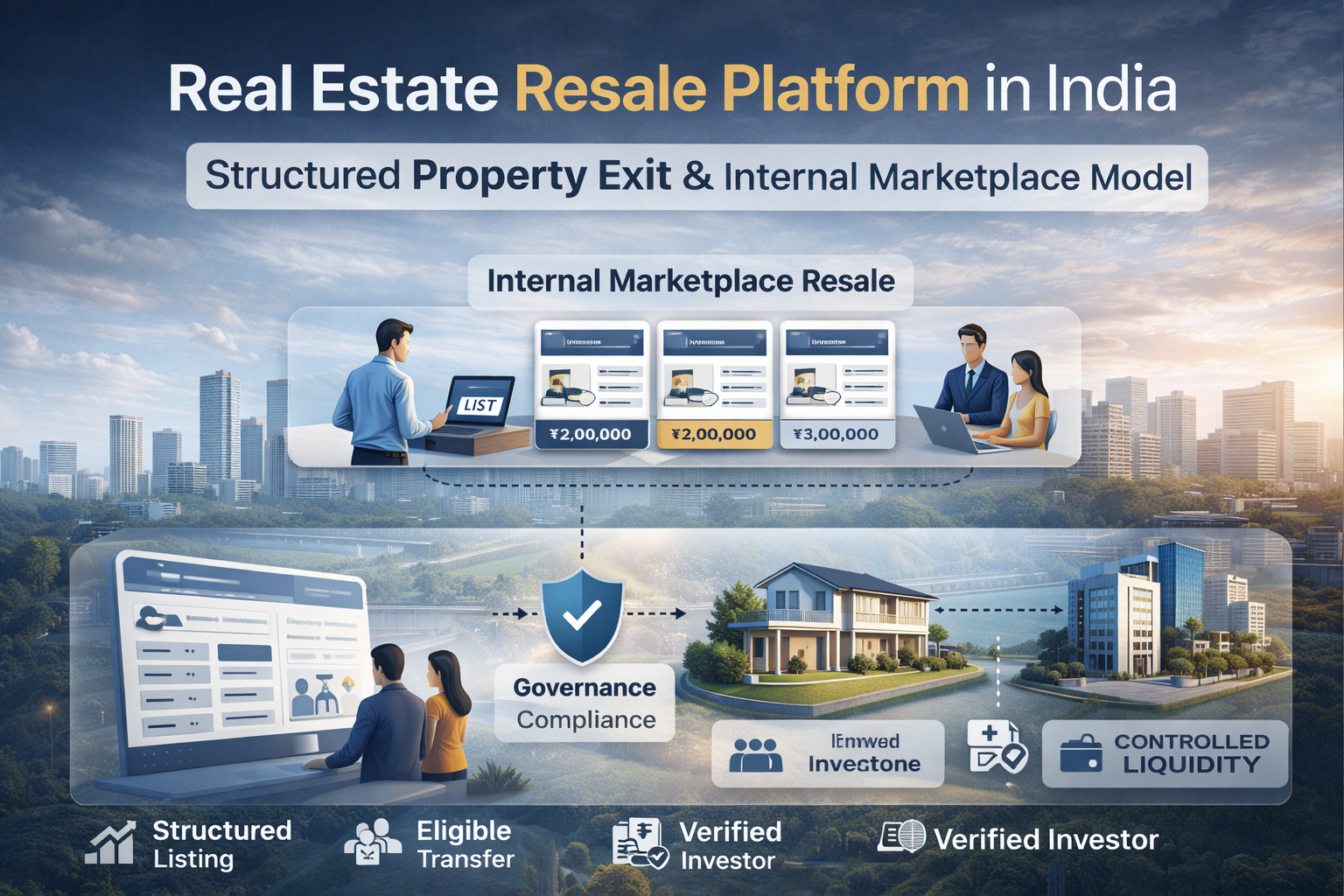
A real estate resale platform in India is an internal system that allows eligible investors to list their participation for transfer to other verified participants. The platform provides:
- Structured listing framework
- Eligibility verification
- Documented transfer process
- Transaction tracking
- Governance compliance
This mechanism differs from open-market speculation. It operates within the boundaries defined by asset-level governance.
How the Internal Marketplace Model Works
The internal marketplace functions in a structured manner:
- An investor initiates a resale request.
- The platform verifies eligibility under governance rules.
- The participation is listed internally.
- Interested verified investors can evaluate the listing.
- Upon matching, documentation is processed.
- Ownership records update within the system.
Because the framework is structured, transparency improves at every step.
Governance and Resale Relationship
Resale mechanisms operate within the boundaries of the
real estate governance model in India. Therefore, transfers must comply with asset-level rules.
For example:
- Only participating investors may vote on full asset sale proposals.
- Resale does not override supermajority decision requirements.
- Asset independence remains intact during transfer.
As a result, liquidity operates without compromising governance discipline.
Resale vs Full Asset Exit
It is important to distinguish between two different exit paths:
1. Secondary Resale
An individual investor transfers participation to another eligible investor within the platform.
2. Full Asset Sale
The entire asset is sold following supermajority investor approval.
While secondary resale offers flexibility, full asset sale depends on collective voting.
Benefits of a Structured Resale Platform
- Improved liquidity visibility
- Reduced informal transaction risk
- Documented transfer records
- Transparent pricing environment
- Controlled investor onboarding
Consequently, investors gain clearer exit pathways compared to unstructured joint ownership.
Important Considerations Before Relying on Resale
Although a resale platform introduces structure, it does not eliminate market realities.
Investors must consider:
- Market demand conditions
- Asset performance outlook
- Holding period expectations
- Liquidity timing risk
Therefore, participation decisions should align with long-term financial planning rather than short-term speculation.
How Resale Supports Fractional Participation
Resale mechanisms are particularly important in fractional participation structures. Smaller allocation sizes increase accessibility, while internal resale frameworks improve flexibility.
To understand participation mechanics in more depth, review our guide on
fractional ownership in India.
Category-Based Asset Resale Discipline
Structured platforms may operate across multiple categories such as residential, commercial, agricultural, industrial, and land assets. However, resale remains asset-specific.
This means:
- Residential participation resale does not affect commercial assets.
- Agricultural asset transfers remain isolated from industrial assets.
- Governance boundaries apply independently per asset.
This separation strengthens structural clarity.
Transparency in Resale Transactions
A strong resale platform emphasizes transparency through:
- Verified investor onboarding
- Documented pricing visibility
- Digital ownership tracking
- Transaction history logs
These features reduce ambiguity and strengthen investor confidence.
Who Should Consider Platforms with Resale Facilities?
- Investors seeking structured liquidity options
- First-time participants requiring exit clarity
- Professionals diversifying across asset categories
- Long-term investors who value governance-backed transfer systems
Structured Exit Is Not Instant Exit
It is important to remain realistic. A real estate resale platform in India provides structured pathways, not instant liquidity. Demand conditions, pricing expectations, and investor appetite still influence outcomes.
However, compared to traditional property exit processes, internal marketplace systems introduce predictability.
How to Get Started
If you are evaluating structured real estate participation with resale capability:
- Create your account.
- Complete mandatory verification.
- Review available asset categories.
- Understand governance rules.
- Participate according to your allocation strategy.
Resale eligibility depends on platform rules and asset-level governance frameworks.
Frequently Asked Questions
Is resale guaranteed on a real estate resale platform in India?
No. Resale depends on demand and governance rules. The platform provides structure, not guaranteed liquidity.
Can I sell anytime?
Resale eligibility depends on platform terms and asset-specific guidelines.
Does resale require investor voting?
Secondary resale typically does not require full investor voting, but full asset sale proposals do.
Is resale safer than direct property selling?
Structured platforms provide documented processes and verification systems, which may reduce informal transaction risks.
Conclusion
A real estate resale platform in India introduces structured liquidity into property participation. By combining governance discipline with internal marketplace systems, investors gain clearer exit pathways.
Although resale is not instant or guaranteed, structured mechanisms improve predictability and transparency.
For investors prioritizing governance-backed participation and controlled liquidity frameworks, structured resale infrastructure represents a significant evolution in property investment models.
Explore structured participation with resale capability today.