Join Community
Signup
Signin
✕
  • Why Choose LandBitt?
  • News
  • Marketplace Snapshot
  • How It Works
  • Become a Partner
  • FAQ's
Join Community
REIT vs Fractional Ownership: Which is Better? | Landbitt

REIT vs Fractional Ownership: Which is Better? | Landbitt

by landbitt | Dec 22, 2025 | Investment Opportunities, Real Estate Tokenization

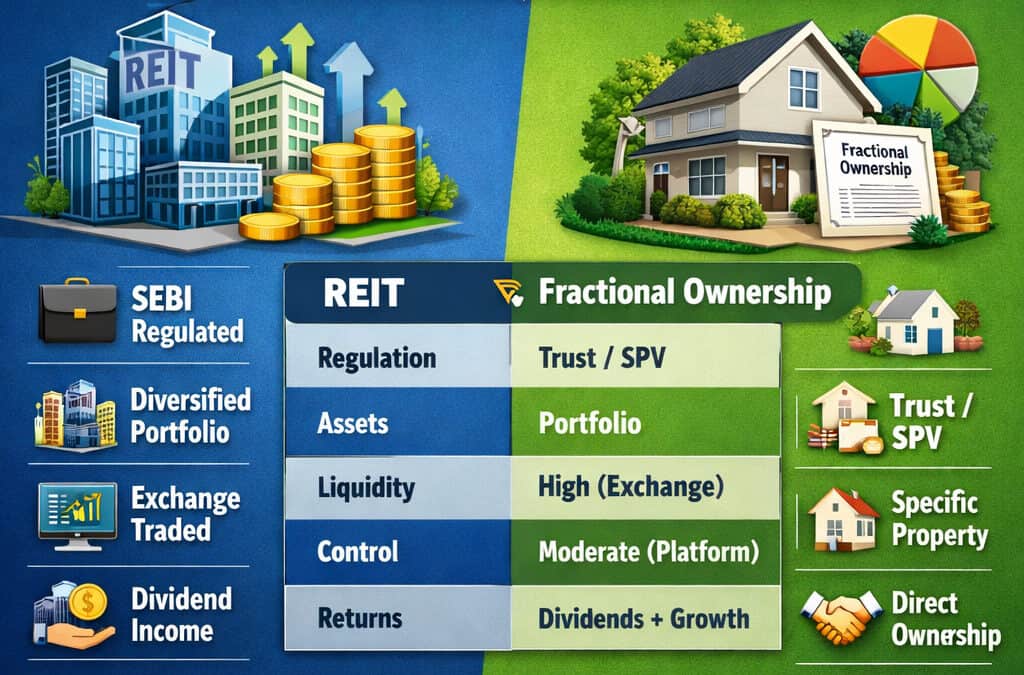
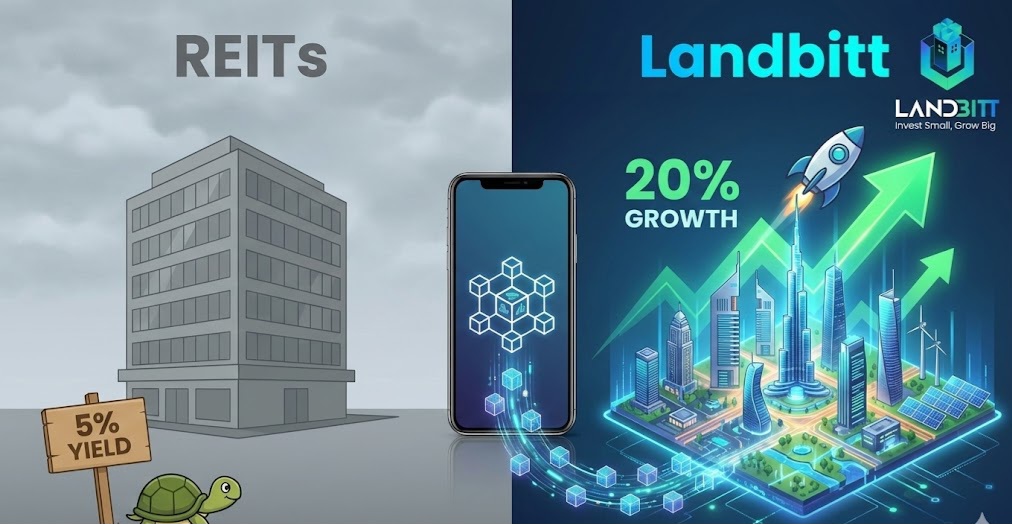
REITs vs. Landbitt: Which is the Better Path to Real Estate Wealth? Key Takeaways The Basics: A REIT (Real Estate Investment Trust) is like a mutual fund that owns income-generating properties like malls and offices. The Limitation: REITs in India typically offer 5-7%...
RWA Tokenization: Transform Physical Assets to Wealth | Landbitt

RWA Tokenization: Transform Physical Assets to Wealth | Landbitt

by landbitt | Dec 21, 2025 | Blockchain Technology, Real Estate Tokenization

RWA Tokenization: How to Own a Piece of India’s Growth (Without Crores) Key Takeaways: Understanding the impact of RWA Tokenization in Real Estate can provide significant advantages for investors. What it is: RWA (Real World Asset) Tokenization turns physical...
Fractional Ownership vs Buying Land in India: Which Is Smarter for Long-Term Investors?

Fractional Ownership vs Buying Land in India: Which Is Smarter for Long-Term Investors?

by landbitt | Dec 20, 2025 | Real Estate Tokenization

Fractional Ownership vs Buying Land in India – A Complete Investor Guide Indian investors have always trusted land as a long-term wealth-building asset. However, the way people participate in land investment is evolving. Traditionally, investors purchased entire plots...
REIT vs Fractional Ownership: Which Is Better for Indian Investors in 2026?

REIT vs Fractional Ownership: Which Is Better for Indian Investors in 2026?

by landbitt | Dec 8, 2025 | Investment Comparisons, Investment Opportunities, Real Estate Tokenization

REIT vs Fractional Ownership in India: Which Is Better for Investors in 2026? Real estate investment in India has evolved significantly over the past decade. Today, investors no longer need to buy an entire property to participate in the market. Instead, two popular...
Fractional Real Estate Investment: Revolutionizing Ownership with Landbitt

Fractional Real Estate Investment: Revolutionizing Ownership with Landbitt

by landbitt | Dec 7, 2025 | Blockchain Technology, Real Estate Tokenization

Fractional Real Estate Investment: Revolutionizing Ownership with Landbitt Investing in premium real estate has always demanded significant capital. Consequently, high-value properties remained out of reach for most people. However, Landbitt is changing this landscape...
Real Estate 3.0: Why 2026 is the Year of the “Digital Landlord”

Real Estate 3.0: Why 2026 is the Year of the “Digital Landlord”

by landbitt | Nov 28, 2025 | Blockchain Technology, Real Estate Tokenization

The real estate market is entering a massive shift with the advent of Real Estate Tokenization. For decades, property investment was a game for the wealthy. It required millions in capital, endless paperwork, and months of waiting. Real Estate Tokenization changes...

« Older Entries
Next Entries »

Recent Posts

  • DILRMP: Digital Land Records Modernization Programme in India Explained
  • Blockchain Use Cases in India: Government Projects Transforming Digital Infrastructure
  • Vishvasya Blockchain Stack India: Government Infrastructure for Digital Trust
  • PropertyChain: India’s Blockchain Revolution in Real Estate Ownership
  • Why Structured Real Estate Participation Matters in Modern Property Investment

Recent Comments

  1. SIP in Land Investing: A Smart Investment Strategy - Landbitt on Best Land Investment Platform in India (2026 Guide) – Structured & Secure | Landbitt
  2. Land Investment Platform: Opportunities in India Real Estate - Landbitt on LandBitt: Pioneering Blockchain-Based Real Estate Tokenisation in India
  3. Land Investment Platform: Opportunities in India Real Estate - Landbitt on Fractional Land Investment in India: The Complete Guide for Smart Investors
  4. REIT vs Fractional Ownership: Understanding the Models - Landbitt on Tokenized Real Estate: The Tech Behind Safe Investing | Landbitt
  5. REIT vs Fractional Ownership: Understanding the Models - Landbitt on Real Estate Tokenization in India – Legal & Secure Fractional Property Investment Guide (2026)
logo img
support@landbitt.com

Consumer Protection
Guidelines

Third-Party Services
Disclaimer Policy
KYC and User
Onboarding Policy

Legal Documents

FB image
insta img
whatsapp img
linkdin img
twitter img
frame img
frame img
frame img
© 2026 LANDBITT. All rights reserved.
Privacy Policy
Terms of Use
AML CFT
Risk Disclosure Statement

Disclaimer

Landbitt.com operates solely as a technology platform and listing service. It is not a real estate broker, dealer, agent, advisor, or direct investment manager. The platform enables Real Estate Asset Owners to host information about properties for which derivative-driven fractional ownership based beneficial rights may be offered to potential investors.

Any such offering is made exclusively through a distinct Special Purpose Vehicle (SPV), which is a separate legal entity. Landbitt.com is not a party to any transaction between the SPV and an investor, does not own the assets, and does not guarantee any returns or the performance of any listed property.

All investments facilitated through information on this platform are subject to significant risk. Potential returns are projections, not guarantees, and past performance is not indicative of future results. The platform’s content, including property disclosures, is for informational purposes only and should not be construed as financial, legal, or investment advice.

User discretion is strongly advised. It is imperative that each user conducts their own independent due diligence, seeks advice from qualified professional advisors regarding legal, tax, and financial implications, and carefully reviews all offering documents and related agreements of the SPV before making any investment decision. By using this platform, you acknowledge and agree that Landbitt.com, its affiliates, and its employees bear no liability for any investment decisions made or outcomes resulting from the use of information provided herein.