
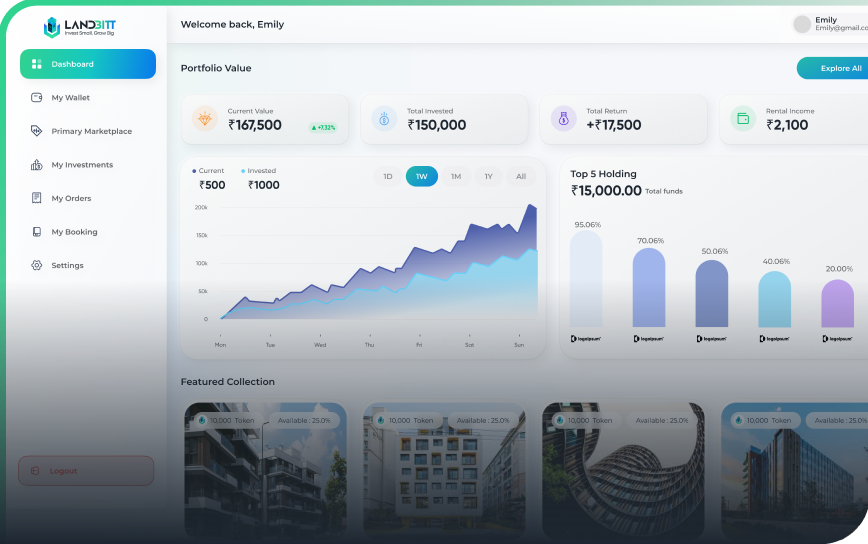
TL;DR: A real estate resale platform gives investors a structured way to exit a property investment by transferring their share to another verified buyer, instead of relying on informal networks or waiting on a full property sale. It’s faster and more transparent than traditional resale, but it’s still not instant — your exit still depends on finding someone willing to buy.

Real Estate Resale Platform India: How Property Liquidity Actually Works
If you’ve ever owned property directly, you know the problem: selling it isn’t quick. You need to find a buyer, agree on a price, get through paperwork, and wait — sometimes for months. Stocks and mutual funds don’t work this way, but real estate always has. That’s the core reason resale platforms exist. They give investors in structured property assets a faster, more transparent way to exit, without needing to find a buyer on their own.
Why does liquidity matter so much in real estate?
Ask anyone who’s tried to sell a property fast and they’ll tell you: it’s hard. You’re at the mercy of brokers, buyer interest, and how the local market happens to be moving that month. None of that is in your control. Structured investment platforms can’t make property instantly liquid — nothing can — but they can make the process of finding a buyer and completing the transfer considerably less painful.
What exactly is a real estate resale platform?
It’s an internal marketplace where investors who want to exit can list their participation, and other verified investors can review and buy it. You’re not selling the whole property — you’re transferring your share of it, within a system that already has verification, documentation, and governance rules built in. Think of it as the difference between trying to sell something through word of mouth versus listing it somewhere buyers are already looking, with the paperwork half-done already.
How does it actually work, step by step?
- You decide to exit. You initiate a resale request through the platform.
- The platform checks eligibility. This confirms you’re allowed to transfer under the asset’s specific governance rules.
- Your stake gets listed internally. Other verified investors on the platform can now see it.
- Interested buyers review it. If someone wants in, they evaluate the listing just like you once did.
- Once both sides agree, the transfer goes through. Documentation gets processed and ownership records update.
This isn’t fundamentally different from selling anything else online — except the “buyers” are pre-verified investors, and the legal structure underneath is already documented.
How has this changed over time?
Years ago, if you wanted to exit a real estate investment, you went through a broker or relied on word-of-mouth in your own network. That’s still how a lot of informal property syndicates work today. Digital platforms changed this by building dashboards, transaction tracking, and proper documentation access into the process itself — so buyers and sellers can actually see what they’re getting into, rather than relying on a broker’s word for it.
Is resale the same thing as selling the whole property?
No, and this distinction matters. There are really two different paths:
Secondary resale — you, as one investor, transfer your specific share to another investor. The property itself doesn’t change hands; just your piece of it does.
Full asset sale — the entire property gets sold, which usually requires supermajority approval from everyone invested in that asset (see our guide on real estate voting rights for how that approval process works).
Secondary resale gives you flexibility without needing everyone else to agree. Full asset sale is a collective decision.
What are the actual benefits compared to traditional property resale?
| Factor | Traditional Property Sale | Resale Platform |
|---|---|---|
| Speed | Often slow | Generally faster |
| Finding a buyer | Broker-dependent | Built-in marketplace |
| Transparency | Limited | Documented, trackable |
| What you’re selling | The whole property | Your specific share |
| Capital needed to buy in | High | Lower, since it’s partial |
Beyond speed, the bigger shift is really about documentation. Every step — listing, verification, transfer — leaves a clear, trackable record, which is a meaningful upgrade over a handshake deal with someone a broker found for you.
Does this stay consistent across different types of assets?
Yes, and it has to. If a platform handles residential, commercial, agricultural, and industrial assets, resale activity in one category shouldn’t bleed into another. A residential investor exiting their stake has no bearing on what happens with a commercial asset elsewhere on the platform. This separation isn’t a technicality — it’s what keeps each asset’s governance clean and predictable.
What’s technology actually doing here?
Mostly the unglamorous but important stuff: keeping secure records, verifying who’s allowed to transact, and tracking what happened and when. Some platforms also give investors real-time dashboards so you can see how an asset is performing or how active the marketplace is for it, rather than finding out secondhand. None of this makes your exit guaranteed — it just makes the whole process easier to trust.
What should you actually check before relying on a resale platform?
A few things genuinely matter here:
- How the platform’s governance is structured — what rules actually govern a transfer
- Whether legal documentation is genuinely accessible, not just promised
- How verification works for both you and any potential buyer
- What the real eligibility conditions are for listing your stake
- How active the marketplace actually is — a resale option means little if there’s no one buying
Is resale guaranteed, or just structured?
Just structured — and that distinction is worth being honest about. A resale platform gives you a clear, documented path to exit. It does not guarantee someone will actually want to buy your stake at the price or time you want to sell. Demand still depends on the market, the specific asset’s performance, and broader investor appetite. Compared to traditional property exit, it’s more predictable — but “more predictable” isn’t the same as “instant” or “guaranteed.”
Who actually benefits most from having resale access?
- Investors who want a real liquidity option, not just appreciation and a long wait
- First-time investors who want to know there’s a clear way out before they put money in
- People diversifying across several different asset categories
- Long-term investors who specifically value governance-backed processes over informal arrangements
Related guides
Frequently Asked Questions
What is a real estate resale platform in India? An internal marketplace where investors can transfer their property participation to other verified investors, instead of relying on brokers or informal buyer searches.
Can I sell my stake whenever I want? Not necessarily — eligibility usually depends on platform terms and asset-specific rules, often including a lock-in period before resale becomes available.
Does resale require everyone else to vote on it? No. Secondary resale — transferring your individual share — typically doesn’t need a full investor vote. A full asset sale generally does.
Is resale safer than trying to sell property the traditional way? It tends to be more transparent, since documentation and verification are built into the process. It’s not without risk, though — your exit still depends on finding a willing buyer.
Can I invest with a smaller amount and still access resale later? Yes — smaller participation sizes are one of the reasons structured platforms exist, and resale eligibility isn’t typically tied to how much you invested.