

Blockchain in Real Estate: Transparency, Security & the Future of Property Investment in India
Blockchain in real estate is steadily transforming how property transactions are recorded, verified, and managed in India. While traditional real estate relies heavily on paperwork and intermediaries, blockchain introduces a secure digital ledger that improves transparency and reduces friction.
Instead of replacing property laws, blockchain strengthens recordkeeping. As a result, investors, developers, and institutions gain greater confidence in transaction history and ownership clarity.
In this guide, you will learn:
- How blockchain works in property transactions
- Its role in land records and commercial real estate
- Benefits and limitations
- How it connects to structured investment models
What Is Blockchain in Real Estate?
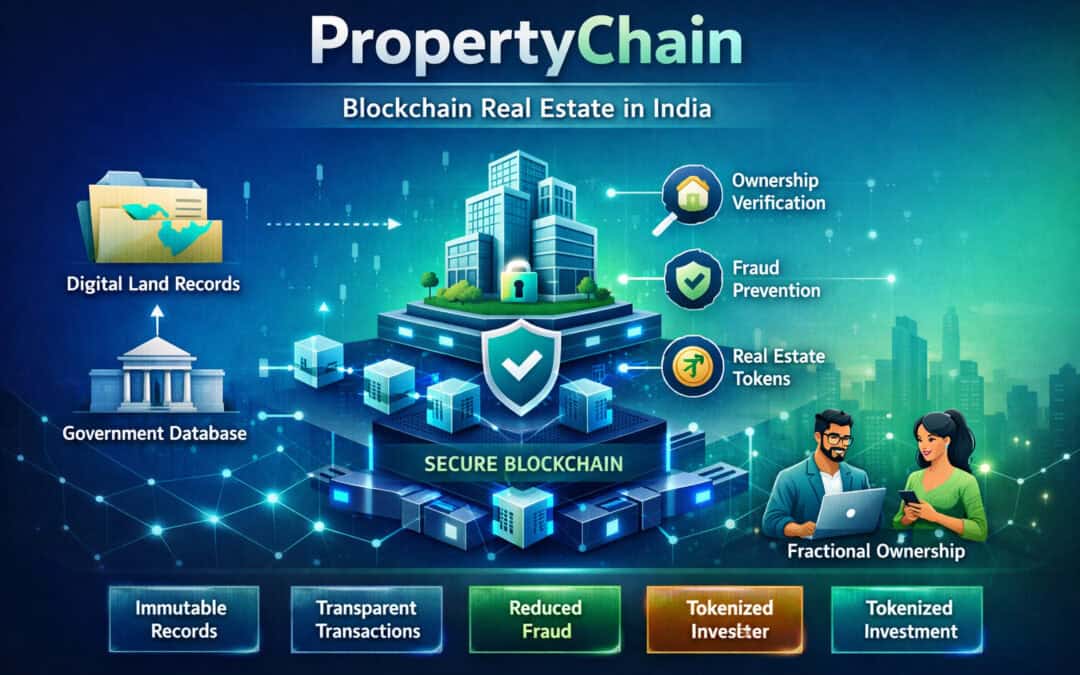
Blockchain is a decentralized digital ledger that records transactions in a secure and time-stamped format. When applied to real estate, it creates transparent ownership records that are extremely difficult to alter.
Because each entry is linked chronologically, the system ensures traceability. Therefore, transaction history becomes easier to verify and audit.
Blockchain and Land Records in India
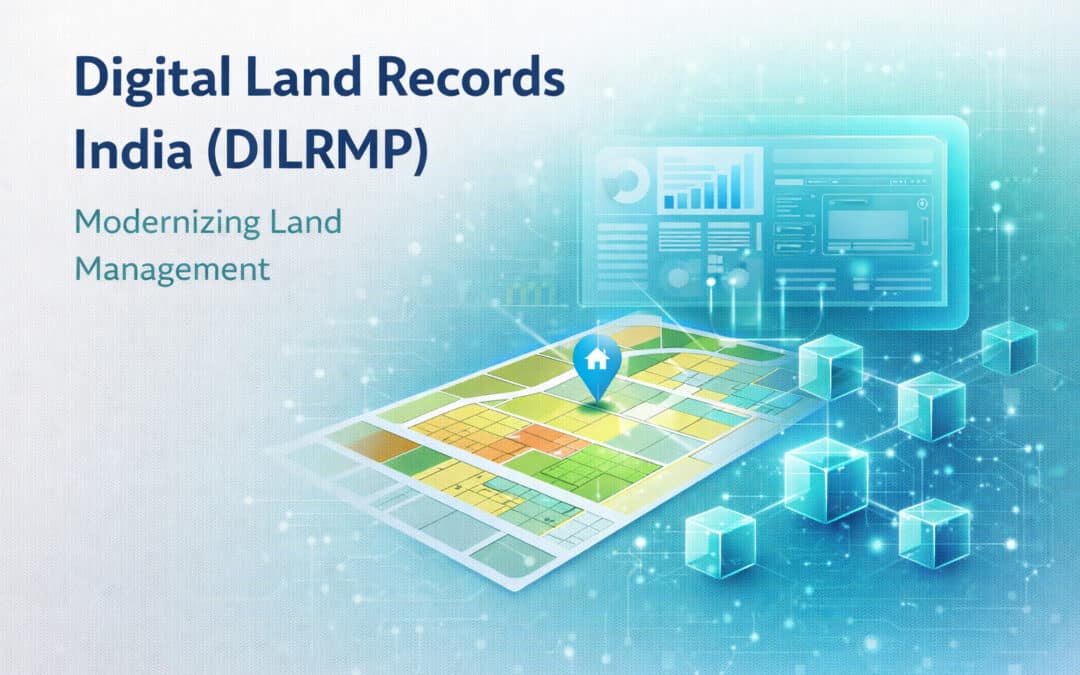
Land records in India have historically faced documentation gaps and manual verification delays. Consequently, ownership confirmation can sometimes become time-consuming. Blockchain-based systems aim to reduce these inefficiencies.
- Digitized ownership tracking
- Time-stamped transaction history
- Reduced duplication risk
- Improved verification transparency
Although nationwide implementation is still evolving, blockchain land records demonstrate the potential for stronger registry integrity.
Blockchain in Commercial Real Estate
Commercial real estate often involves multiple stakeholders, structured leases, and institutional investors. Therefore, transparency and reporting accuracy become critical.
Blockchain in commercial real estate can support:
- Digitized lease documentation
- Automated rental distributions
- Clear revenue allocation systems
- Faster reconciliation processes
As a result, operational clarity improves while reducing manual dependency.
The Role of Smart Contracts
Smart contracts are digital agreements that automatically execute when predefined conditions are met. In property transactions, they may trigger payments, confirm compliance, or record validated transfers.
However, smart contracts do not replace legal documentation. Instead, they operate alongside formal agreements to streamline certain processes.
Blockchain and Structured Property Participation
Blockchain infrastructure plays an important role in structured real estate participation models. It enables secure digital tracking of economic rights while maintaining defined governance frameworks.
For a deeper understanding of how structured property models operate in India, explore our guide on
Real Estate Tokenization in India.
Key Benefits of Blockchain in Real Estate
1. Transparency
Transaction records remain visible and verifiable, which strengthens investor confidence.
2. Security
Cryptographic validation and distributed networks reduce single-point vulnerabilities.
3. Efficiency
Automation reduces paperwork and improves transaction speed.
4. Record Integrity
Immutable entries help prevent unauthorized data modification.
Limitations and Realistic Expectations
While blockchain enhances documentation and transparency, it does not eliminate real estate market risk. Property values still depend on demand, location, and economic cycles.
Moreover, regulatory compliance remains essential. Technology improves systems, but legal governance continues to define ownership rights.
Therefore, investors should evaluate asset quality, documentation clarity, and long-term fundamentals before participating.
The Future of Blockchain in Indian Real Estate
India’s ongoing digital transformation and infrastructure expansion create favorable conditions for blockchain adoption. Over time, property registries, settlements, and structured participation systems may increasingly rely on digital ledgers.
Nevertheless, blockchain will likely complement existing frameworks rather than replace them entirely.
How Blockchain Connects to Modern Property Structures
Today, investors evaluating fractional ownership in India increasingly look for transparency, structured governance, and secure recordkeeping. Blockchain supports this evolution by maintaining tamper-resistant transaction logs while legal ownership continues to operate under established trust and property laws.
As a result, blockchain does not replace legal frameworks — instead, it strengthens documentation systems within structured models. In fact, many forms of structured property investment now integrate digital ledgers to track beneficial participation rights with clarity and auditability.
This technological foundation also enables the growth of tokenized real estate, where economic participation can be recorded digitally while governance remains clearly defined. Consequently, investors gain better visibility without compromising regulatory alignment.
Frequently Asked Questions
Is blockchain legally valid for property ownership in India?
Blockchain supports recordkeeping and transparency, but property ownership rights remain governed by Indian property and trust laws.
Does blockchain eliminate middlemen in real estate?
Blockchain reduces dependency on manual verification, but legal professionals and compliance systems remain essential.
Can blockchain improve land registry systems?
Yes, blockchain can improve transparency and reduce record duplication; however, implementation depends on regulatory frameworks.
Does blockchain reduce real estate investment risk?
No. Blockchain improves documentation integrity, but market risks still depend on demand, economic cycles, and location fundamentals.
Final Perspective
Blockchain in real estate strengthens record integrity, improves transparency, and supports structured investment models. However, technology alone does not determine returns. Real estate fundamentals, governance clarity, and market cycles remain central.
Transparency builds trust. Structure builds discipline. Markets determine performance.