

TL;DR: Land in Delhi has long been priced out of reach for most retail investors — a small plot in a decent colony can run into crores. Fractional ownership through an SPV structure changes that math, letting you participate starting from 1 sq. ft. of a property’s value or ₹20,000, whichever is higher, instead of needing the full purchase price.

Delhi Land Investment: Breaking the Capital Barrier Through Fractional Ownership
Everyone wants a piece of the capital. For some, it’s about status. For others, it’s stability or growth. Owning land in Delhi has always carried weight as an Indian asset.
What’s stopping most investors from buying land in Delhi?
Check current prices and you’ll see the problem fast. A small plot in a decent colony costs crores. Even developing zones on the outskirts demand substantial capital. For most professionals and small business owners, direct land investment in Delhi has been effectively out of reach. Fractional ownership through an SPV structure changes that calculation.
Why does Delhi land investment matter right now?
Delhi isn’t just a city. It functions as a major economic engine. Per coverage of the National Capital Territory, it remains one of India’s most productive regions. Demand never really softens here, since people consistently move to the capital for jobs, government work, and trade. That sustained demand underpins long-term value in this market:
- Infrastructure expansion — new expressways and metro lines open up previously inaccessible pockets of land.
- Scarcity — land is finite. As the population grows, available plots become scarcer and more valuable by definition.
- Relative stability — real estate in the capital has tended to hold value better than speculative tier-3 markets during downturns.
This combination of demand and limited supply is exactly why fractional ownership in Delhi is worth structuring carefully. See our fractional land investment guide for the underlying mechanics.
How does fractional ownership solve the entry-price problem?
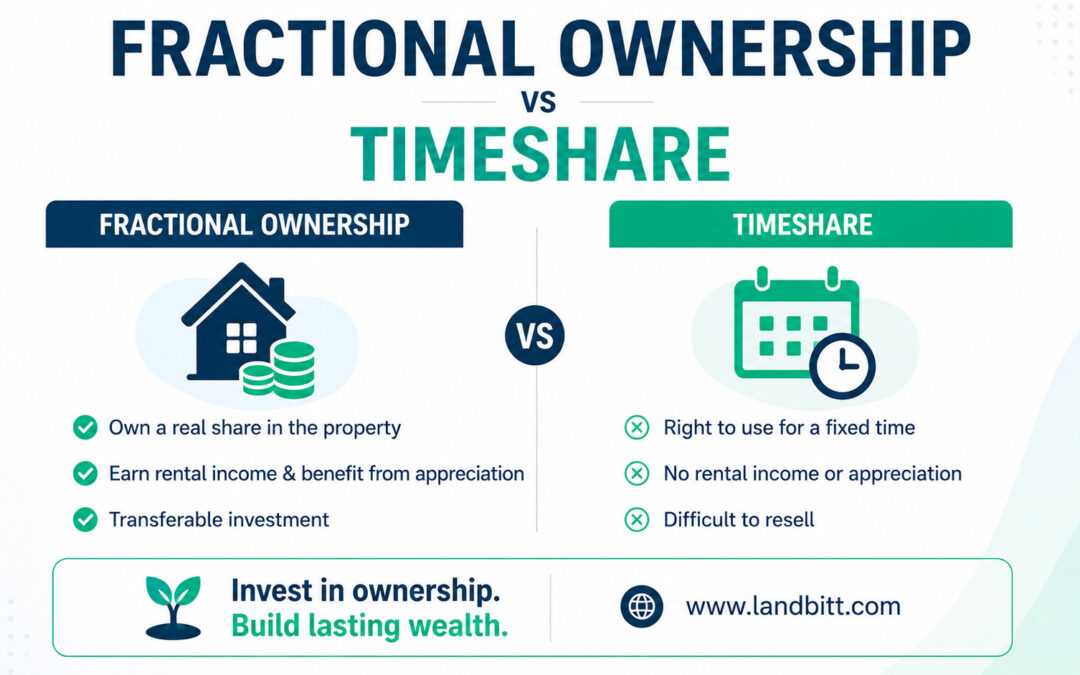
Take a premium commercial plot in Delhi valued at ₹10 crore. You can’t buy the whole asset. You can, however, participate in a defined fraction of it through an SPV structure. Instead of needing crores for Delhi land investment, you can start from 1 sq. ft. of the property’s value, or ₹20,000 — whichever is higher. You hold a proportional share of that land. If it appreciates by 10%, your share appreciates by the same 10%.
Is this actually safe?
Trust matters enormously in real estate. Landbitt’s structure relies on two specific, verifiable safeguards rather than asking you to trust the platform on faith.
The legal structure: SPV
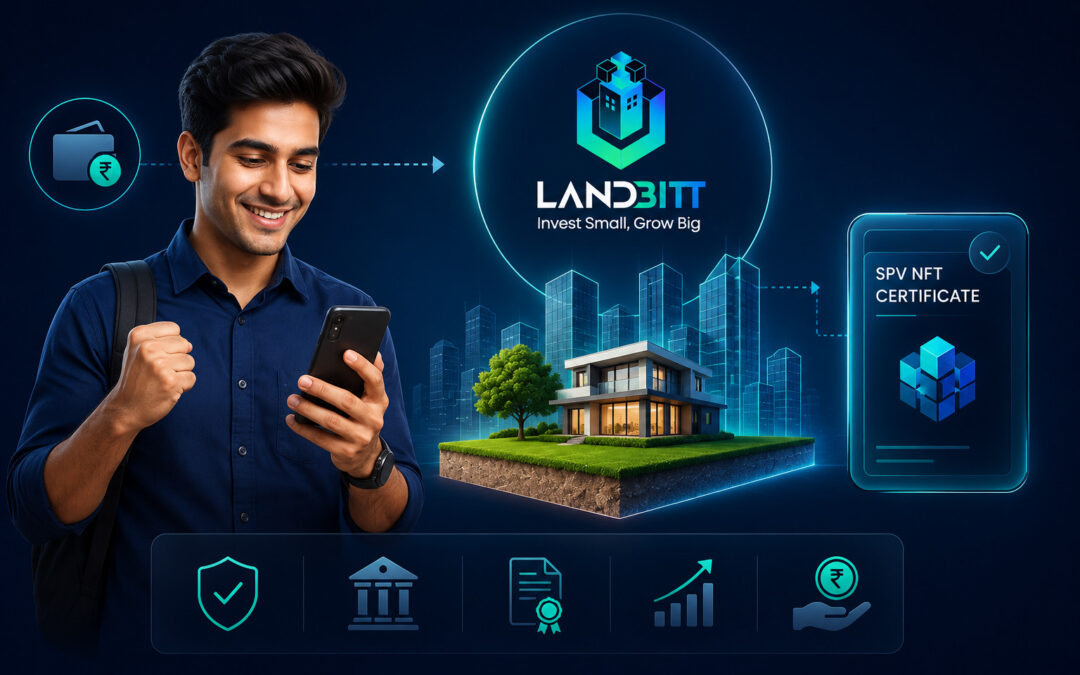
A Special Purpose Vehicle (SPV) is an entity created for one specific purpose: holding a particular asset, separate from any other business activity. Your ownership rights tie directly to that SPV’s defined structure. This keeps the asset’s legal standing distinct from informal arrangements and gives you a documented position, not just a digital receipt.
The technology layer: Polygon blockchain
Landbitt maintains ownership records on the Polygon blockchain, creating a permanent digital ledger. This proves your ownership transparently. No one can quietly alter the record, and no one can double-sell the same share.
Why shouldn’t you wait for prices to drop?
Real estate in major capital cities rarely gets cheaper over time. Waiting usually just means paying more later. Fractional ownership removes the need to accumulate significant wealth before you start participating. Create your free Landbitt account to view verified Delhi opportunities.
Frequently Asked Questions
What’s the minimum investment for Delhi land through Landbitt?
1 sq. ft. of the property’s value, or ₹20,000, whichever is higher. The exact figure depends on the specific listing’s valuation.
How is my investment legally protected?
Through an SPV structure that holds the underlying asset, combined with blockchain-based recordkeeping for ownership transparency.
Why does Delhi land remain attractive despite high prices?
Sustained demand from jobs, government activity, and trade, combined with genuinely limited land supply, tends to support long-term value even when entry prices are high.
Is this the same as buying land directly?
No. You hold a fractional, proportional interest in the property through the SPV structure, not an individually registered title to the land itself.