
TL;DR: Landbitt records and tracks investor participation on the Polygon network, a scalable, Ethereum-compatible blockchain known for low transaction costs and fast confirmations. The choice wasn’t about following a trend — it was about avoiding the unpredictable fee spikes that make some networks impractical for long-term, structured property investment. Blockchain here is infrastructure, not a guarantee of returns; legal ownership and governance still run entirely under Indian trust law.

Landbitt on Polygon Network: Why Infrastructure Choices Actually Matter
Every digital platform makes technology decisions that investors rarely see, but that quietly shape the entire experience. For Landbitt, one of the biggest was picking which blockchain network to build on. It wasn’t about chasing whatever was trending. Real estate participation means long holding periods, periodic updates, and structured transfers — all of which need a network that’s actually stable, not just exciting.
Why does the underlying blockchain network even matter?
Blockchain gives you tamper-resistant recordkeeping and transparent transaction logs, but not every network delivers that the same way. Some networks get hit with high fees and slow confirmations whenever traffic spikes. For structured real estate participation, predictable performance matters more than raw hype — investors want clarity, not volatility, in something as basic as confirming a transaction. For the full picture of how blockchain fits into property investment generally, see our guide on real estate tokenization in India.
What is Polygon, in plain terms?
Polygon is a scalable blockchain network built to improve transaction speed and cut costs while staying compatible with Ethereum infrastructure. It runs on a proof-of-stake system, which supports faster confirmations and lower fees than many base-layer networks that see fee spikes during busy periods. That’s a big part of why it’s become widely adopted for applications that need to handle real transaction volume. You can read more directly from Polygon’s own technical documentation if you want the deeper technical picture.
Why did Landbitt specifically choose this network?
A few concrete reasons, not just a general preference for “modern tech”:
Lower transaction costs. Real estate participation can involve multiple transactions over time, and high network fees would eat into that efficiency fast. Polygon’s lower gas costs help keep things affordable.
Faster confirmations. Nobody wants to sit around wondering if a transaction went through. Polygon’s quicker block times make the whole experience smoother.
Security through real network validation. A distributed validator network secures every transaction, which keeps records tamper-resistant and publicly verifiable — not just claimed to be secure.
Compatibility with Ethereum standards. Because Polygon supports the Ethereum Virtual Machine, it allows proper smart contract functionality without sacrificing performance.
What’s the actual problem with high-fee networks?
Plenty of blockchain networks suffer from unpredictable “gas fees” — the cost of processing a transaction — which can spike sharply during congestion. That might be tolerable for someone speculatively day-trading something, but it’s genuinely unsuitable for a structured property system that needs operational stability over years, not minutes. Real estate participation involves long holding periods, periodic updates, structured transfers, and compliance-linked transactions — and a network prone to cost volatility introduces friction at exactly the wrong moments. Landbitt needed efficiency first, not hype.
How does this actually connect to your investment?
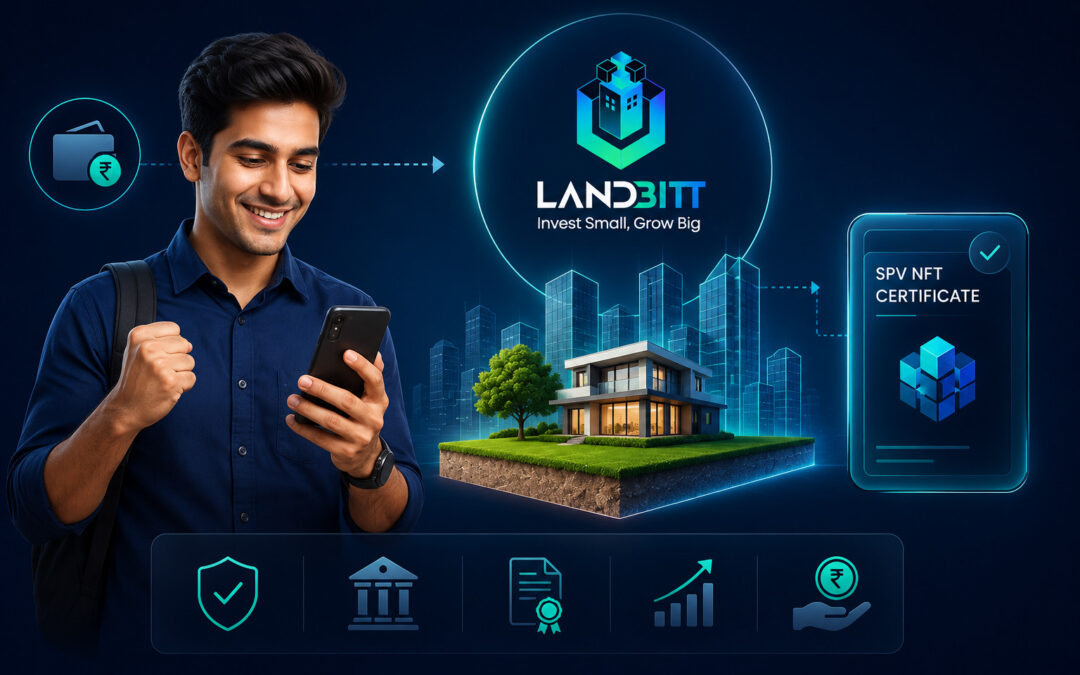
Landbitt uses Polygon to record and track digital representations of your beneficial participation rights within a structured, trust-based model. The blockchain layer supports transparency in those records. But — and this is the important part — your legal ownership and governance rights remain defined entirely under Indian trust law, not by the blockchain itself. If you’re exploring how fractional ownership in India works, think of blockchain here as a recordkeeping enhancement, not a legal replacement for anything.
What does “gas-efficient” actually mean for you as an investor?
In practical terms, it means you’re not exposed to the kind of volatile network fee spikes that can hit you during routine participation activities. It doesn’t mean transactions skip validation — they’re still fully verified. It just means the underlying infrastructure doesn’t pile unnecessary cost onto what should be a straightforward process. That keeps your focus on how the actual asset performs, rather than on technical overhead you shouldn’t have to think about.
Does using Polygon affect security at all?
No — if anything, the opposite. Polygon’s distributed validator model keeps transactions transparent and secure, and that doesn’t get traded away for the sake of efficiency. Security and cost-predictability aren’t actually in tension here; Landbitt’s infrastructure decisions treat both as non-negotiable rather than picking one over the other.
But blockchain security is only one layer. Real security in real estate technology operates on several levels at once:
- Blockchain transaction integrity
- Smart contract reliability
- Platform-level access controls
- KYC and AML compliance
Polygon strengthens the first layer. Platform governance, compliance policy, and the underlying trust structure handle the rest.
Does Polygon’s scalability actually matter long-term?
Yes, genuinely. As more investors participate, infrastructure has to handle growing transaction volume without buckling. Polygon’s architecture is built for high throughput without the congestion that smaller or less scalable networks run into. That’s what lets a platform grow without investors suddenly facing slower, more expensive transactions just because more people showed up.
Is blockchain itself the investment, or just the plumbing?
Just the plumbing — and it’s worth being completely clear about that. Blockchain technology here is infrastructure. It doesn’t guarantee investment returns, and it doesn’t replace market fundamentals. Real estate performance still depends on asset quality, location growth, and broader economic cycles — exactly as it always has. Blockchain enhances documentation integrity. It doesn’t alter how the market actually behaves.
Review the Legal Documents and AML & CFT Policy directly if you want to understand the legal and compliance framework that actually governs your investment, rather than just the technology underneath it.
Where does this go from here?
As India’s digital infrastructure keeps maturing, blockchain-backed record systems will likely play a bigger supporting role alongside traditional property structures. Polygon’s scalability puts it in a solid position for that kind of growth. But infrastructure is only one piece of a disciplined real estate strategy — the asset still has to be the right asset, regardless of which network records the transaction.
Frequently Asked Questions
What is Polygon, and why does Landbitt use it?
Polygon is a scalable, Ethereum-compatible blockchain known for low fees and fast confirmations. Landbitt uses it to record investor participation efficiently, without the cost volatility some other networks experience.
Does using Polygon mean my investment is less secure?
No. Polygon uses a distributed validator network for security, and Landbitt’s actual legal protections come from its trust-based SPV structure and compliance processes — the blockchain layer adds transparency on top of that, not instead of it.
Does “gas-efficient” mean transactions skip verification?
No. Every transaction is still fully validated. It just means you’re not exposed to unpredictable fee spikes during normal participation activity.
Does blockchain infrastructure guarantee returns?
No. Blockchain is infrastructure, not an investment thesis on its own. Returns still depend entirely on the underlying asset’s performance, location, and market conditions.
Is my legal ownership defined by the blockchain record?
No. Legal ownership and governance operate under Indian trust law. The blockchain record supports transparency, but it isn’t itself the source of your legal rights.