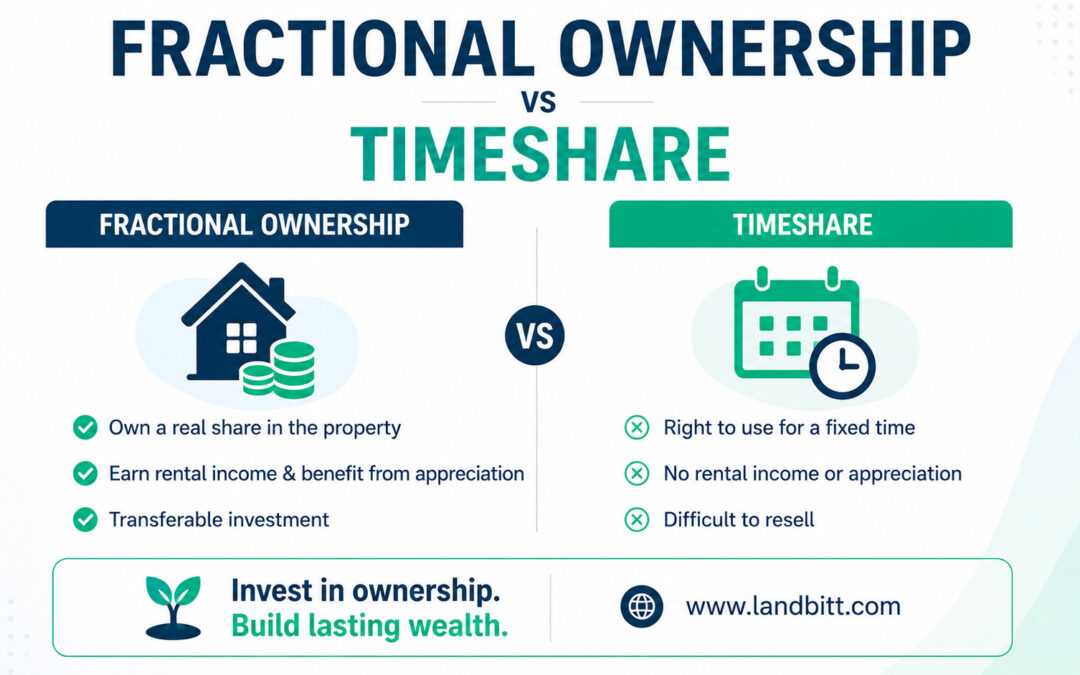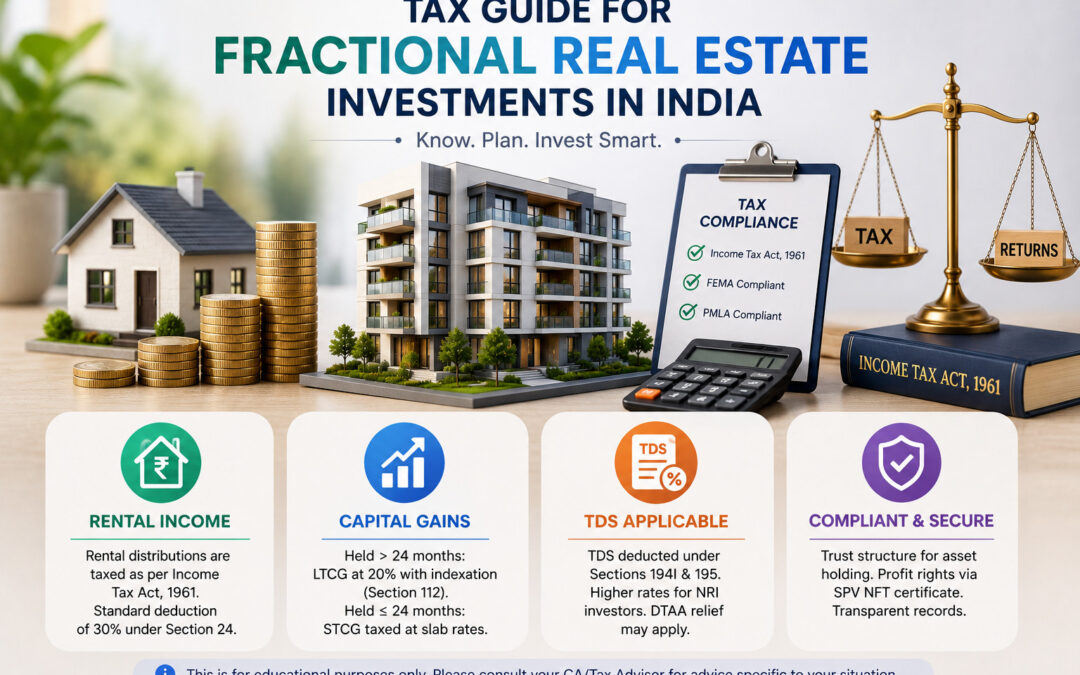

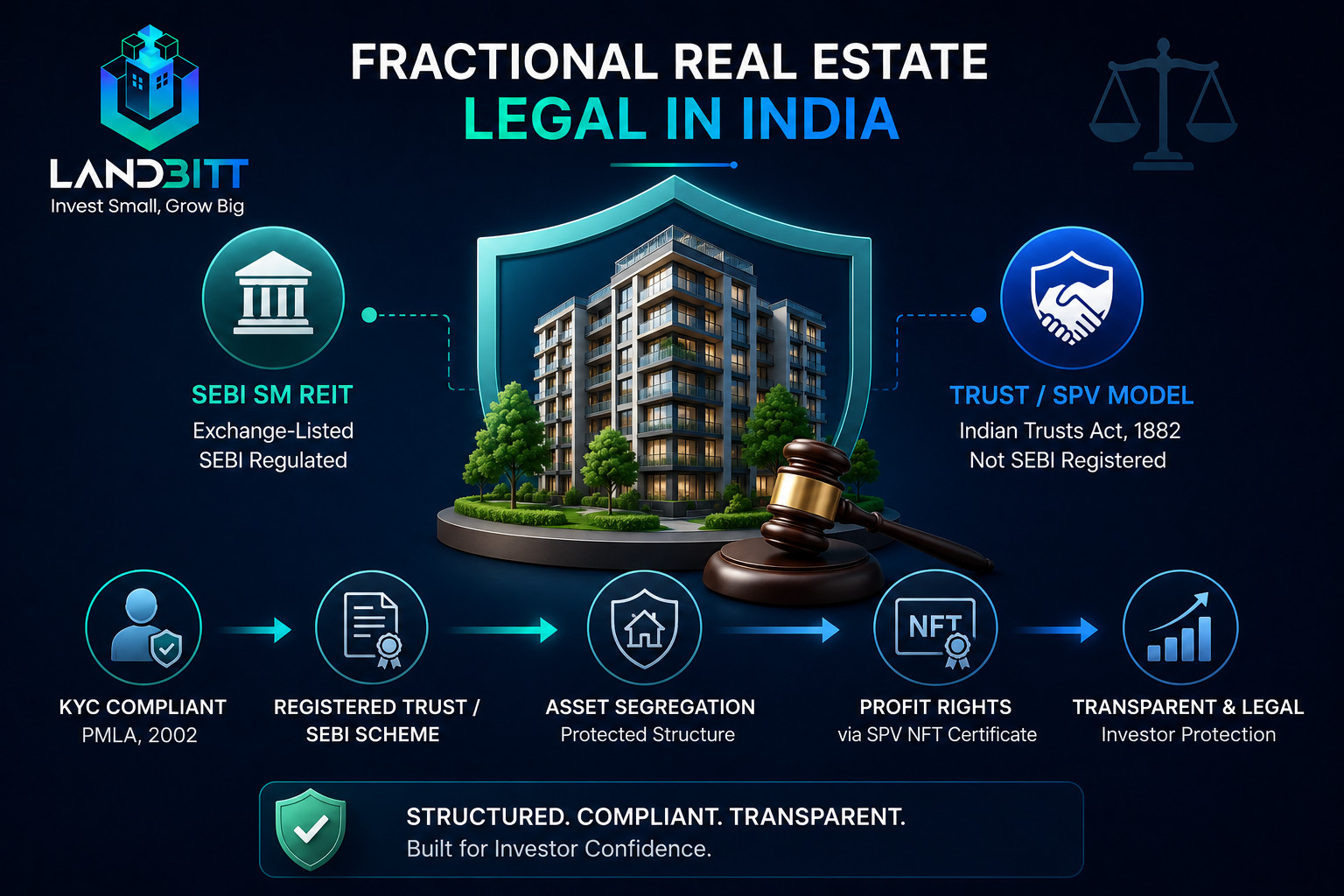
TL;DR: Fractional real estate investment in India is legal. Two frameworks govern it: the SEBI SM REIT framework (exchange-listed, SEBI-regulated) and the Trust/SPV model (governed by the Indian Trusts Act, 1882). Neither framework prohibits fractional investment. However, the legality of a specific investment depends on whether the platform uses a properly structured legal vehicle, complies with PMLA, 2002, and issues the correct documentation to investors.

Is Fractional Real Estate Legal in India? The Full Legal Picture (2026)
Many investors ask whether fractional real estate is legal in India before committing capital. The answer is yes — fractional real estate investment operates within a defined legal framework in India. However, the more precise question is: is the specific platform and structure you are considering legally sound? Consequently, this guide walks through the laws that apply, the structures they govern, and the verification steps that confirm legality.
Understand the legal structure — then invest with confidence.
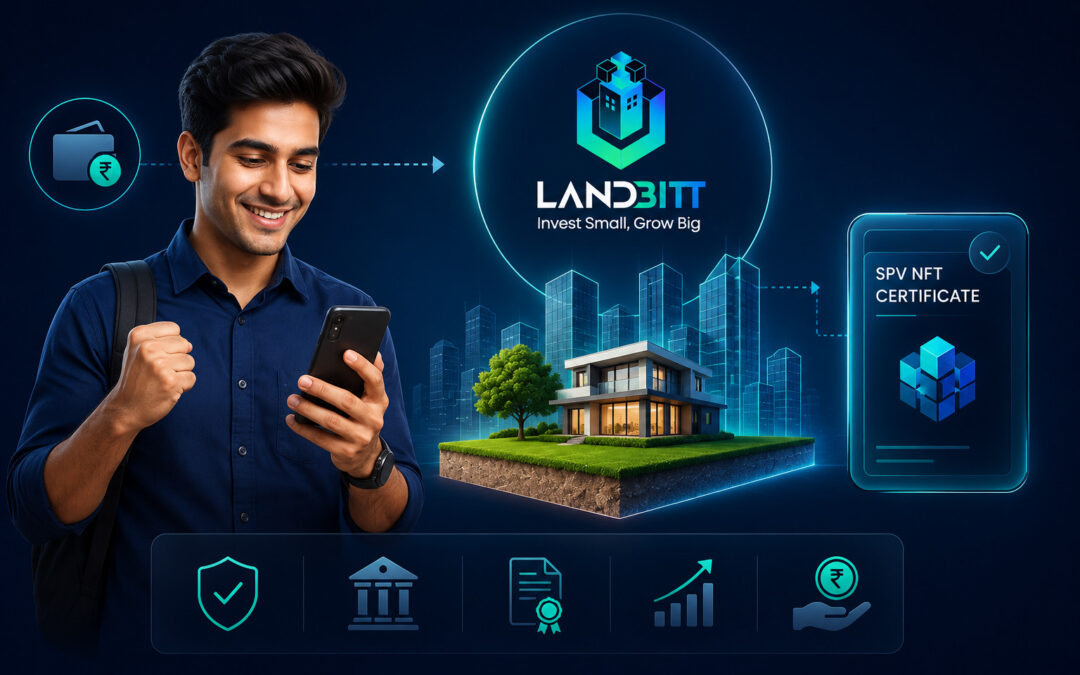
Landbitt structures every investment through a registered Trust under the Indian Trusts Act, 1882. An independent Trustee holds registered title; you hold documented profit rights via an SPV NFT certificate — not a company share, not a property deed. KYC-verified, legally constituted, starting from 1 sq. ft. or ₹20,000.
Quick Facts
- Legal status: Fractional real estate investment is legal in India under both the SEBI SM REIT framework and the Trust/SPV model.
- Two governing frameworks: SEBI (Real Estate Investment Trusts) Regulations, 2014 (amended 2023) for SM REITs; Indian Trusts Act, 1882 for Trust/SPV platforms.
- Key compliance laws: PMLA, 2002 (KYC/AML), FEMA, 1999 (for NRI investors), Income Tax Act, 1961 (taxation).
- What makes a platform legal: A proper legal vehicle (registered Trust or SEBI-registered scheme), independent asset holding, documented investor rights, and KYC compliance.
- Evidence Act note: Platforms using blockchain-based certificates must ensure records comply with Indian Evidence Act, 1872, Section 65B for enforceability as electronic records.
The Two Legal Frameworks That Govern Fractional Real Estate in India
Framework 1: SEBI SM REIT (Exchange-Listed)
SEBI’s 2023 amendment to the Real Estate Investment Trusts Regulations, 2014 created the SM REIT category. Specifically, platforms that register with SEBI as an Investment Manager and list their scheme units on a recognised stock exchange (NSE or BSE) operate under this framework. Moreover, SEBI mandates ongoing disclosures, valuations, and governance requirements. Consequently, SM REIT investors receive exchange-listed securities governed by SEBI oversight. This framework is the clearest form of regulated fractional real estate investment in India.
Framework 2: Trust/SPV Model (Indian Trusts Act, 1882)
The second framework uses a registered Trust or Special Purpose Vehicle governed by the Indian Trusts Act, 1882. Under this model, an independent Trustee holds registered title to the property. Investors receive profit rights via an SPV NFT certificate — a contractual instrument that records the investor’s entitlement to profit distributions from the Trust. Furthermore, these platforms must comply with PMLA, 2002 for KYC and AML requirements. Importantly, this framework does not require SEBI registration and does not involve exchange-listed securities. However, it remains fully lawful under Indian Trust law.
Laws That Apply to Fractional Real Estate Platforms in India
Indian Trusts Act, 1882
The Indian Trusts Act, 1882 governs the creation, registration, and management of Trusts in India. Specifically, Section 3 defines a Trust as an obligation annexed to the ownership of property, arising from confidence reposed in the owner for the benefit of beneficiaries. Consequently, Trust/SPV platforms that create registered Trusts with independent Trustees operate under this well-established legal framework. The Act specifies the Trustee’s fiduciary duties, beneficiary rights, and the conditions under which a Trust can be modified or dissolved.
SEBI (Real Estate Investment Trusts) Regulations, 2014 (Amended 2023)
SEBI’s regulations govern SM REIT platforms specifically. Moreover, these regulations set out registration requirements, permissible asset classes, disclosure standards, and investor rights. Platforms operating under this framework must register with SEBI and comply with its ongoing requirements. Consequently, SM REIT investors benefit from the protection that comes with SEBI oversight.
Prevention of Money Laundering Act, 2002 (PMLA)
PMLA, 2002 requires all fractional real estate platforms — both SM REIT and Trust/SPV — to conduct customer due diligence (KYC) and maintain anti-money laundering (AML) policies. Specifically, platforms dealing with high-value property transactions must verify investor identity, conduct ongoing monitoring, and file Suspicious Transaction Reports (STRs) with the Financial Intelligence Unit (FIU). Therefore, any platform that operates without KYC compliance does so in violation of PMLA.
Indian Evidence Act, 1872 — Section 65B
Section 65B of the Indian Evidence Act, 1872 governs the admissibility of electronic records in Indian courts. Specifically, for a blockchain-based NFT certificate to be legally enforceable as evidence, it must meet Section 65B’s conditions — including being generated by a computer during its regular functioning and being accompanied by the required certificate. Consequently, platforms that issue NFT certificates as investor instruments must structure these records to comply with Section 65B.
What Makes a Fractional Real Estate Investment Legally Sound
Proper Legal Vehicle
The investment must flow through a properly constituted legal vehicle. For Trust/SPV platforms, this means a registered Trust with an independent Trustee who holds registered title to the property. For SM REIT platforms, this means a SEBI-registered Investment Manager and exchange-listed scheme. Consequently, investors should request the Trust Deed or SM REIT offer document and verify the legal vehicle’s registration before investing.
Asset Segregation
The underlying property must sit in a legal vehicle that is separate from the platform company’s operating balance sheet. Specifically, if the property appears on the platform company’s balance sheet, it is not properly segregated and investor assets are exposed to platform liabilities. Therefore, confirming asset segregation is a fundamental legality check.
KYC Compliance
The platform must complete KYC verification in accordance with PMLA, 2002. Importantly, a platform that allows investment without proper KYC is operating in breach of Indian law. Consequently, investors should verify that the platform conducts KYC using government-issued ID, address proof, and appropriate financial documentation.
Documented Investor Rights
The investor’s rights must be documented in a legally binding instrument. For Trust/SPV investments, this is the Trust Deed and the SPV NFT certificate. For SM REIT investments, this is the unit certificate and scheme offer document. Furthermore, these documents must clearly specify the investor’s rights to distributions, voting (if any), and exit mechanisms.
Compliance Red Flags That Signal Legal Risk
No Registered Trust Deed or Offer Document
Platforms that cannot provide a registered Trust Deed or SEBI-registered offer document cannot demonstrate the legal basis of the investment vehicle. Consequently, investment in such platforms carries significant legal uncertainty.
Property on Platform’s Balance Sheet
If the property appears on the platform company’s balance sheet rather than in a separate Trust or registered scheme, the asset segregation requirement is not met. Therefore, this is a fundamental legal risk for investors.
No KYC Process
Platforms that operate without KYC verification violate PMLA, 2002. Moreover, investors who invest without completing KYC may face legal complications when seeking to repatriate funds or claim tax deductions.
How Landbitt Structures Legally Compliant Investments
Registered Trust with Independent Trustee
Landbitt structures each investment through a registered Trust under the Indian Trusts Act, 1882. An independent Trustee holds registered title to each asset, ensuring that the property is legally segregated from Landbitt’s operating company. Investors receive profit rights via an SPV NFT certificate that documents their entitlement to profit distributions under the Trust.
PMLA-Compliant KYC
Landbitt conducts KYC verification for all investors in accordance with PMLA, 2002. Furthermore, the platform maintains AML policies and procedures as required by Indian law. Consequently, all investor accounts are verified before investment proceeds.
Section 65B-Compliant Electronic Records
Landbitt structures NFT certificates to comply with Indian Evidence Act, 1872, Section 65B requirements. Therefore, the blockchain-based records that document investor profit rights are structured to be legally enforceable as electronic records in Indian courts.
Internal Links for Further Research
For a step-by-step checklist of how to verify a platform before investing, read our Platform Verification Checklist. To understand the Trust/SPV structure in detail, see our guide on the Indian Trusts Act, 1882. Additionally, our article on SPV in real estate explained covers the specific legal mechanics of the SPV structure. For SEBI’s current SM REIT registration list, refer to SEBI’s official website.
Frequently Asked Questions
Is fractional real estate investment legal in India?
Yes. Fractional real estate investment is legal in India under two frameworks: the SEBI SM REIT framework (exchange-listed, governed by SEBI REIT Regulations 2014, amended 2023) and the Trust/SPV model (governed by the Indian Trusts Act, 1882). Both are lawful investment structures. The legality of a specific investment depends on whether the platform uses a properly structured legal vehicle and complies with applicable laws.
Does SEBI regulate all fractional real estate platforms in India?
No. SEBI regulates platforms that register as SM REIT Investment Managers and list their scheme units on stock exchanges. Trust/SPV platforms operating under the Indian Trusts Act, 1882 are not SEBI-regulated under the SM REIT framework. However, they are governed by the Indian Trusts Act, 1882, PMLA, 2002, and other applicable laws.
What law governs Trust/SPV fractional real estate platforms?
Trust/SPV fractional platforms operate under the Indian Trusts Act, 1882. Additionally, they must comply with PMLA, 2002 for KYC and AML requirements, and the Income Tax Act, 1961 for tax deductions at source. For platforms using blockchain-based investor certificates, the Indian Evidence Act, 1872, Section 65B also applies.
What documentation proves a fractional investment is legal?
For Trust/SPV investments: a registered Trust Deed confirming the Trust’s existence and the Trustee’s fiduciary role, plus an SPV NFT certificate recording the investor’s profit rights. For SM REIT investments: the SEBI registration confirmation and the scheme offer document. Furthermore, KYC completion certificates confirm that the platform has complied with PMLA, 2002.
Is Landbitt’s fractional investment structure legal in India?
Yes. Landbitt structures investments through registered Trusts under the Indian Trusts Act, 1882 with independent Trustees holding registered title to each asset. The platform conducts PMLA-compliant KYC and issues SPV NFT certificates structured to comply with Indian Evidence Act, 1872, Section 65B. Consequently, the investment structure is legally constituted under applicable Indian laws.
Ready to invest in a legally structured fractional real estate platform?
Landbitt uses a registered Trust/SPV structure under the Indian Trusts Act, 1882. Independent Trustee holds the asset; you hold profit rights — not registered title, not company equity. PMLA-compliant KYC. Starting from 1 sq. ft. or ₹20,000.