
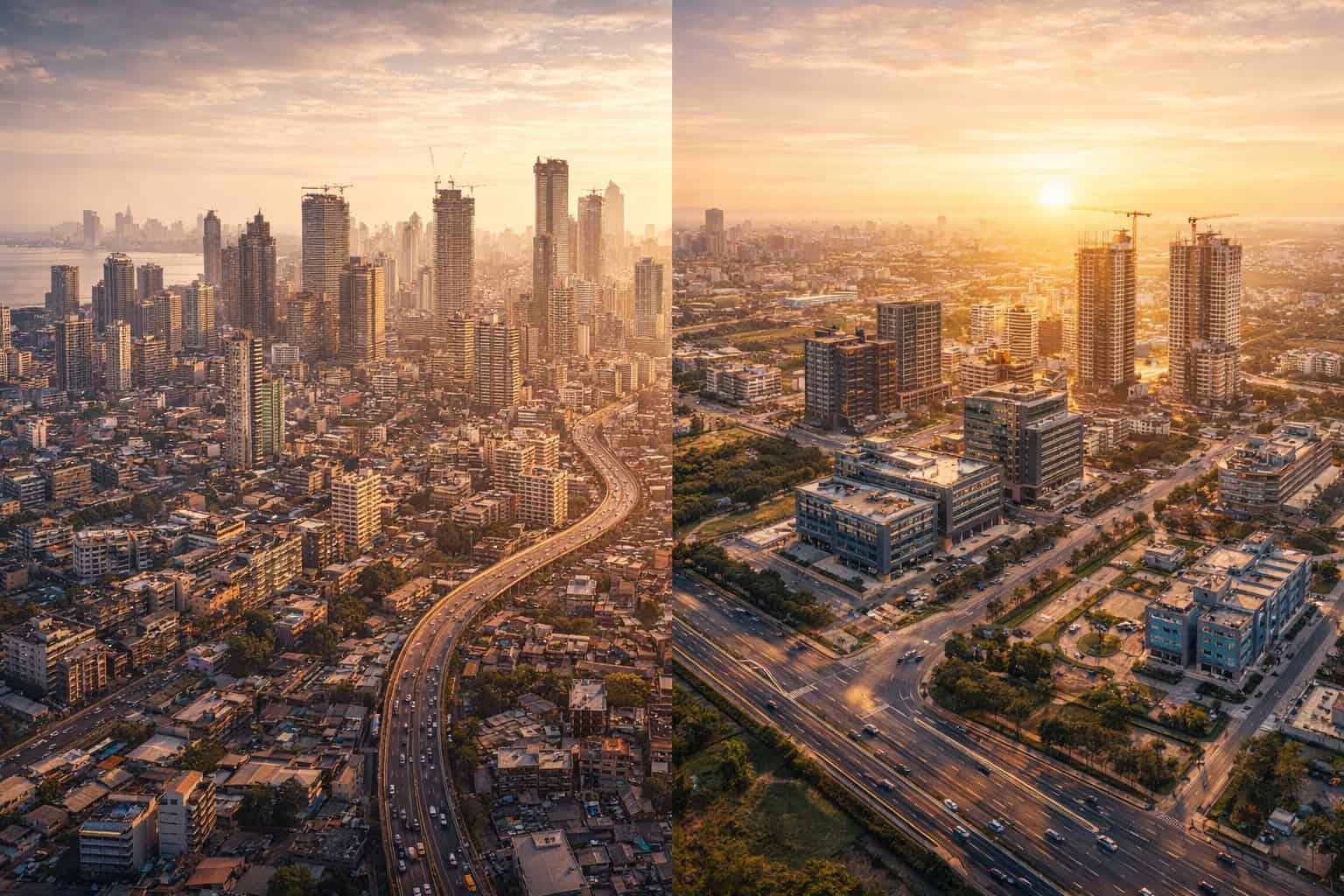
TL;DR: Real estate investment in Tier 2 cities India has drawn genuine interest. Infrastructure development, lower entry costs compared to saturated metro markets, and proximity to growth hubs like Dholera and GIFT City all play a role. None of that supports specific return predictions or “buy before it explodes” framing. Both cross into the kind of confident market-timing advice no one can responsibly give. The honest case for Tier 2 cities rests on real, verifiable factors, not urgency.

Real Estate Investment in Tier 2 Cities India: What’s Actually Driving Interest
For years, real estate investment in Tier 2 cities India barely registered against the pull of Mumbai, Delhi, and Bangalore. That’s genuinely shifting, for reasons worth examining carefully rather than treating as a guaranteed opportunity. Metro markets have gotten expensive enough that entry barriers now matter more than they used to. Tier 2 cities have picked up real infrastructure investment in the meantime. Both of those facts are worth understanding on their own terms. Neither one is a claim about how much money you’ll make from acting on them.
What’s actually changed about the established metro markets?
Property prices in the most established metro corridors have climbed substantially. Parts of South Mumbai or Central Delhi, for example, now require very large capital just to enter the market. Rental yields in many of these areas have settled into a relatively modest range too. That’s not a defect in metro real estate; it’s a natural consequence of decades of appreciation. It does mean the capital efficiency of a metro investment looks different today than it did when entry prices were lower.
What’s actually driving interest in Tier 2 cities specifically?
A few concrete, verifiable factors, rather than a vague “it’s the next big thing” narrative.
Real infrastructure investment. Government initiatives like the Smart Cities Mission, new expressway projects including the Delhi-Mumbai Expressway, and dedicated freight corridors are genuinely passing through several Tier 2 cities. Infrastructure tends to support land value in the areas it touches. Execution timelines matter as much as the announcement itself, though.
Proximity to major growth hubs. Projects like GIFT City and Dholera SIR have drawn real government and private investment. GIFT City is India’s first operational International Financial Services Centre, located near Ahmedabad. Dholera SIR is a planned industrial region. Worth being precise: GIFT City is a financial services hub, not itself a “smart city” in the planning sense. That distinction matters if you’re evaluating the specific claims behind any investment near it.
Lower entry costs relative to metros. Land in Tier 2 cities is generally more affordable than equivalent metro real estate. A given amount of capital buys more exposure to a specific local market as a result. Lower current prices don’t guarantee faster or larger appreciation, though. That still depends on actual demand and infrastructure execution playing out over time, not on the starting price alone.
Why is “buy before it explodes” the wrong way to think about this?
Because no one, including any platform, can responsibly tell you when or whether a specific area’s prices will rise sharply. Any specific CAGR percentage attached to “Tier 2 corridors” generally should be treated with real skepticism, unless it’s tied to a specific, named asset with actual track record behind it. Real infrastructure catalysts are a legitimate reason to research an area. They are not a basis for a confident price prediction. Treating them as one is exactly the kind of urgency-driven framing that leads to poor decisions.
How does structured, fractional access actually work for Tier 2 city land?
Verifying land remotely in an unfamiliar city is a genuine, practical challenge. Confirming municipal approvals, checking for encroachment, and managing the property without a local presence all take real effort. Structured platforms can reduce that specific friction by handling due diligence and documentation. They also let investors hold a proportional, beneficial interest in a verified parcel through a Trust or SPV structure, rather than needing to manage an entire plot directly. For the underlying mechanics, see our guide on real estate tokenization in India.
What are the real risks specific to Tier 2 city investment?
- Execution risk — announced infrastructure projects can run behind schedule, and a corridor’s growth story depends on actual delivery, not the announcement
- Liquidity risk — Tier 2 markets are generally less liquid than established metro markets, which matters if you need to exit on a specific timeline
- Verification risk — documentation and title-clarity standards can vary significantly by specific city and region
- Demand uncertainty — not every Tier 2 city or corridor will see the same growth trajectory, and assuming uniform “Tier 2 boom” performance across different cities is a real mistake
So how should an investor actually approach this?
Treat “Tier 2 cities are getting infrastructure investment” as a genuine, research-worthy starting point, not a conclusion. Look at the specific city, the specific corridor, and the specific parcel’s documentation and proximity to confirmed projects. Don’t assume the broader Tier 2 narrative applies equally everywhere.
Frequently Asked Questions
Q: Is real estate investment in Tier 2 cities in India a good idea?
A: It can be, for investors who research the specific city and corridor carefully, given genuine infrastructure catalysts in several areas. It isn’t a guaranteed outcome, and claims of specific high returns should be treated with real skepticism.
Q: Which Tier 2 cities are getting the most infrastructure attention?
A: Cities like Ahmedabad, Surat, Jaipur, and Indore have seen real infrastructure and economic-hub activity, though the specific opportunity still depends on the exact location and project within each city.
Q: Can I invest in Tier 2 city land without living there?
A: Yes, particularly through structured platforms that handle local verification, due diligence, and documentation on an investor’s behalf.
Q: Do Tier 2 cities guarantee higher returns than metros?
A: No. Lower entry prices don’t guarantee faster or larger appreciation; that still depends on actual demand and infrastructure execution in the specific area.
Q: What’s the biggest risk in Tier 2 city land investment?
A: Execution risk, infrastructure projects running behind announced timelines, combined with the documentation and liquidity challenges that come with less-established markets.