
TL;DR: Fractional ownership and real estate tokenization both let you own a share of a property instead of buying it outright, but they’re not always two separate things — on many Indian platforms, tokenization is simply the digital infrastructure that fractional ownership runs on. The real question isn’t “which model,” but how a specific platform structures the legal ownership (Trust or SPV), and how it uses technology on top of that structure.

Real Estate Tokenization vs Fractional Ownership in India
Real estate investment in India used to mean one thing: buying an entire property outright, with all the capital and paperwork that involves. That’s changed. Two terms come up constantly in this new landscape — real estate tokenization and fractional ownership — and people often talk about them as if they’re competing alternatives. In practice, the relationship is closer than that, and understanding how is more useful than picking a side.
Are tokenization and fractional ownership actually different things?
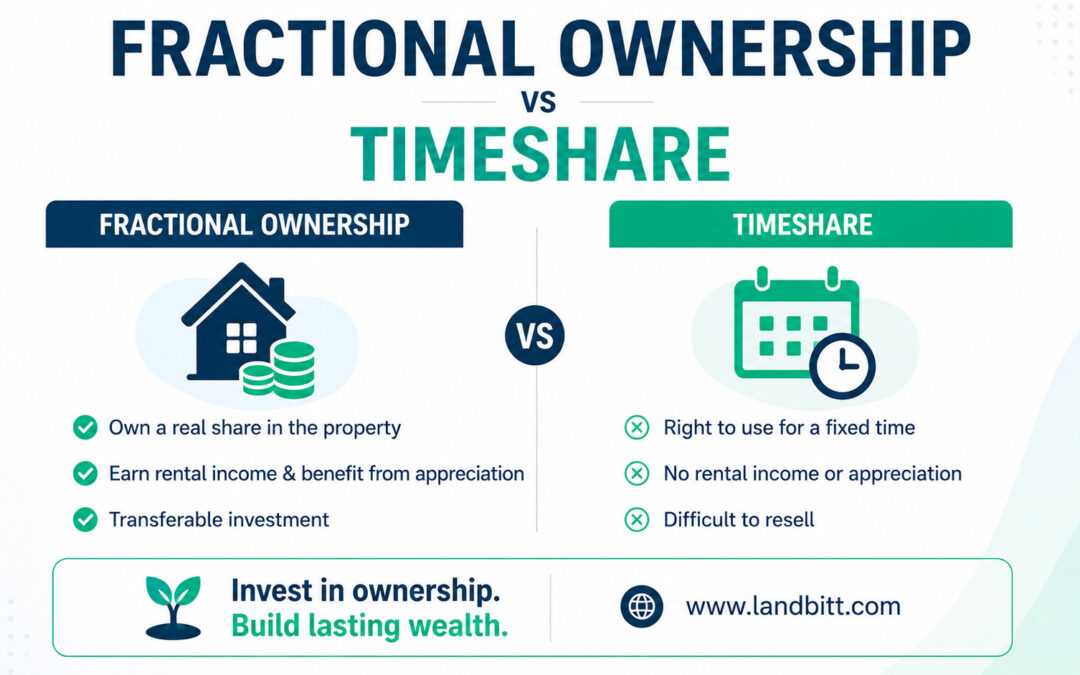
Not always, and that’s the part most explainers skip. Fractional ownership describes the outcome: multiple investors holding a proportional economic interest in one property instead of one buyer owning the whole thing. Tokenization describes a mechanism: representing that ownership digitally, on a blockchain, instead of through paper-only records.
On many Indian platforms, including Landbitt, you get both at once — fractional ownership achieved through tokenized digital certificates. So the practical comparison usually isn’t “tokenization vs. fractional ownership” as two rival models. It’s closer to comparing a car’s engine to the car itself.
How does fractional ownership actually work?
Multiple investors jointly hold an economic interest in a property instead of one person buying it outright. A typical structure:
- A trust or SPV (Special Purpose Vehicle) is formed to hold the property
- Investors hold a beneficial interest in that trust, proportional to what they invested
- Rental income, if any, gets distributed proportionally
- When the property sells, proceeds get distributed the same way
For the full mechanics specific to land, see our fractional ownership in India guide.
How does the tokenization layer fit into that?
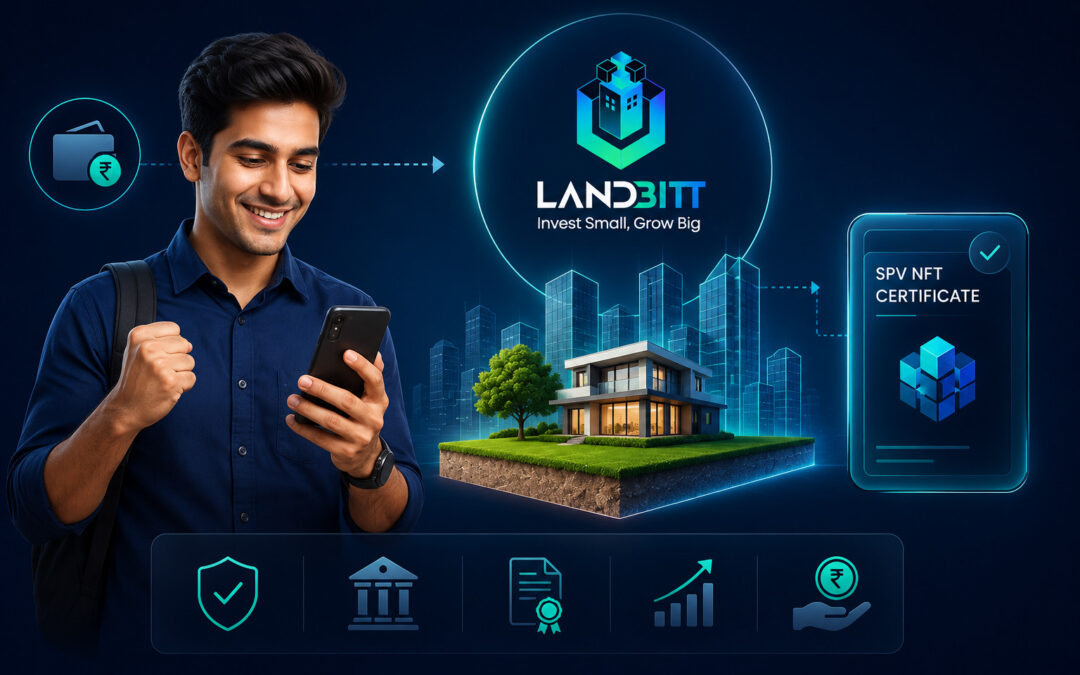
Tokenization is what makes the record of your ownership digital, traceable, and harder to dispute. Instead of (or alongside) a paper certificate, you get a digital ownership unit recorded on a blockchain, representing your beneficial interest in the underlying trust or SPV.
This is where the earlier point matters: the token doesn’t replace the legal structure. The SPV still holds the property. The token is a digital representation of your stake in that structure — not a separate, independent claim that exists apart from it. For the full picture, see our guide on real estate tokenization in India.
What does this actually mean for you as an investor?
Practically, it means the question worth asking isn’t “should I choose tokenization or fractional ownership” — it’s “how does this specific platform structure things, and does the technology layer add real transparency or just marketing language.” A few things worth checking on any platform:
- Is the underlying legal structure a properly documented Trust or SPV?
- Does the digital certificate clearly represent a beneficial interest, not vague “ownership” language that overstates what you’re actually getting?
- Is the blockchain layer adding genuine traceability, or is it cosmetic?
What are the genuine benefits of combining both?
Lower entry barrier. Fractional structuring means you don’t need the full property price to participate.
Stronger record integrity. Blockchain-based tracking makes ownership records harder to quietly alter or dispute compared to paper-only systems.
Clearer governance. A properly documented SPV or trust defines investor rights upfront, rather than leaving them to informal arrangement.
What are the real risks either way?
- Liquidity risk — neither model makes real estate instantly tradable; exit still depends on finding a buyer.
- Regulatory evolution — frameworks for digital ownership representation in India are still developing.
- Platform risk — your protection depends on the specific platform’s legal documentation and operational integrity, regardless of how much “blockchain” language it uses.
Technology improves transparency. It doesn’t replace the need to actually read the legal documents behind an investment.
Frequently Asked Questions
Is tokenization different from fractional ownership?
They’re related rather than opposed — fractional ownership describes shared economic interest in a property; tokenization describes representing that interest digitally on a blockchain. Many platforms combine both.
Do I own the property directly with either model?
No. In both cases, you typically hold a beneficial interest in a trust or SPV that holds the property — not a directly registered title.
Is this legal in India?
Yes, when structured through a properly documented trust or SPV under existing Indian law. There’s no dedicated “tokenization law” yet — platforms operate within established trust and contract law frameworks.
Which one should I choose?
This isn’t usually a real choice between two separate things — it’s worth evaluating the platform’s actual legal structure and how genuinely useful its technology layer is, rather than picking a label.