
TL;DR: Investing in land in India starts with defining your goal, verifying location and legal records, then choosing between direct ownership, fractional ownership, or SIP-based investing depending on your capital and risk tolerance. Beginners benefit most from structured models — fractional ownership or systematic investing — since these lower the entry barrier and reduce the pressure of getting market timing exactly right. No method removes legal or market risk entirely; due diligence still matters at every step.

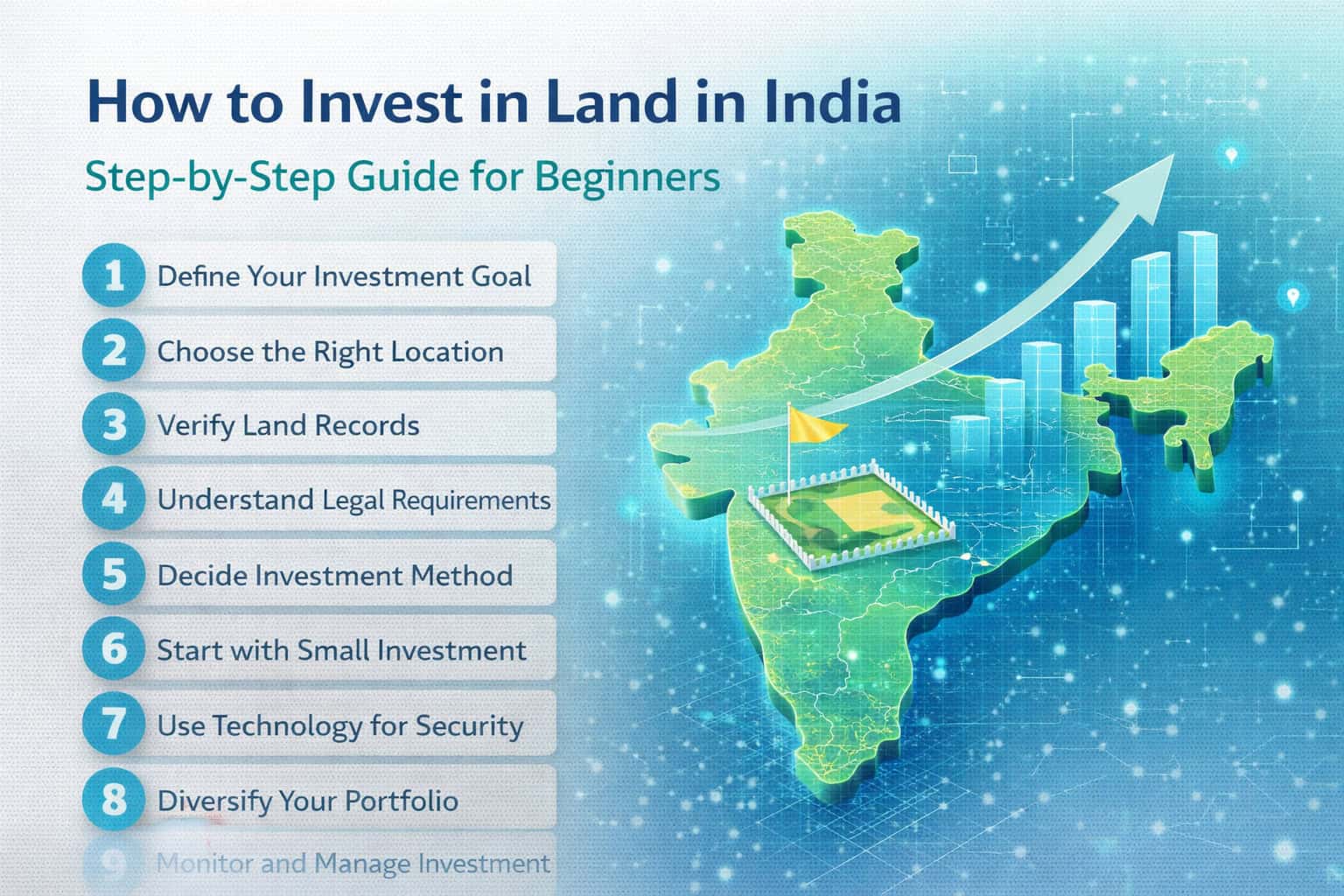
How to Invest in Land in India: Step-by-Step Guide for Beginners
Land has long stood out as one of India’s most trusted long-term investments. However, many first-time investors struggle with the same questions: what’s the right process, which legal checks actually matter, and which of today’s investment models — traditional or digital — makes sense for them. This guide walks through both the classic path and the newer options powered by blockchain and fractional ownership, so you can decide with a clear picture of what each one actually involves.
Step 1: Define your investment goal
Before you invest, get specific about your objective. Are you aiming for long-term appreciation? Future construction? Portfolio diversification? Your answer shapes everything downstream — your budget, your preferred location, your holding period, and how much liquidity you’ll need along the way. Because raw land typically doesn’t generate rental income, it tends to suit investors who can hold for several years rather than look for short-term cash flow.
Step 2: Choose the right location
Location remains the single most important factor in land investment — more important than any short-term discount. High-growth areas like planned smart cities and infrastructure corridors tend to offer stronger appreciation potential than unplanned zones. Emerging regions such as the Dholera SIR investment corridor have drawn significant investor attention for exactly this reason — infrastructure execution, not hype, is what drives long-term value here.
Step 3: Verify land records
Verification protects you against fraud and legal disputes down the line. Always check ownership history, title clarity, and government records before committing any capital. Digital systems are gradually improving transparency here — see our guide on blockchain in real estate for how this works in practice.
Step 4: Understand legal requirements
Land laws vary by state in India, so verify zoning regulations, land-use permissions, and local authority approvals specific to your target area. Confirm the land carries no disputes, encumbrances, or pending legal claims before moving forward.
Step 5: Decide your investment method
Today you can choose between traditional ownership and newer structured models:
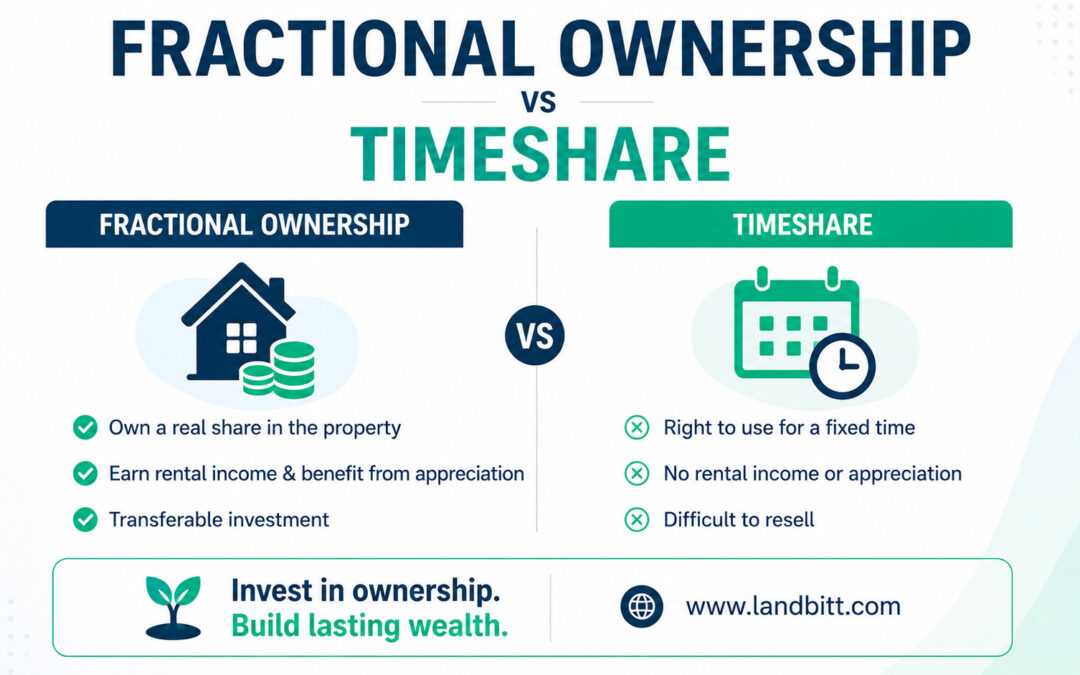
Traditional ownership means buying full property outright. It gives you complete control, but requires significant capital and offers limited liquidity if you need to exit.
Structured models — fractional ownership, SIP-based land investing, or tokenized real estate — lower the capital requirement substantially and introduce documented governance rules from the outset. For the full breakdown of how fractional and tokenized models actually differ, see our guide on real estate tokenization vs. fractional ownership.
Step 6: Consider starting with smaller, regular investments
Rather than deploying a large amount in one transaction, many investors now prefer a systematic approach — investing smaller amounts regularly and building exposure over time. This reduces the pressure of getting your entry timing exactly right. Our guide on SIP in land investing covers how this works in detail.
Step 7: Use technology to verify and secure your investment
Blockchain-based recordkeeping adds a layer of transparency and fraud resistance that traditional paperwork alone doesn’t offer. It doesn’t replace legal due diligence, but it strengthens the audit trail around your investment. See our guide on blockchain in real estate for the specifics.
Step 8: Diversify rather than concentrate
Avoid putting all your capital into a single property. Spreading investment across locations and asset types reduces concentration risk and improves your overall portfolio resilience. Structured participation models — see our guide on fractional land investment in India — make this kind of diversification considerably more practical than traditional full-property purchases.
Step 9: Monitor and manage your investment
Track your investment’s performance, the broader market trend, and infrastructure developments in your chosen area on an ongoing basis. This is what lets you make informed decisions about holding, selling, or reinvesting, rather than reacting to news after the fact.
Why does land investment attract first-time investors specifically?
Land is a real, finite asset that doesn’t suffer the structural wear and tear buildings do, and it carries lower holding costs since there’s no building maintenance involved. Infrastructure expansion — new highways, industrial corridors — continues to shape demand across India. That said, appreciation still depends on location quality and broader market conditions, so approach land with patience and realistic expectations rather than assuming automatic returns.
Direct ownership vs. fractional ownership — which fits a beginner better?
Direct ownership gives you full control, but it demands significant capital and places full legal and resale responsibility on you alone.
Fractional ownership lets multiple investors participate in one land asset through a defined legal entity, which lowers the capital requirement and introduces structured governance rules from day one. For a closer look at how this compares specifically, see our guide on fractional ownership vs. REITs.
Neither option is inherently “safer” — they carry different kinds of risk and different levels of personal control.
What returns can you realistically expect?
Land generates returns primarily through capital appreciation, driven by improved infrastructure, urban expansion, commercial development, and industrial activity in the area. However, your actual returns depend on your entry price, your holding period, and prevailing market demand — there’s no guaranteed outcome here, regardless of which investment method you choose.
What are the key risks beginners need to evaluate?
Market risk — land prices can grow slowly if development in the area gets delayed.
Liquidity risk — land transactions can take time to close, especially outside prime areas.
Legal risk — improper or incomplete documentation can lead to disputes later.
Speculative risk — buying based on rumors rather than verified development plans increases your uncertainty significantly.
Disciplined research and structured governance go a long way toward managing all four of these, though none of them disappear entirely.
Common mistakes to avoid
- Skipping legal verification to save time
- Investing without doing your own research
- Ignoring a location’s actual growth potential in favor of its current price
- Concentrating all your capital in one single asset
- How to think about real estate ROI in India
Once you’ve read through this guide, test your knowledge with the Landbitt Weekly Knowledge Quiz — 7 questions, leaderboard, and a Landbitt-branded gift for the top scorer.
Frequently Asked Questions
Is land suitable for new investors?
Yes, provided you approach it with proper research and a genuinely long-term investment horizon rather than expecting quick returns.
What’s the minimum capital required?
Direct ownership requires substantial capital. Fractional ownership models can allow meaningfully lower entry amounts — see our fractional ownership guide for specifics.
How long should you hold land before selling?
Typically several years, depending on infrastructure growth and market demand in your specific location.
Is fractional ownership safer than direct purchase?
Each model carries different risks. Structured governance can reduce administrative complexity, but it doesn’t remove market risk.
Can technology reduce real estate risk?
Technology improves transparency and documentation quality, but the underlying asset’s performance still depends on real market fundamentals.