

TL;DR: Passive income from real estate in India comes primarily from rental yield. Residential or commercial property that generates recurring rent does this; raw land typically doesn’t. Land usually appreciates without producing regular cash flow. Structured investment models can lower the entry barrier into income-generating assets. They don’t eliminate real risks like vacancy, maintenance costs, and limited liquidity, though. Building a sustainable strategy means being honest about which assets actually produce income and which ones grow value without it.

Passive Income from Real Estate in India: What Actually Generates It
Passive income from real estate in India gets discussed often, and not always precisely. Real estate as a category includes two different kinds of assets. Some generate recurring income. Others mainly appreciate in value without producing any regular cash flow at all. Conflating the two leads to real confusion about what a specific investment will actually deliver.
What does passive income in real estate actually mean?
It refers to earnings generated regularly without requiring daily active work, distinct from a one-time profit on a sale. In real estate specifically, this typically comes from one of two sources: rental income on a developed property, or structured investment models that distribute income generated by an underlying asset.
Why do investors specifically want passive income, rather than just appreciation?
Passive income provides regular cash flow. That reduces dependence on a single income source and supports financial stability in a way pure appreciation can’t, since appreciation only becomes usable money once you actually sell. Rental-generating assets can also offer a degree of protection against inflation. Rents tend to adjust upward over time, roughly in line with rising prices. For more on that specific dynamic, see our guide on inflation vs. real estate in India.
What actually generates passive income, and what doesn’t?
This distinction matters more than most general real estate content makes clear.
Rental properties genuinely do. Residential and commercial properties that are leased out generate recurring rental income. This is the most direct and traditional form of real estate passive income.
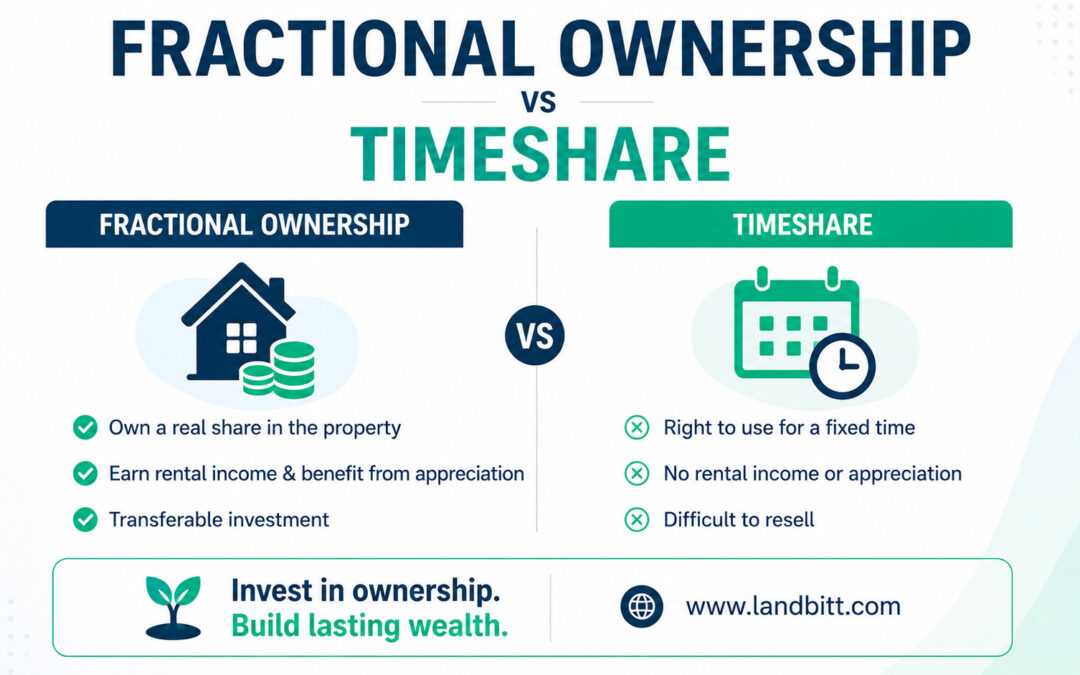
Structured investment models can, depending on the asset. Some platforms structure participation in income-generating assets specifically, which can distribute rental-type returns to investors. This depends entirely on the underlying asset actually generating income, not on the platform itself.
Raw land typically doesn’t. Land appreciation can support long-term wealth growth. Undeveloped land generally doesn’t generate monthly cash flow the way a leased property does, though. If your goal is specifically passive income rather than long-term appreciation, raw land usually isn’t the right tool for that goal. It can still be a very reasonable choice for appreciation-focused investing instead.
How should an investor actually build a sustainable passive-income approach?
Smart investors tend to balance a few things deliberately: income-generating assets for actual recurring cash flow, growth-oriented investments for longer-term appreciation, and genuine risk management across both. They don’t concentrate entirely in one category or the other. Knowing which category a specific asset falls into, income or appreciation, before investing is the single most important step here. It’s what separates building toward an actual passive-income outcome from just general real estate exposure.
What are the real challenges with passive real estate income specifically?
- Vacancy risk — a rental property generates no income at all during vacant periods, which is a real cost that pure appreciation-focused assets don’t carry
- Maintenance costs — income-generating property requires ongoing upkeep that reduces net returns, unlike land, which has minimal maintenance needs
- Liquidity limitations — exiting a real estate position, income-generating or not, depends on finding a buyer, and that process takes real time
Understanding these tradeoffs honestly helps investors plan for the actual net return, not just the gross rental figure before costs.
What mistakes do investors commonly make chasing passive income here?
Focusing only on short-term returns. Real estate income tends to compound and stabilize over a longer holding period, not in the first year or two.
Ignoring legal verification. Skipping due diligence on title clarity and tenancy documentation to move faster usually costs more later than it saves now.
Overleveraging. Taking on debt against an income-generating property can backfire if vacancy or maintenance costs run higher than projected. Loan payments don’t pause just because rental income does.
Frequently Asked Questions
Q: What is passive income in real estate?
A: Recurring income generated from property, primarily rental income, that requires limited ongoing active involvement compared to other income sources.
Q: Can land generate passive income?
A: Generally no. Land mainly supports long-term appreciation rather than monthly cash flow, unless it’s developed or leased specifically to generate income.
Q: Is rental income considered passive income?
A: Yes, it’s one of the most direct and common forms of passive real estate income.
Q: How much capital is needed to start building passive income through real estate?
A: It varies. Structured investment models can offer smaller entry points than traditional direct property ownership, though the specific amount depends on the platform and asset.
Q: What are the main risks in passive real estate income?
A: Vacancy risk, ongoing maintenance costs, and liquidity limitations are the most significant practical risks.
Q: How can beginners start building real estate income responsibly?
A: By clearly distinguishing income-generating assets from appreciation-focused ones, researching specific opportunities carefully, and avoiding excessive leverage.