
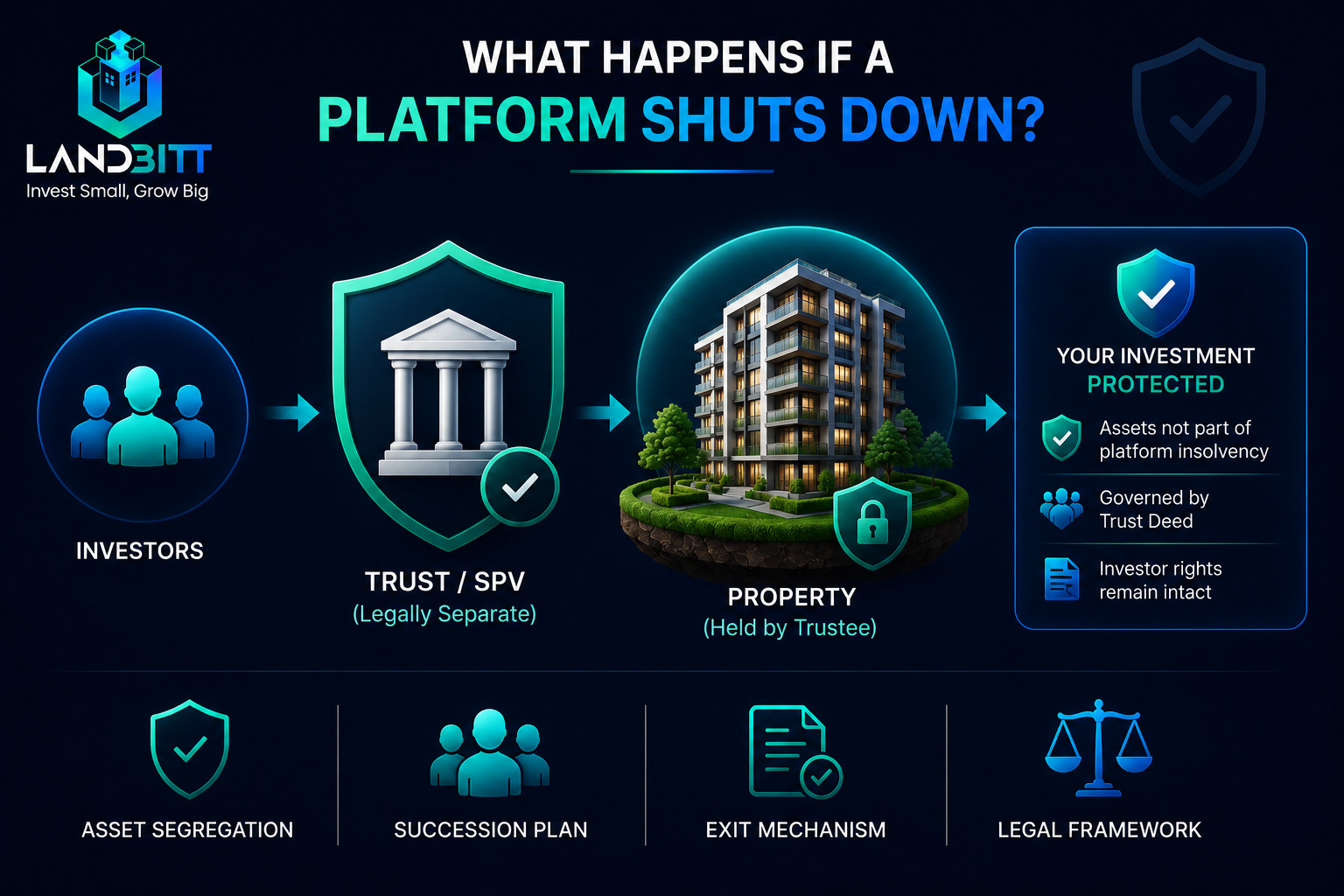
TL;DR: If a fractional real estate platform shuts down, what happens to your investment depends entirely on the legal structure underneath it. When a Trust or SPV holds the property separately from the platform’s operating company, that property does not automatically become part of the platform’s insolvency estate. However, your ability to realise value from your holding depends on whether the Trust deed includes a clear succession plan and exit mechanism. This page explains what actually protects you — and what does not.

What Happens If a Fractional Real Estate Platform Shuts Down?
Platform risk — the risk that the technology company operating a fractional real estate platform ceases to function — is real and underappreciated. Most investors ask about market risk and returns. Far fewer ask what happens if a fractional platform shuts down before they exit. This is, however, one of the most important questions to answer before you invest.
Platform closure risk starts with the Trust deed — not the platform name.
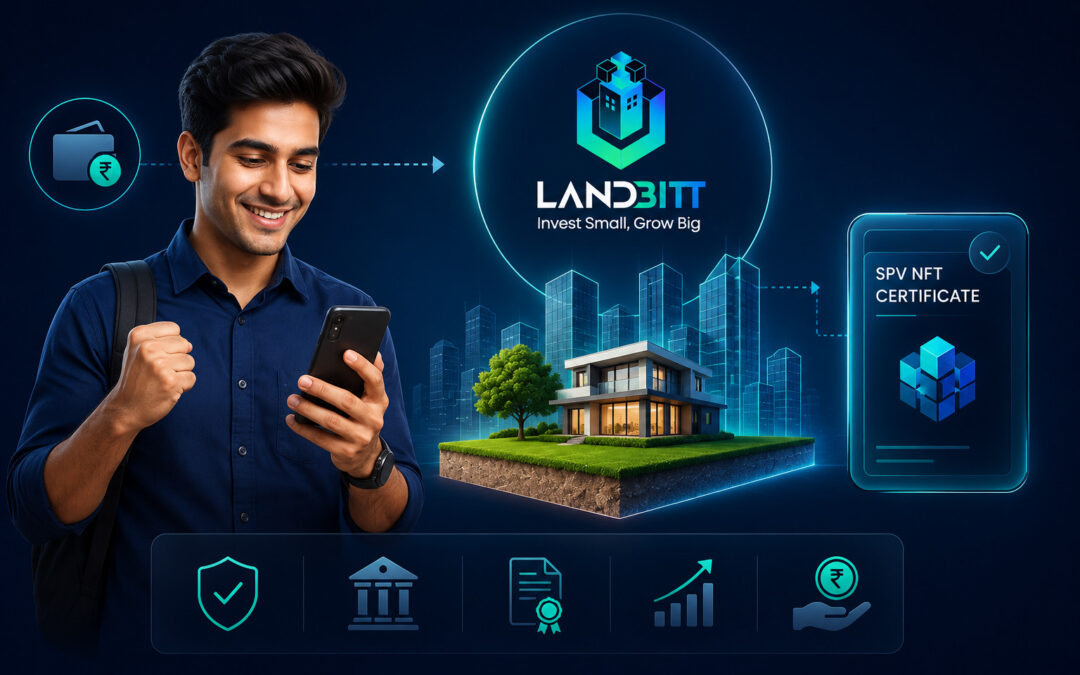
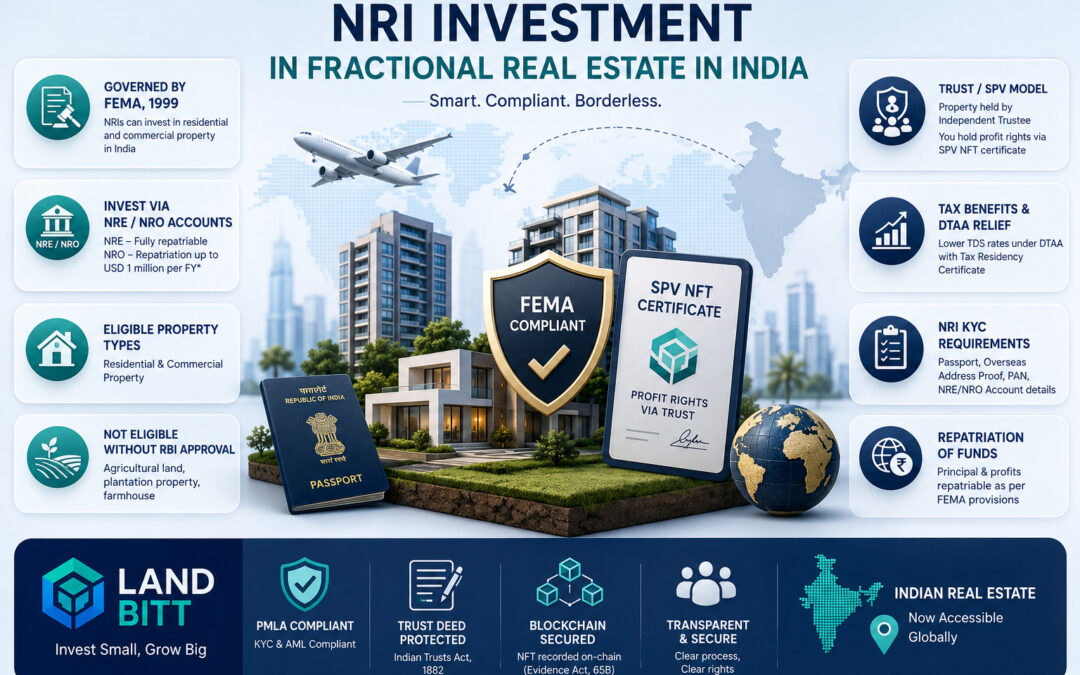
Landbitt structures every investment through a registered Trust under the Indian Trusts Act, 1882. An independent Trustee holds registered title to each asset — legally segregated from Landbitt’s operating company. You hold documented profit rights via an SPV NFT certificate. Starting from 1 sq. ft. or ₹20,000.
Quick Facts
- Key protection mechanism: Asset segregation — property held in a Trust or SPV legally separate from the platform company
- Legal basis: Indian Trusts Act, 1882 (Trust-based models); Indian Insolvency and Bankruptcy Code, 2016 (IBC) governs platform company insolvency
- What protects you: A well-drafted Trust deed with Trustee succession provisions and a clear exit mechanism
- What does NOT protect you automatically: A blockchain certificate alone, a verbal assurance, or a Trust deed with no succession clause
- SEBI SM REIT note: Exchange-listed SM REITs operate under SEBI’s regulatory oversight — wind-down procedures differ materially from Trust/SPV models
The Central Question: Is the Property Legally Separate from the Platform?
Asset Segregation Explained
When a fractional platform shuts down, the key question is not whether the platform has money — it is whether the property your investment relates to sits inside a legally separate entity. Specifically, does a Trust or SPV own the property, or does the platform’s operating company own it directly?
If the platform’s operating company owns the property directly, then when that company becomes insolvent, the property becomes part of the insolvency estate. Consequently, the platform’s creditors can make claims against it under the Insolvency and Bankruptcy Code, 2016. Moreover, your claim as an investor sits in the queue behind secured creditors — often at the back.
By contrast, when a properly structured Trust or SPV holds the property, that entity is legally separate from the platform company. Therefore, if the platform company winds up, the Trust or SPV’s assets are not automatically available to the platform’s creditors. Instead, they remain governed by the Trust deed’s terms — which typically include investor rights. This separation is what the term “asset segregation” means in practice.
What the Trust Deed Determines
Three Clauses That Matter Most
Asset segregation provides the foundation. However, even with a properly segregated Trust or SPV, your ability to realise value from your holding depends on what the Trust deed actually says. Three clauses determine most of the outcome when a fractional platform shuts down.
First, the Trustee succession clause specifies what happens if the current Trustee — which is often the platform company itself or a related entity — is removed or becomes unable to act. A well-drafted deed names a successor Trustee or a clear process for appointing one. Without this clause, the Trust may effectively be stranded: the property sits inside a legal entity with no one authorised to manage it or realise its value.
Second, the exit mechanism clause specifies how investors can realise value from their holdings — whether through a secondary market sale, a structured buyout, or a property sale. If the platform operated the secondary market, and the platform has shut down, then the exit mechanism may no longer function. Consequently, investors may be left holding certificates with no clear path to liquidity.
Third, the investor notification and governance clause specifies whether investors have rights to be informed about material events — including platform closure — and whether they have any governance rights over the Trust’s decisions. Without this clause, investors may have no formal mechanism to initiate action.
Even if they know the platform has ceased operating, without explicit governance rights, they have limited recourse.
What Happens Step by Step
A Realistic Scenario
Consider a Trust-based fractional platform that ceases operating. First, the platform company’s creditors file claims under the IBC against the platform company — not against the Trust or SPV. As a result, the Trust’s assets are not directly affected, assuming proper segregation. Second, the Trustee — whoever that is — continues to hold the property legally. However, without the platform’s technology and operational infrastructure, the Trustee may have limited ability to manage distributions or facilitate exits.
Third, investors who want to realise value must work through the Trust deed’s exit mechanism. If that mechanism requires a platform-operated secondary market, the mechanism may be non-functional. If the Trust deed provides for property sale at investor request or at a specified event (such as platform closure), then that process can be initiated — but it depends entirely on the specific deed language.
Finally, if the Trustee itself was the platform company, and that company has wound up, then the succession clause governs who steps in. Without one, investors may need to petition a court to appoint a replacement Trustee.
What Does NOT Automatically Protect You
Common Misconceptions
Several protections investors assume exist do not function automatically when a fractional platform shuts down. A blockchain certificate records your holding, but it does not automatically trigger any exit or protection mechanism. The certificate documents your claim — it does not itself provide liquidity or force a property sale. Additionally, verbal assurances from the platform’s founders or sales team have no legal standing after a wind-up.
Furthermore, a Trust structure alone — without a well-drafted deed — may not provide the protections investors expect. A Trust where the platform is the sole trustee and the deed contains no succession clause may leave investors in a difficult position even if the property itself is technically segregated. Moreover, a poorly drafted exit mechanism that relies entirely on the platform’s own secondary market provides no real exit once the platform closes.
The structure matters — but only as much as its implementation.
The Evidence Act Section 65B Limitation
Why Blockchain Records Are Not Enough Alone
Many fractional platforms issue blockchain-based certificates to document investor holdings. These records are tamper-resistant and transparent, which makes them a useful audit trail. However, Section 65B of the Indian Evidence Act, 1872 treats blockchain records as electronic records that require a certificate for admissibility in court proceedings, per the Supreme Court’s 2020 ruling in Arjun Panditrao Khotkar v. Kailash Kushanrao Gorantyal, which confirmed this certificate requirement is mandatory but clarified that courts can direct production of the certificate if the responsible party refuses to provide it.
As a result, if you need to assert your rights in a legal proceeding after a platform closure, a blockchain certificate is supporting evidence — not primary evidence.
The Trust deed, the registered Trust, and other underlying legal documents remain the primary instruments. Investors who rely solely on a blockchain certificate without understanding the underlying Trust deed structure may find their position harder to assert legally than they expected.
SEBI SM REIT Platforms: A Different Framework
What SEBI Oversight Adds
Platforms operating as registered SM REITs under SEBI’s framework (such as PropShare and hBits) face a different wind-down process. SEBI oversight requires mandatory disclosures, and exchange listing means investors can typically sell their units on a regulated exchange while the SM REIT is operational. Wind-down procedures for SEBI-regulated entities involve regulatory supervision, which adds a layer of investor protection not present in Trust/SPV models.
However, this distinction does not mean SM REITs are immune to platform risk — it means the regulatory framework around wind-down is more structured.
Trust/SPV models can also be well-protected when properly documented — but that protection depends entirely on the quality of the Trust deed and the independence of the Trustee, not on regulatory oversight.
What to Check Before You Invest
Four Specific Questions to Ask
Before committing capital to any fractional real estate platform, ask four specific questions about platform closure scenarios. First, who is the Trustee, and is they independent of the platform company? Second, does the Trust deed contain a Trustee succession clause, and who does it name as a successor? Third, what exit mechanism applies if the platform is no longer operational, and does that mechanism require the platform’s infrastructure to function? Fourth, do investors have any governance rights or notification rights in the event of a material event such as platform closure?
A platform that cannot answer these questions clearly — or that answers them only with verbal reassurance — presents meaningful platform risk regardless of its marketing.
For a complete checklist, see our platform verification checklist, which covers all five verification areas including platform-exit protection. For more on the legal structure underlying these protections, see our explainer on the Indian Trusts Act, 1882.
Frequently Asked Questions
If a fractional platform shuts down, do I lose my investment?
Not automatically — provided the property is held in a properly structured Trust or SPV that is legally separate from the platform company. However, your ability to realise value depends on the Trust deed’s succession and exit provisions. A well-drafted deed protects you; a poorly drafted one may leave you without a clear path to liquidity even if the property itself is safe.
What is asset segregation and why does it matter when a platform closes?
Asset segregation means the property is held in a separate legal entity — a Trust or SPV — distinct from the platform’s operating company. When that operating company becomes insolvent, its creditors cannot automatically claim the Trust or SPV’s assets. Without segregation, platform insolvency can directly affect your investment.
What should a Trust deed say about platform closure?
A well-drafted Trust deed should specify a Trustee succession clause (who steps in if the current Trustee cannot act), an exit mechanism that does not rely solely on the platform’s own secondary market, and investor notification rights in the event of material events such as platform closure. Ask for the actual deed — not just a summary — before you invest.
Does a blockchain certificate protect me if the platform shuts down?
A blockchain certificate documents your holding and provides a tamper-resistant audit trail. However, it does not automatically trigger any protection or exit mechanism. Under Section 65B of the Indian Evidence Act, 1872, it is also supporting evidence rather than primary legal evidence. Your protection comes from the underlying Trust deed structure, not the blockchain record.
Is a SEBI SM REIT platform safer than a Trust/SPV platform if it shuts down?
SEBI-regulated SM REITs have a more structured wind-down process due to regulatory oversight and exchange listing. Trust/SPV platforms can also provide strong protection if properly structured — but that depends entirely on the quality of the Trust deed and the independence of the Trustee. Neither structure is automatically safer than the other without examining the implementation.
Invest through a structure built to protect you — even if the unexpected happens.
Landbitt uses registered Trust/SPV structures under the Indian Trusts Act, 1882 with independent Trustees. Your profit rights are documented via SPV NFT certificate — not a company share or property deed. PMLA-compliant KYC. Starting from 1 sq. ft. or ₹20,000.