
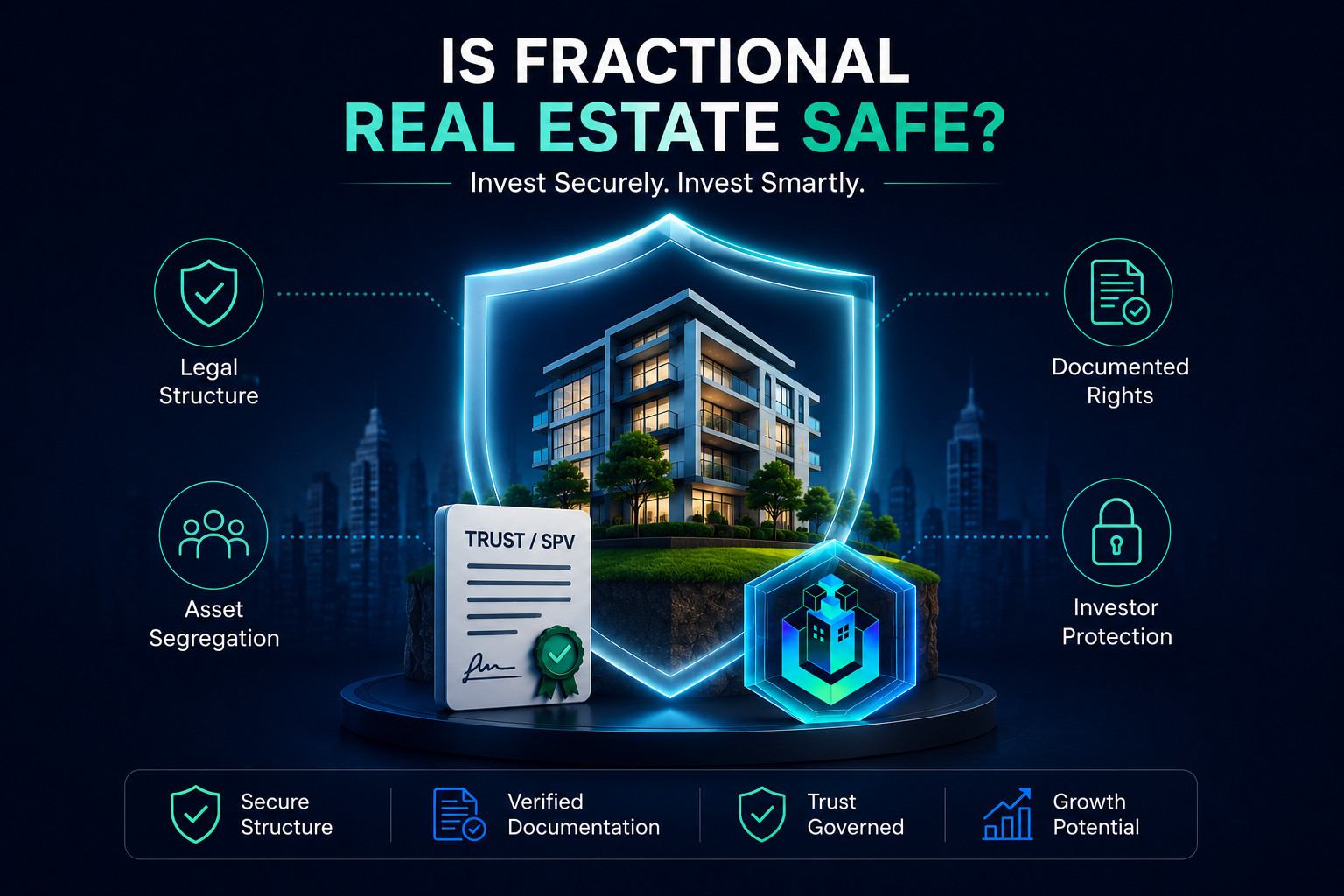
TL;DR: Fractional real estate is safe when the underlying legal structure, asset documentation, and platform governance are sound. In India, a Trust/SPV model under the Indian Trusts Act, 1882 segregates investor profit rights from the platform’s operational liabilities. Consequently, you own enforceable profit rights via an SPV NFT certificate — not a verbal promise. However, safety depends entirely on the platform you choose and how rigorously it documents your rights.

Is Fractional Real Estate Safe? Security & Risk Guide for Indian Investors
Every first-time fractional investor asks the same question: is fractional real estate safe? The honest answer is — it depends on the structure. Fractional real estate is not inherently safe or risky. Moreover, the safety of any fractional investment depends on legal structure, asset quality, documentation, and platform governance. This guide breaks down each risk category clearly so you can evaluate any platform before you invest.
Invest in Indian real estate from ₹20,000 — with documented profit rights
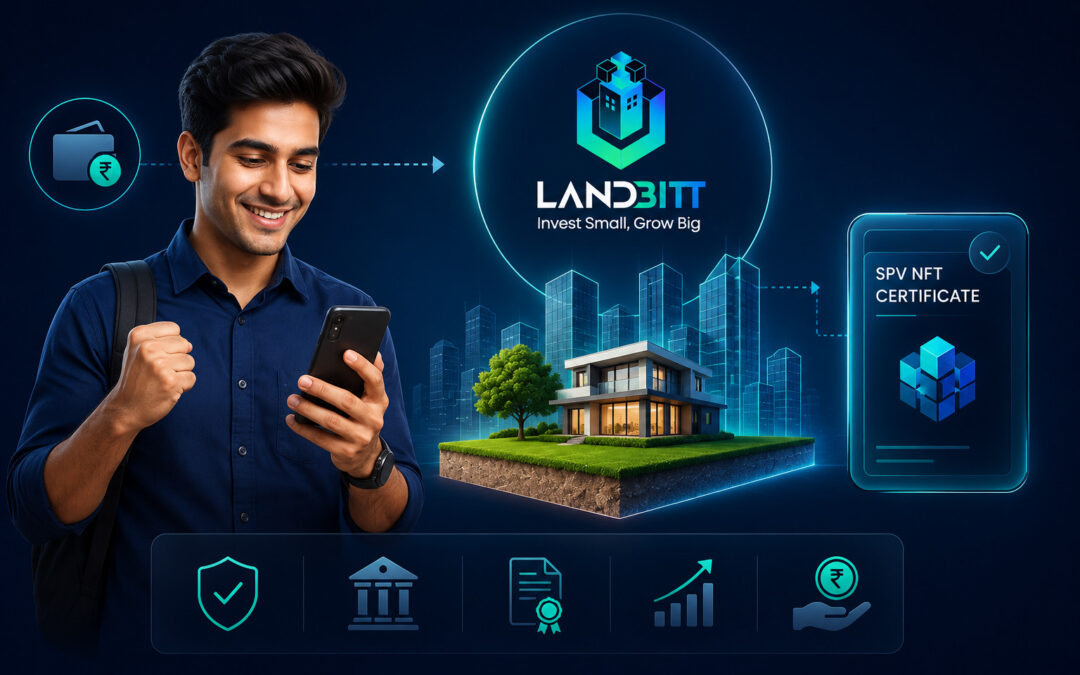
Landbitt structures every property in a registered Trust/SPV. Your holding is an SPV NFT certificate — KYC-verified, Trust-deed governed, on-chain recorded. Not a verbal promise; not registered title.
Quick Facts: Is Fractional Real Estate Safe in India?
- Legal basis: Indian Trusts Act, 1882 — Trust/SPV model
- Investor protection mechanism: Asset segregation via Special Purpose Vehicle (SPV)
- Investor right: Profit rights via SPV NFT certificate
- Regulator: SEBI (for SM REITs); Trust/SPV model is governed by the Indian Trusts Act
- Key risk factor: Platform insolvency, illiquidity, incomplete documentation
- Minimum check: Verify registered Trust Deed, Trustee identity, SPV structure before investing
What Are the Main Risks of Fractional Real Estate?
Understanding fractional real estate safety starts with identifying the actual risk categories. Specifically, there are five distinct risk types every investor should evaluate before committing capital.
1. Platform Insolvency Risk
Platform insolvency risk means that if the company operating the platform shuts down, your investment could be at risk — unless the legal structure protects you. Consequently, this is the single most important risk to evaluate. Platforms that hold assets directly on their balance sheet expose investors to corporate liquidation proceedings. In contrast, a Trust/SPV model places the asset inside a separate legal entity (the SPV), which is insulated from the platform’s operational debts. Therefore, even if the platform operator ceases operations, the Trust continues to hold and manage the asset independently. You can read more about this in our detailed post on what happens if a fractional platform shuts down.
2. Asset Illiquidity Risk
Fractional real estate is not liquid in the way that stocks or mutual funds are. Moreover, secondary markets for fractional units in India are still developing. Therefore, you should treat fractional real estate as a medium-to-long-term holding. Specifically, investors should plan for a holding period of 3–7 years depending on the project phase and exit mechanism. As a result, illiquidity risk is real — but it is a known, manageable risk rather than a hidden one, provided the platform discloses exit timelines clearly upfront.
3. Asset-Level Risk
The underlying real estate asset itself carries risk. Consequently, location, land use approval, infrastructure timelines, and government policy all affect the value of the land or property in which you hold profit rights. Furthermore, assets in Special Investment Regions such as Dholera SIR carry additional regulatory layers. However, these government-notified zones also provide statutory infrastructure commitments, which reduces some categories of asset-level risk compared to unplanned land parcels.
4. Documentation Risk
Documentation risk is the most underestimated risk in fractional real estate. Specifically, if the Trust Deed is not properly registered, if the SPV is not correctly constituted, or if your NFT certificate does not link to a verified on-chain record, your profit rights may not be legally enforceable. Therefore, always verify the Trust Deed registration, Trustee credentials, and the blockchain record before you invest. Landbitt’s Platform Verification Checklist walks through every documentation checkpoint in detail.
5. Regulatory Risk
Regulatory risk refers to the possibility that future laws or regulations could affect the fractional real estate structure. Currently, SEBI’s SM REIT framework governs exchange-listed fractional real estate products. However, the Trust/SPV model operates under the Indian Trusts Act, 1882, and is therefore a separate legal category. Additionally, the proposed Asset Tokenisation Bill (currently a proposed Private Member’s Bill, not enacted law) may in the future provide additional statutory clarity on tokenised profit rights. Investors should monitor regulatory developments annually.
How Does a Trust/SPV Structure Make Fractional Real Estate Safer?
The Trust/SPV structure provides two critical safety mechanisms that direct ownership models cannot replicate.
Asset Segregation
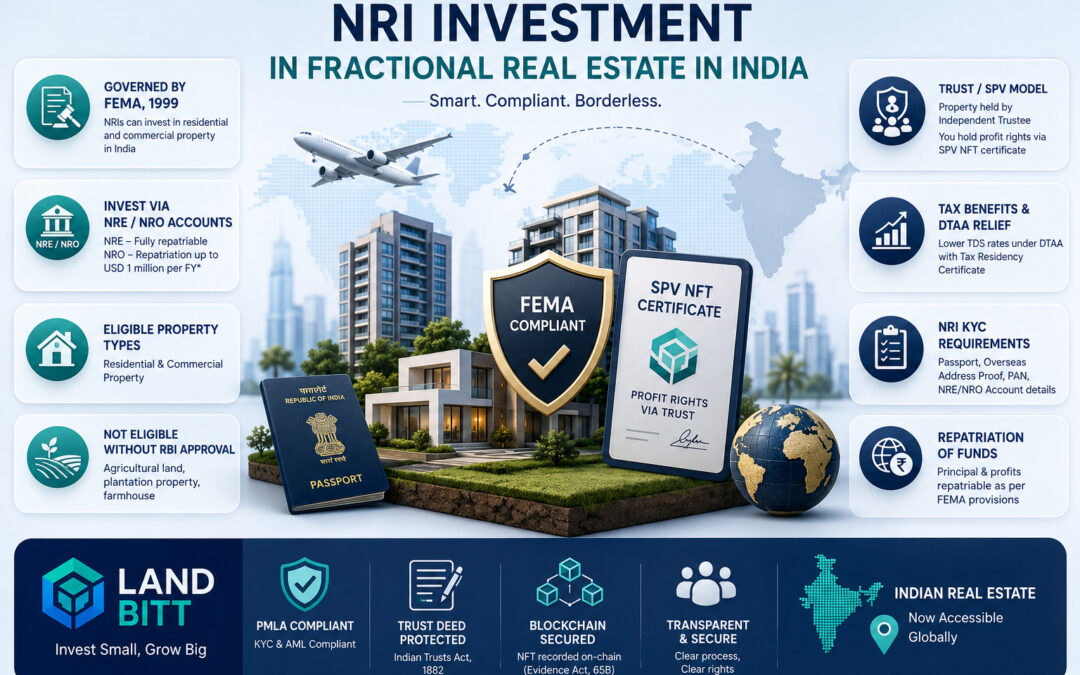
When an asset is held inside a Special Purpose Vehicle (SPV) governed by a registered Trust, it is legally separated from the platform operator’s balance sheet. Consequently, the platform operator’s creditors cannot claim the asset in a liquidation. Furthermore, the Trustee — who is an independent fiduciary — has a legal obligation under the Indian Trusts Act, 1882 to act in the beneficiaries’ interest. Therefore, the structure itself creates a layer of legal protection that does not exist when you invest through a private limited company or informal co-ownership.
Profit Rights via SPV NFT Certificate
At Landbitt, investors receive profit rights via an SPV NFT certificate. This certificate is recorded on-chain and links your wallet address to a specific fractional unit of the underlying asset. Moreover, the on-chain record creates an immutable, timestamped proof of your rights. However, it is important to note that this is a profit rights structure — not direct registered title or shareholders’ rights in a company. Additionally, blockchain records in legal proceedings in India are governed by Section 65B of the Indian Evidence Act, 1872, which means electronic records must be certified to be admissible as evidence.
How to Evaluate Whether a Fractional Platform Is Safe
Use these five checkpoints to evaluate any fractional real estate platform before investing.
Checkpoint 1: Is There a Registered Trust Deed?
Ask for the registered Trust Deed number and verify it against the Sub-Registrar’s records. A platform that cannot produce a registered Trust Deed is operating without the legal foundation that protects your profit rights.
Checkpoint 2: Who Is the Trustee?
The Trustee must be an independent entity — not the platform operator itself. Specifically, the Trustee’s identity, credentials, and fiduciary obligations should be clearly disclosed. Consequently, if the platform and the Trustee are the same entity, asset segregation is incomplete.
Checkpoint 3: Is the SPV Correctly Constituted?
Each asset should have its own dedicated SPV. Furthermore, the SPV’s registration documents, director details, and asset assignment agreement should be available for investor review. Therefore, ask for these documents before committing capital.
Checkpoint 4: Is There a Verifiable On-Chain Record?
Your NFT certificate should link to a verifiable on-chain record on a public or permissioned blockchain. Moreover, you should be able to independently verify the record without relying solely on the platform’s dashboard. Additionally, review whether the blockchain records comply with Section 65B of the Indian Evidence Act, 1872, for legal enforceability.
Checkpoint 5: Are Exit Terms Documented?
Exit timelines, buyback provisions, secondary market access, and profit distribution schedules should all be in writing inside the Trust Deed or a supplementary Investor Agreement. Consequently, any platform that cannot provide documented exit terms is exposing you to unquantified illiquidity risk.
Is Fractional Real Estate Regulated in India?
Fractional real estate regulation in India operates across two frameworks. First, SEBI’s SM REIT framework governs exchange-listed fractional products with a minimum asset size of Rs. 50 crore and minimum investment of Rs. 10 lakh. However, the SEBI SM REIT framework specifically covers REITs — it does not directly govern private Trust/SPV models. Therefore, Trust/SPV fractional platforms operate primarily under the Indian Trusts Act, 1882, and general contract law. Furthermore, SEBI’s Consultation Paper on Fractional Ownership Platforms (2023) acknowledged that Trust/SPV models occupy a regulatory space that requires further policy development. For a detailed comparison of these two structures, see our post on SM REIT vs Fractional Ownership India.
Frequently Asked Questions
Is fractional real estate safe for first-time investors in India?
Fractional real estate can be safe for first-time investors if the platform uses a properly constituted Trust/SPV structure, provides registered documentation, and clearly discloses exit terms and risks. However, first-time investors should complete full due diligence — including verifying the Trust Deed, Trustee identity, SPV registration, and on-chain record — before investing.
What happens to my investment if the platform shuts down?
If the platform uses a Trust/SPV structure, your profit rights are held inside the SPV — not on the platform’s balance sheet. Consequently, the Trustee continues to manage the asset even if the platform operator ceases operations. However, if the platform holds assets on its own balance sheet without a Trust structure, your investment is exposed to corporate liquidation risk.
Is fractional real estate regulated by SEBI?
SEBI regulates SM REITs under the SEBI (Real Estate Investment Trusts) (Amendment) Regulations, 2024. Trust/SPV fractional platforms are not directly regulated under this framework. Therefore, investors in Trust/SPV platforms should review platform documentation carefully and look for compliance with the Indian Trusts Act, 1882, and relevant SEBI disclosure guidelines.
What is an SPV NFT certificate and is it legally valid?
An SPV NFT certificate is a blockchain-recorded token that represents your profit rights in a specific fractional unit of a real estate asset held inside a Special Purpose Vehicle. Its legal validity in Indian courts depends on compliance with Section 65B of the Indian Evidence Act, 1872, which requires electronic records to be properly certified for use as legal evidence.
How is fractional real estate different from a fixed deposit or mutual fund?
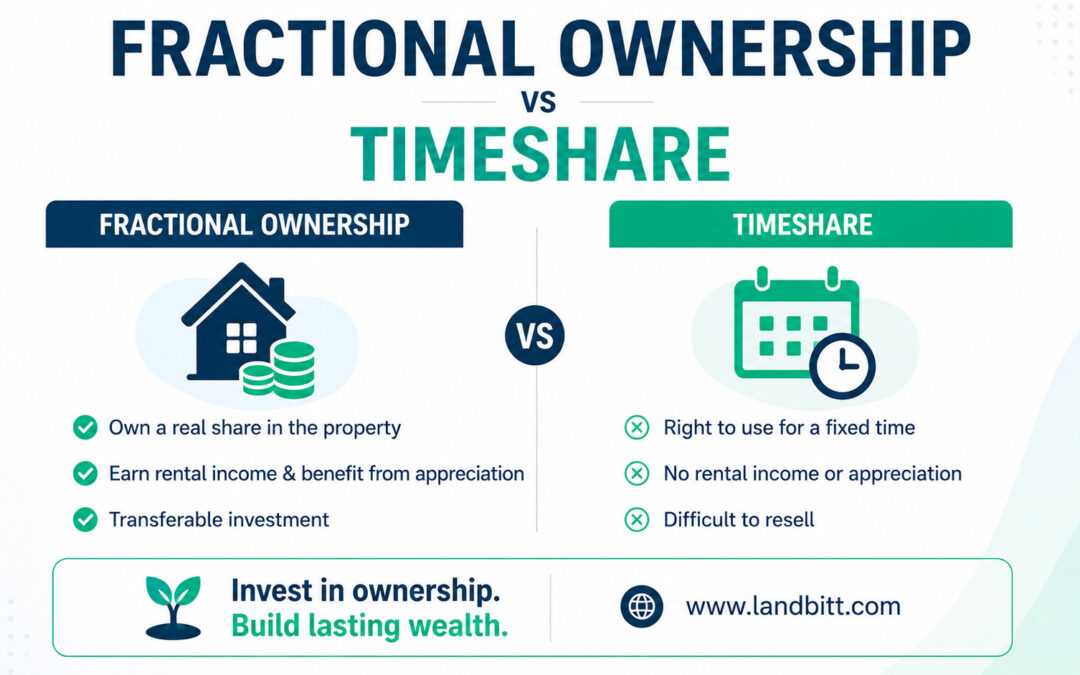
Fractional real estate offers profit rights in a physical asset rather than a financial instrument. Consequently, it is not subject to the same liquidity, market volatility, or regulatory framework as fixed deposits or mutual funds. Moreover, unlike fixed deposits, fractional real estate does not carry guaranteed returns — profits depend on asset performance, development timeline, and exit terms. Therefore, investors should treat fractional real estate as a long-term, asset-backed holding rather than a liquid savings instrument.
Ready to invest in a Trust/SPV-backed property?
Every Landbitt property is held in a registered Trust, asset-segregated from the platform. Your profit rights are documented on-chain via SPV NFT certificate.