
TL;DR: Landbitt Director Sneha explains why she helped build the platform: most Indians have been priced out of land ownership. Even though it’s historically been one of the country’s strongest wealth-building assets, many cannot access it. Fractional ownership through an SPV structure, combined with blockchain-backed digital recordkeeping, lowers that capital barrier. However, it does this without removing the need for real legal documentation, due diligence, or honest risk disclosure.

Why We Built Landbitt: India’s Land Belongs to Everyone
A Director’s perspective on why fractional real estate investment is the wealth opportunity most Indians are still missing — and how Landbitt is working to change that, one square foot at a time.
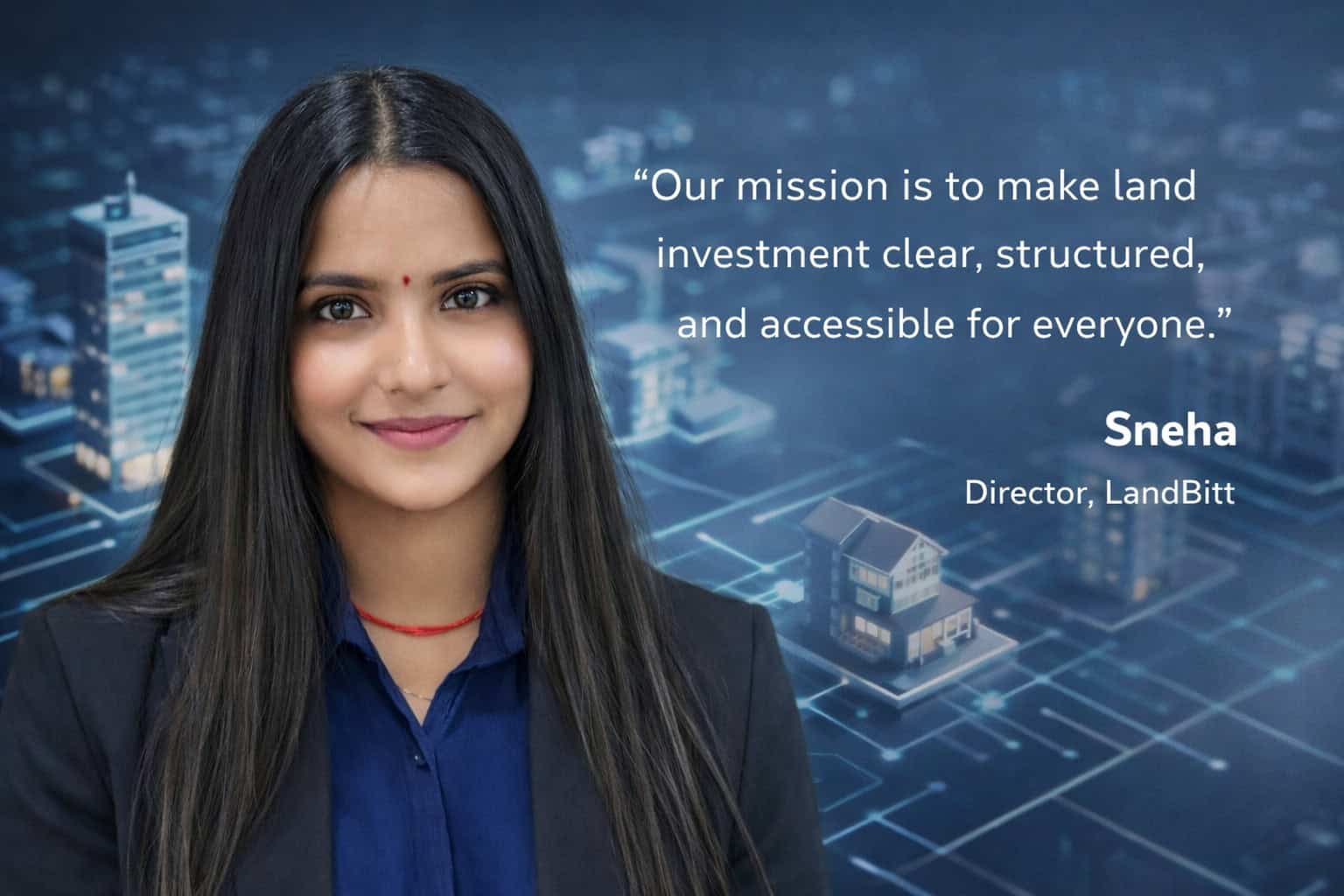
Sneha · Director, Landbitt
Growing up, I heard my parents talk about land the way most Indian families do — as something sacred, finite, and ultimately out of reach for ordinary people. Land was an asset for wealthy families, developers, and NRIs. For everyone else, it stayed a distant aspiration.
That belief isn’t just outdated. It’s economically limiting. It has kept millions of middle-class Indians away from one of the most powerful wealth-building assets in the country’s history.
I joined Landbitt because I refused to accept that as a fixed reality. Fractional real estate investment isn’t a gimmick or a passing trend. It’s how more Indians can actually participate in long-term wealth creation, instead of watching from the sidelines.
The real problem wasn’t access — it was the structure around access
India’s real estate and PropTech sectors are expanding fast. Industry projections from CREDAI and EY suggest India’s PropTech sector could grow from roughly USD 10.5 billion today to nearly USD 600 billion by 2047.
And yet most Indians — young professionals, first-time investors, NRIs — stay excluded from land ownership. This is because the traditional system demands high capital, legal expertise, local networks, and a long list of barriers most people simply don’t have access to.
The result is straightforward: wealth concentrates among those who already own land, while everyone else stays on the sidelines. At Landbitt, we wanted to change that math.
What fractional real estate investment actually means
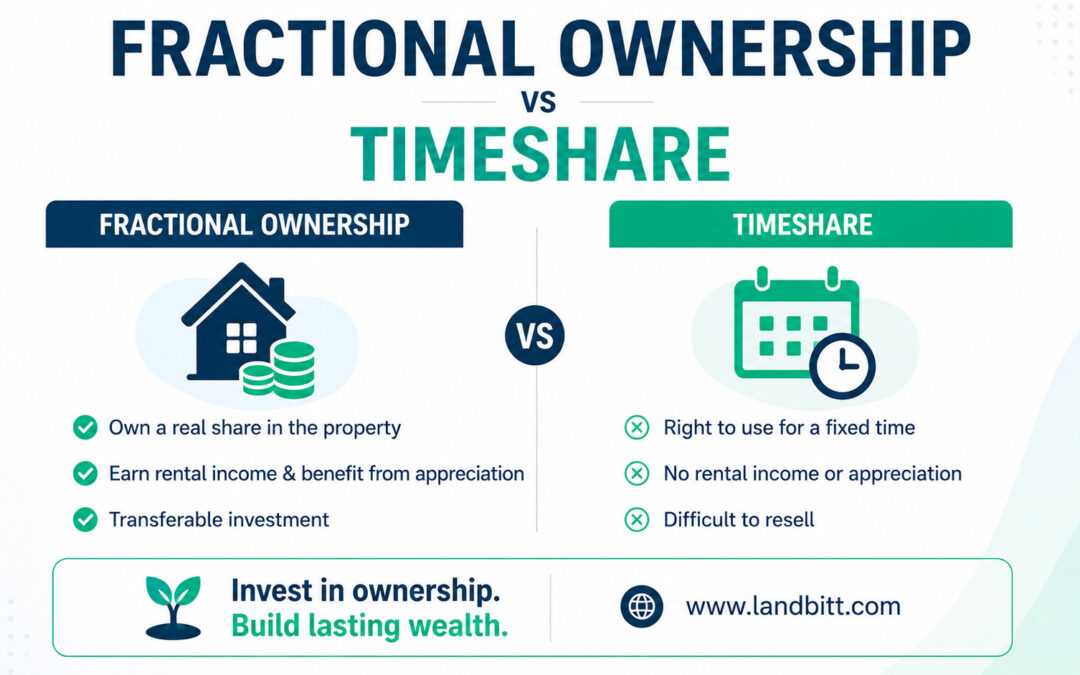
Fractional real estate investment lets people own a legally structured share of a verified land parcel. This means instead of having to purchase the entire property outright, investors can own a fraction.
Instead of needing ₹50 lakhs to buy land in a growth corridor, an investor can start with a meaningfully smaller amount. Even so, they still hold a proportional stake in that asset. Ownership gets recorded digitally and is built to be tamper-resistant, not just promised to be.
Every property on Landbitt is structured through a Special Purpose Vehicle (SPV), which defines investor rights, profit-sharing mechanisms, and exit structures clearly. These details are defined before anyone invests a rupee.
Blockchain functions as the trust layer underneath all of this. India’s real estate sector has historically dealt with title disputes, unclear ownership chains, and documentation fraud. Nevertheless, recording transactions on a distributed ledger and issuing digital ownership certificates makes transparency foundational to the structure. It is not an afterthought bolted on later.
Why Dholera SIR matters to this story
Dholera Special Investment Region represents one of India’s most significant infrastructure opportunities. Located roughly 100 km from Ahmedabad, it's India's first greenfield smart city and spans over 920 sq km. Moreover, it sits within the Delhi-Mumbai Industrial Corridor (DMIC) — a massive infrastructure initiative built around advanced manufacturing and industrial ecosystems.
The region is also emerging as a semiconductor manufacturing hub. This is being backed by India’s ₹91,000 crore Semiconductor Mission, global chipmakers, planned expressways, airport connectivity, metro infrastructure, and dedicated utilities.
Historically, regions like Gurugram, Navi Mumbai, and Pune’s Hinjewadi saw dramatic appreciation once infrastructure development accelerated. Dholera looks to be entering a similar early-growth phase. As a result, Landbitt has structured verified fractional ownership opportunities tied to Dholera’s growth corridor, with full legal documentation and blockchain-backed ownership behind each one. This isn’t speculative hype — it’s structured participation in India’s industrial future. For the full mechanics, see our Dholera SIR Investment Guide.
Why representation in PropTech actually matters
When I entered the real estate and technology sectors, the conversations were often dominated by legacy systems focused on margins, access, and relationships. These conversations rarely focused on inclusion.
I believe women bring a genuinely different perspective to investment, partly because historically, many wealth-building systems weren’t designed with them in mind. Furthermore, women often evaluate trust, transparency, and accessibility differently than the systems built around them assume.
Women in India now influence nearly 27% of household investment decisions, yet traditional real estate still remains difficult to navigate. Documentation complexity, dependence on brokers, and physical access requirements all add friction. This falls disproportionately on people without existing networks in the space.
Landbitt’s digital-first approach removes a lot of that friction. An investor can explore verified land parcels, complete KYC, access legal documentation, receive blockchain-backed ownership certificates, and monitor their investment digitally — without depending entirely on intermediaries to get any of it done.
Building a platform around trust, not marketing language
Trust can’t be created through marketing copy alone. At Landbitt, every listed property goes through multi-stage due diligence — title checks, document validation, physical verification, and third-party audits — before it ever becomes available for investment.
SPV agreements are legally registered. Risk disclosures are meant to be genuinely transparent, not buried in fine print. Investors are encouraged to actually understand what they’re investing in, not just trust that someone else has checked.
The goal here was never to attract speculative hype. It’s to build informed participation backed by real legal structure, real operational transparency, and a long-term view of investor confidence rather than a short-term sales push.
Who this is actually for
Fractional ownership creates real access for several different kinds of investors:
- Young professionals — an entry point into real estate without needing enormous capital upfront
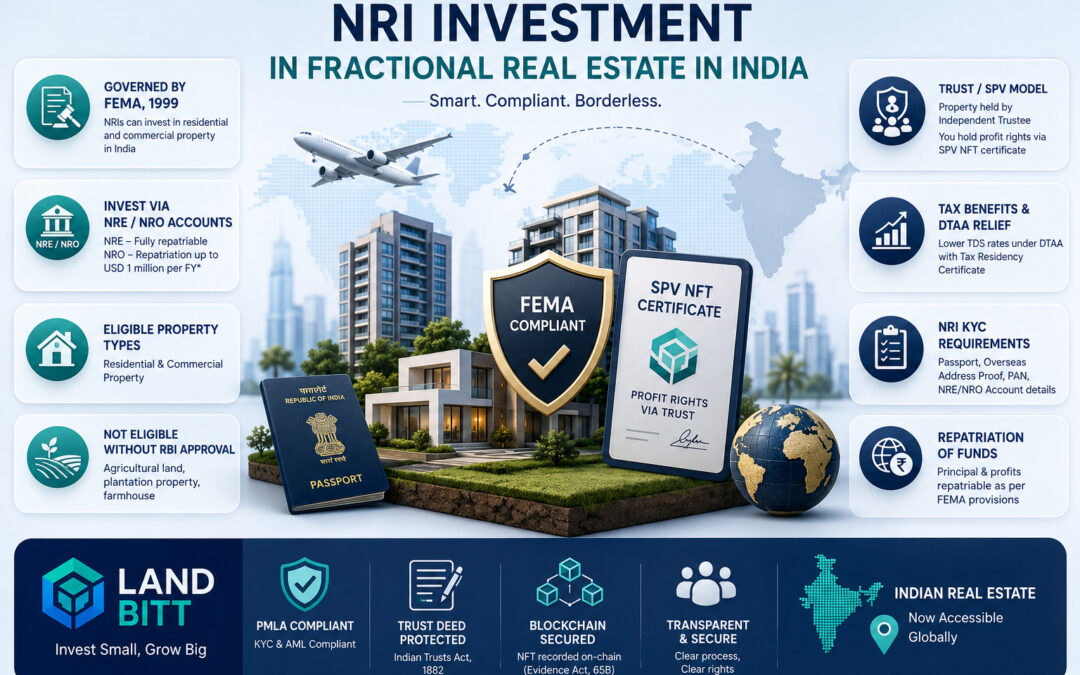
- NRIs — verified land ownership opportunities without requiring physical presence in India
- First-time investors — exposure to real estate while learning the asset class gradually, rather than all at once
- Portfolio diversifiers — an alternative asset category alongside equities, mutual funds, or gold
- Women investors — a digitally accessible investment system built around transparency and convenience, not dependence on a broker’s goodwill
The road ahead
Landbitt is still in its early stages, but the long-term vision is genuinely ambitious. The company is developing blockchain-backed infrastructure for property ownership, AI-powered legal assistance through a tool called DocBot, IoT-enabled land monitoring systems, and ESG-based land scoring models.
The objective is bigger than building another investment platform. It’s about rebuilding access to ownership itself — letting more Indians, regardless of background or starting capital, participate in the country’s real estate growth story.
India is changing fast. Dholera is rising. Digital infrastructure for transparent land ownership is finally emerging. The question isn’t whether land ownership should remain exclusive anymore. The real question is whether more Indians are ready to participate in the future already being built around them.