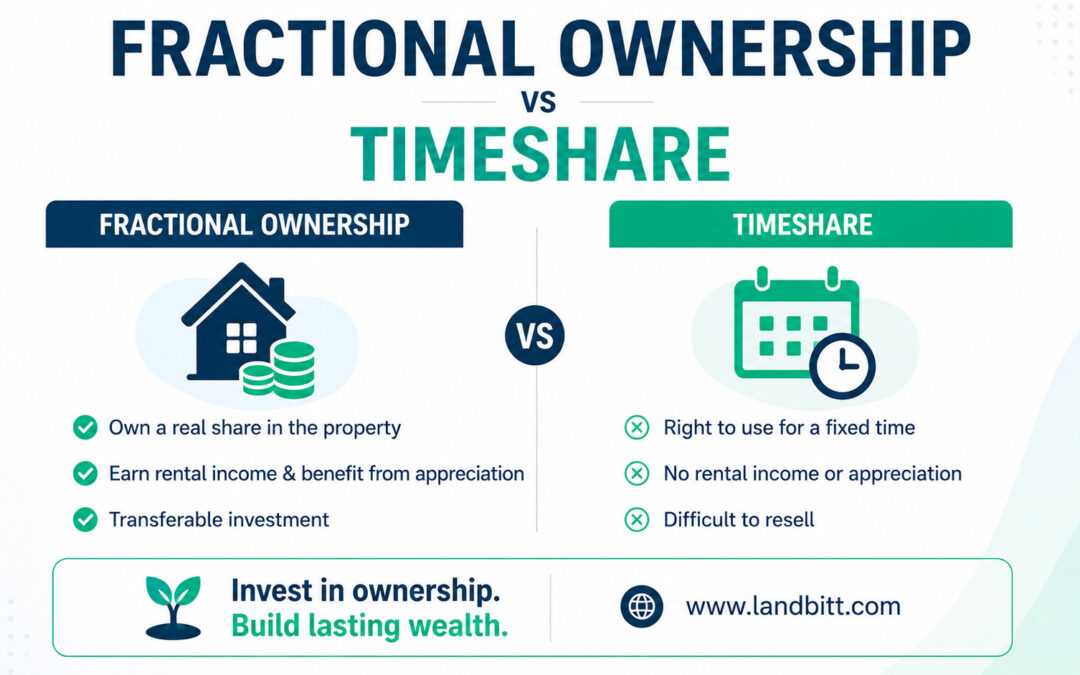


TL;DR: Landbitt, PropShare, hBits, and Strata all offer fractional real estate investment in India, but they operate under different legal structures and regulatory frameworks. Consequently, the comparison that matters most is not about project listings or returns — it is about how each platform legally structures your investment interest, what minimum applies, and how each framework protects your holding. This guide covers those structural differences specifically.

Landbitt vs PropShare vs hBits vs Strata: A Structure Comparison
When investors compare fractional real estate platforms in India, they frequently focus on project types, claimed returns, or marketing materials. However, the most important comparison sits at the structural level: which legal framework does each platform use, how does it hold the underlying asset, and what does the investor actually receive? Therefore, this article examines each platform’s structure — not its listings or projected outcomes.
Ready to invest in Indian real estate from ₹20,000?
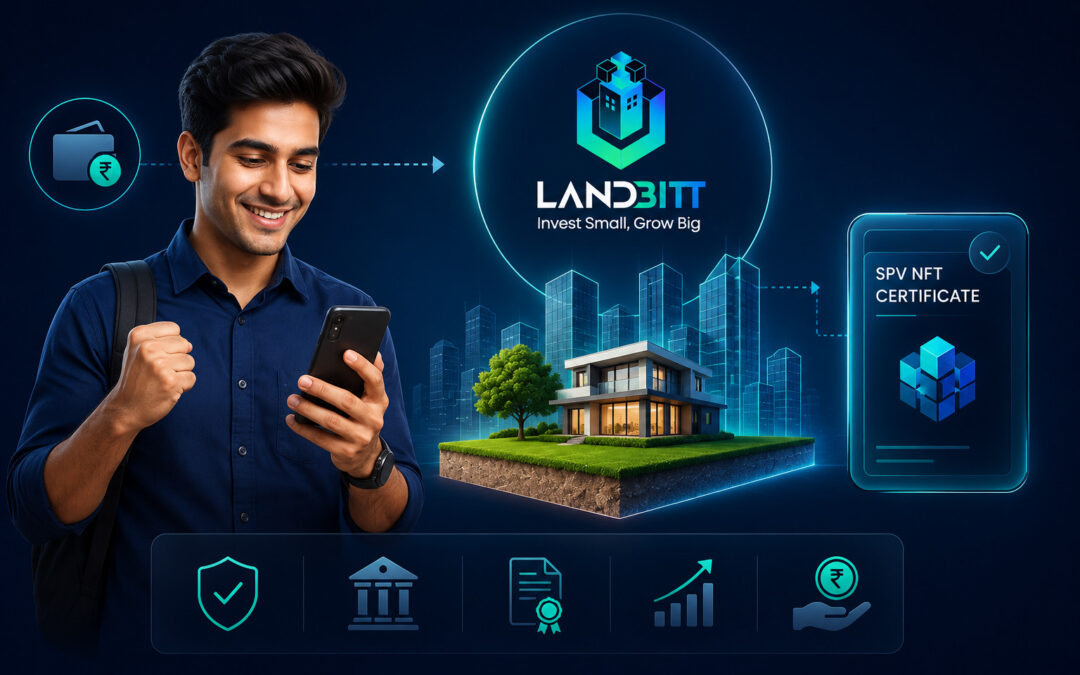
Landbitt structures every property through a registered Trust/SPV — your profit rights are recorded via an SPV NFT certificate, backed by KYC and a registered Trust deed. You hold documented economic participation, not registered title.
Quick Facts
- Comparison basis: Legal structure, regulatory framework, investor instrument, and minimum investment. No project-specific or return data appears in this guide.
- Two frameworks in play: SEBI SM REIT (exchange-listed) and Trust/SPV model (Indian Trusts Act, 1882). These are distinct instruments with different protections.
- Landbitt’s model: Trust/SPV — investors receive profit rights via SPV NFT certificate. Not an SM REIT.
- Key distinction: SM REIT units are exchange-listed SEBI-regulated securities. Trust/SPV profit rights are contractual instruments governed by the Indian Trusts Act, 1882.
Why Structure Is the Right Starting Point for Comparison
The Problem with Return-Based Comparisons
Most investor comparisons start with projected returns, portfolio sizes, or minimum investment amounts. While these factors matter operationally, they do not tell you what you legally own or how your rights get protected. Moreover, projected returns are not guaranteed and vary significantly based on market conditions, asset performance, and fee structures. Consequently, a structural comparison gives you the foundation you need before evaluating any operational claims.
What Structural Comparison Covers
A structural comparison examines four things specifically: the legal vehicle that holds the asset, the regulatory framework that governs the platform, the instrument the investor receives, and the minimum investment threshold that applies. Furthermore, it also covers what happens to the investor’s interest if the platform ceases operations — a question that structural analysis answers far better than any return projection.
Framework Overview: Two Models Govern Indian Fractional Platforms
SEBI SM REIT Framework
SEBI introduced the SM REIT category through its 2023 amendments to the Real Estate Investment Trusts Regulations, 2014. Under this framework, platforms must register with SEBI as an Investment Manager and list their scheme units on a recognised stock exchange (NSE or BSE). Additionally, they must comply with ongoing disclosure, valuation, and governance requirements that SEBI mandates. Investors in SM REIT schemes receive exchange-listed units — consequently, these units behave like listed securities and carry the associated market and settlement risks.
Trust/SPV Framework
Under the Trust/SPV framework, the Indian Trusts Act, 1882 governs asset holding. A registered Trust holds the property with an independent Trustee carrying fiduciary responsibility. The platform creates a separate Trust for each asset, and the property registers in the Trust’s name — not the platform company’s name. Investors receive profit rights via an SPV NFT certificate. Importantly, these profit rights are contractual instruments, not equity, shares, or registered title. Moreover, the Indian Trusts Act, 1882, PMLA, 2002, and applicable state land revenue laws govern this model — not SEBI’s SM REIT regulations specifically.
Structural Comparison: Landbitt vs PropShare vs hBits vs Strata
Landbitt
Landbitt structures investments under the Trust/SPV model governed by the Indian Trusts Act, 1882. An independent Trustee holds registered title to each asset in a separate Trust. Investors receive profit rights via an SPV NFT certificate — a blockchain-based digital certificate that records the contractual entitlement on-chain. The minimum investment is 1 sq. ft. of the property’s value or ₹20,000, whichever is higher. Furthermore, the Trust Deed includes successor Trustee provisions, which means investor profit rights persist independently of Landbitt’s operational continuity. Importantly, Landbitt does not operate as an SM REIT and is not exchange-listed.
PropShare
PropShare operates platforms that include both a direct fractional model and a SEBI-registered SM REIT (PropShare Platina). Consequently, PropShare’s investor instrument differs depending on which product the investor selects. The SM REIT scheme issues exchange-listed units governed by SEBI REIT Regulations, 2014 (amended 2023). The direct fractional model operates under a different structure. Therefore, investors should verify which specific vehicle they participate in and review the applicable offer document or Trust Deed accordingly. This guide does not provide specific minimum figures — investors should check current figures in the applicable offer document.
hBits
hBits operates under a fractional model that has evolved over time. As of the time of writing, hBits has pursued SEBI SM REIT registration. Consequently, investors in hBits should verify the current regulatory status of their specific investment and the applicable instrument. Specifically, they should confirm whether their investment falls under an SM REIT scheme (exchange-listed SEBI-regulated units) or a prior fractional model. Moreover, checking current offer documents or Trust Deeds directly with hBits remains the most reliable verification step.
Strata
Strata operates a commercial real estate fractional platform. It previously held an SM REIT registration that is no longer active, so it does not currently operate as a SEBI-registered SM REIT. Investors should verify the regulatory status of any specific Strata product before investing. The SM REIT framework requires exchange listing and SEBI oversight; earlier fractional models operated under SPV or LLP structures. Therefore, investors should confirm which framework governs their specific investment, what instrument they receive, and how the asset holding structure works for that specific product.
Key Structural Comparison Table
Legal Framework
- Landbitt: Indian Trusts Act, 1882 (Trust/SPV model)
- PropShare (SM REIT scheme): SEBI REIT Regulations 2014 (amended 2023)
- hBits: Verify current status — SM REIT registration pursued
- Strata: Not currently a SEBI-registered SM REIT — verify before investing
Investor Instrument
- Landbitt: SPV NFT certificate (profit rights, not equity or registered title)
- SM REIT platforms: Exchange-listed scheme units (SEBI-regulated securities)
Asset Segregation Mechanism
- Landbitt: Registered Trust with independent Trustee holds each asset separately
- SM REIT platforms: Each scheme forms a separate trust under the SM REIT framework with SEBI oversight
Platform-Exit Protection
- Landbitt: Trust Deed includes successor Trustee provision; Trust assets survive platform closure
- SM REIT platforms: SEBI regulations govern scheme continuity; listed units provide market exit option
What to Verify Before Investing in Any Platform
Verification Checklist Regardless of Platform
- Which legal framework governs this specific investment — SM REIT or Trust/SPV?
- Does the asset registration show the Trust or scheme name — not the platform company?
- Does the platform provide the Trust Deed, SM REIT offer document, or equivalent legal document?
- Has independent legal due diligence been conducted on the underlying asset?
- Does the platform comply with PMLA, 2002 KYC/AML requirements?
- Does the Trust Deed or scheme document include continuity provisions for exit scenarios?
- Do blockchain-based records (if any) comply with Indian Evidence Act, 1872, Section 65B?
Internal Links for Further Research
For a complete walkthrough of platform verification, read our Platform Verification Checklist. To understand the Trust/SPV legal structure in detail, see our guide on SPV in Real Estate Explained. Additionally, our guide on what happens if a fractional platform shuts down covers exit scenarios for both frameworks. For the authoritative source on SM REIT registration, refer to SEBI’s official website.
Frequently Asked Questions
What is the difference between Landbitt and SM REIT platforms like PropShare Platina?
Landbitt operates under the Trust/SPV model governed by the Indian Trusts Act, 1882. Investors receive profit rights via an SPV NFT certificate. SM REIT platforms operate under SEBI’s Real Estate Investment Trusts Regulations (2014, amended 2023) and issue exchange-listed scheme units. These are structurally different instruments with different protections and regulatory frameworks.
Is Landbitt SEBI regulated?
Landbitt operates under the Indian Trusts Act, 1882 and PMLA, 2002. It does not operate as a SEBI SM REIT. The Trust/SPV model and the SM REIT model are different legal structures. Consequently, investors should understand which framework governs their investment before comparing platforms.
What instrument do Landbitt investors receive?
Landbitt investors receive an SPV NFT certificate that records profit rights in the specific Trust holding the asset. This is a contractual instrument — not a share, equity stake, or registered property title. Moreover, the NFT certificate exists on-chain, providing an independently verifiable record that complies with Indian Evidence Act, 1872, Section 65B requirements.
What is PropShare Platina?
PropShare Platina is a SEBI-registered SM REIT that PropShare operates. SM REIT scheme units are exchange-listed securities governed by SEBI’s Real Estate Investment Trusts Regulations, 2014 (amended 2023). Investors in PropShare Platina receive exchange-listed scheme units, which differs structurally from the profit rights that Trust/SPV investors receive.
How do I verify which structure a fractional platform uses?
Ask the platform for its Trust Deed (for Trust/SPV models) or SM REIT offer document (for SEBI-regulated schemes). Furthermore, verify SEBI registration status directly on the SEBI website for SM REIT platforms. For Trust/SPV platforms, check the property registration to confirm the Trust — not the platform company — holds the asset.
Compared the structures — now see Landbitt’s listed properties
Every Landbitt property is held in a registered Trust/SPV. Your interest is documented as profit rights via an SPV NFT certificate — KYC-verified, on-chain recorded, Trust-deed governed.
Visual comparison of LandBitt, PropShare, hBits, and Strata highlighting different fractional real estate investment structures in India.