
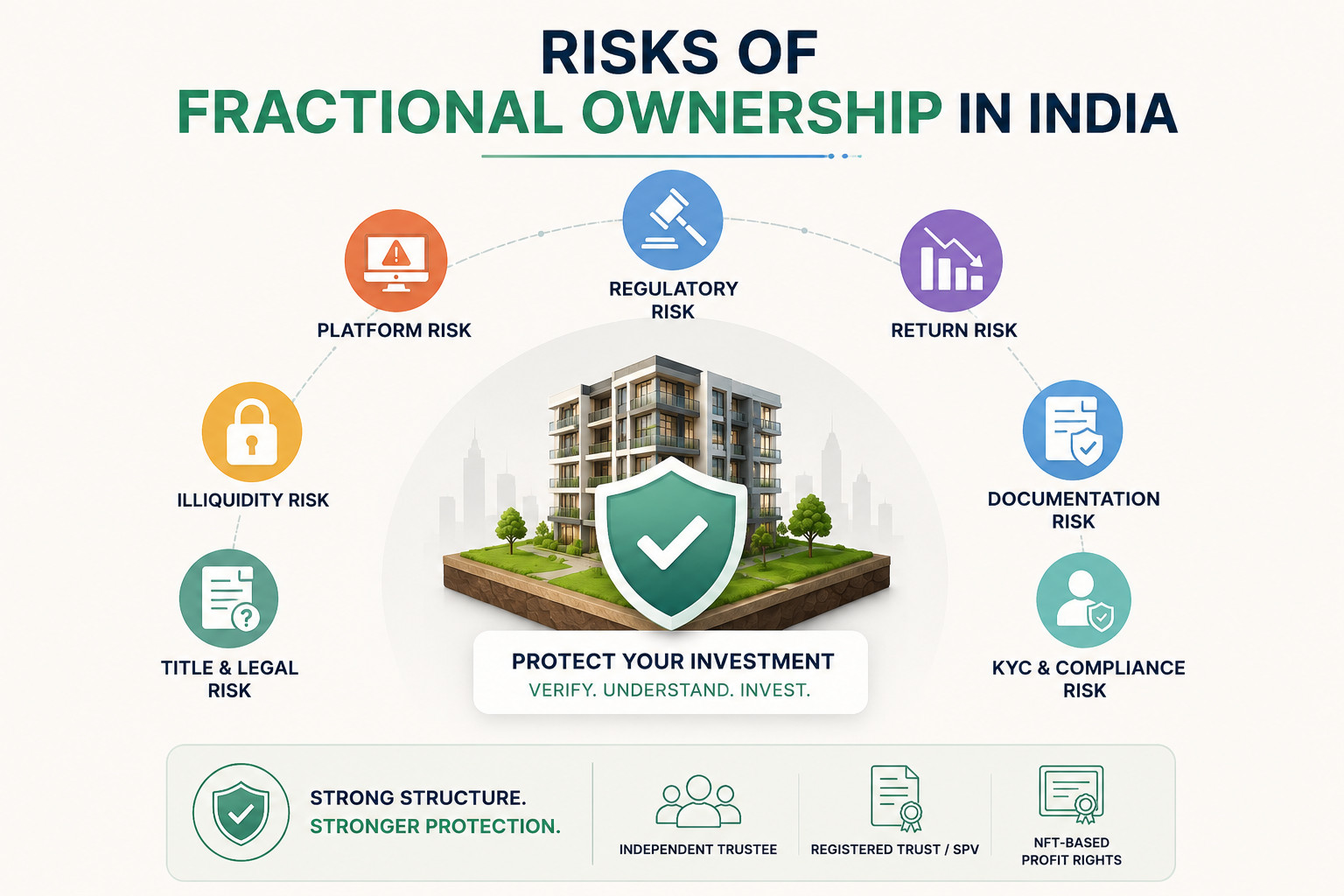
TL;DR: Fractional real estate ownership in India carries real risks — including platform insolvency, illiquidity, title disputes, and unclear exit routes. Understanding these risks helps you vet platforms properly and protect your investment. Landbitt structures ownership through a registered Trust/SPV model with NFT-based profit rights certificates, which provides legal clarity compared to unregistered arrangements.

Risks of Fractional Ownership in India: The Honest Guide
India’s fractional real estate market is growing fast — but not every platform, structure, or promise is equal. Before you invest, you need an honest look at what can go wrong, and how to evaluate whether a platform’s structure actually protects you. In addition, understanding these risks helps you ask the right questions and make informed decisions.
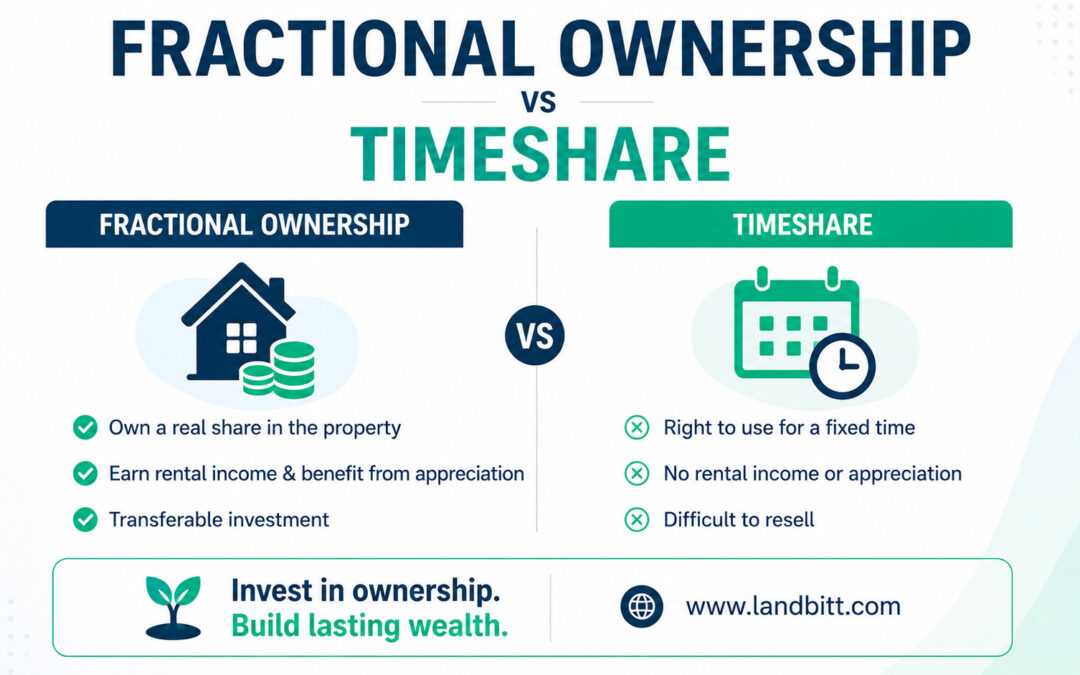
Fractional ownership carries real risks — structure is everything.
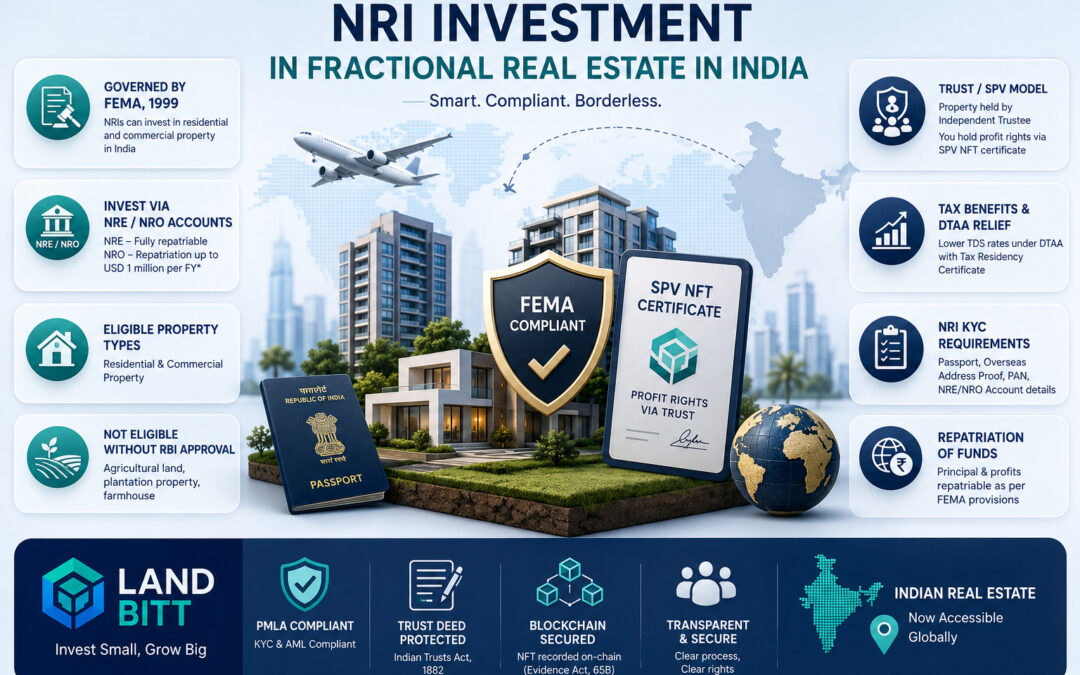
Landbitt structures every investment through a registered Trust under the Indian Trusts Act, 1882. An independent Trustee holds registered title; you hold documented profit rights via an SPV NFT certificate — not a company share, not a property deed. PMLA-compliant KYC. Starting from 1 sq. ft. or ₹20,000.
Start from 1 sq. ft. Already a member? Log inQuick Facts: Fractional Ownership Risks in India
- Platform risk: Platforms can shut down or face regulatory action — investor protections vary by structure
- Liquidity risk: Fractional real estate is illiquid — no secondary market exists for most platforms
- Title risk: Unregistered arrangements can leave investors without legal recourse
- Regulatory risk: SEBI SM REIT rules apply only to ₹50 cr+ listings — smaller platforms operate under different frameworks
- Return risk: Land appreciation is not certain — projected values are not actual returns
What Are the Main Risks of Fractional Real Estate Ownership?
Fractional ownership pools multiple investors into a single asset. This structure creates efficiency — but it also introduces specific risk vectors that traditional direct ownership does not. Therefore, investors who understand these vectors can better protect their capital.
1. Platform or Operator Risk
If the platform shuts down, faces acquisition, or encounters regulatory action, your investment can freeze or fall into dispute. Consequently, the most critical question is: does the legal ownership of your share sit with the platform — or with a separately registered Trust or SPV that exists independently of the platform?
Platforms that hold assets in their own name — rather than a ring-fenced SPV or Trust — create concentration risk. Furthermore, if the company becomes insolvent, the asset becomes part of the insolvency estate, not a separately protected investor holding.
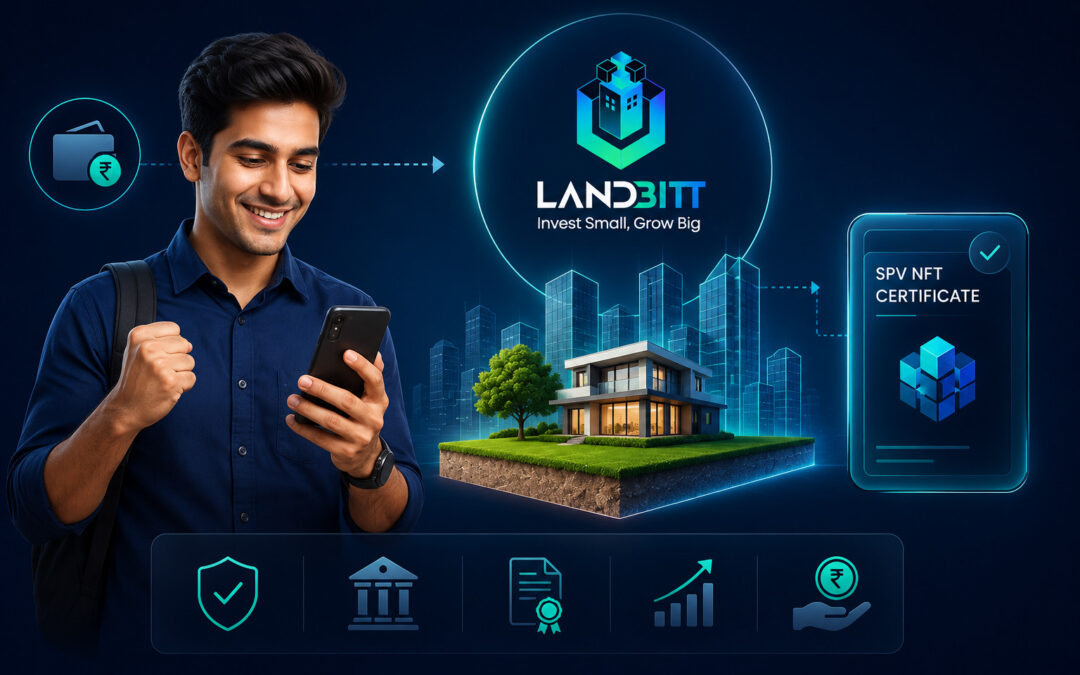
Landbitt uses a registered Trust/SPV structure for each property, so the asset stays legally separated from Landbitt’s operational entity. As a result, investors hold profit rights via an SPV NFT certificate — not a claim against Landbitt directly. Learn more in our SPV in Real Estate Explained guide.
2. Illiquidity Risk
Real estate — including fractional real estate — is an illiquid asset. Unlike listed shares, you generally cannot sell your fractional holding instantly. Moreover, most platforms in India do not offer a regulated secondary market. Your exit depends on three things:
- The platform’s own buyback or resale mechanism (if any)
- Finding another investor willing to purchase your share at a negotiated price
- Waiting for the underlying property to sell — which may take years
Before investing, always ask: what is the exit pathway, and how long is the minimum holding period? In short, treat fractional real estate as a medium-to-long-term commitment.
3. Title and Legal Structure Risk
Not all fractional ownership is legally equivalent. Specifically, there is a significant difference between a registered Trust deed with government-stamped documentation and an informal co-ownership agreement or unregistered MOU.
The Indian Trusts Act, 1882 provides the legal foundation for Trust-based structures. Importantly, a properly constituted Trust gives investors clear legal rights that courts can enforce. Informal or verbal arrangements do not offer this protection. See our Indian Trusts Act 1882 Explained post for the full breakdown.
4. Regulatory and Compliance Risk
SEBI’s SM REIT framework (introduced in 2024) applies specifically to listed, regulated fractional structures above ₹50 crore. However, most fractional platforms — including Trust/SPV models — operate under a different regulatory framework and are not subject to SEBI SM REIT rules directly.
This distinction is not inherently negative — many legitimate, legally sound structures exist outside SM REIT. Nevertheless, investors cannot assume SEBI oversight applies to every platform that claims to offer fractional ownership. Always verify which regulatory framework governs your specific investment. Read our detailed SM REIT vs Fractional Ownership comparison for full clarity.
5. Return and Appreciation Risk
Land and property values are not certain to rise. Appreciation depends on infrastructure timelines, government policy, local demand, and macroeconomic conditions. In addition, platforms that present projected appreciation as certainties — or that use specific percentage return projections without clear disclosure — deserve extra scrutiny.
Therefore, Landbitt does not guarantee returns or present CAGR projections as investment advice. Instead, investment decisions should rest on individual due diligence and, where appropriate, professional financial guidance.
6. Documentation and KYC Risk
Platforms that skip thorough KYC, do not provide proper sale deeds, or do not complete NA conversion and RERA registration expose investors to downstream legal risk. Consequently, use the Platform Verification Checklist to assess any platform before committing capital.
How Do You Evaluate Platform Safety Before Investing?
Due diligence is the primary risk mitigation tool available to investors. Specifically, there are six key checks to complete before committing any capital:
- Legal structure: Does the asset sit in a registered Trust or SPV — not in the platform company’s name?
- Documentation: Does the platform provide registered sale deeds, Trust deeds, and transfer documents?
- Exit policy: Does a clearly defined exit mechanism exist in writing — not just described verbally?
- Regulatory status: Has the platform disclosed its applicable regulatory framework?
- Track record: Has the platform completed previous projects and distributed proceeds to investors?
- Minimum investment: Landbitt’s minimum is 1 sq. ft. of the property’s value or ₹20,000, whichever is higher — transparent and clearly documented
Is Fractional Ownership in India Worth the Risk?
Fractional ownership provides access to real estate at lower entry points, which is a genuine value proposition for investors who cannot purchase full properties outright. Furthermore, the risks are manageable — but only if the platform you choose uses a sound legal structure, maintains transparency, and clearly documents investor rights.
In conclusion, a well-structured fractional investment in a legally verified property — through a Trust/SPV model with proper documentation — carries substantially lower risk than an informal arrangement or a platform that holds all assets in its own name.
FAQ: Risks of Fractional Ownership in India
What is the biggest risk of fractional real estate ownership in India?
Platform risk — where the platform becomes insolvent or shuts down — is often the most significant concern. Specifically, investors can address this risk by choosing a platform that holds assets in a separately registered Trust or SPV, legally independent from the operating company.
Can I lose all my money in fractional real estate?
In extreme cases — such as platform fraud, unregistered title, or complete property value collapse — significant losses are possible. However, proper due diligence, registered legal structures, and RERA-compliant projects substantially reduce this risk.
Is fractional ownership regulated by SEBI?
SEBI regulates SM REITs — listed fractional structures above ₹50 crore. Trust/SPV-based fractional ownership models like Landbitt’s operate under the Indian Trusts Act, 1882 and fall under different legal provisions, not SEBI SM REIT regulations directly.
How liquid is fractional real estate investment in India?
Fractional real estate is illiquid — there is no secondary market. However, exit depends on the platform’s resale mechanism, investor demand, or the sale of the underlying property. Therefore, investors should treat fractional real estate as a medium-to-long-term holding.
What documents should I check before investing in fractional real estate?
Key documents include the property sale deed, Trust or SPV registration documents, NA conversion certificate where applicable, encumbrance certificate, and the investor’s profit rights certificate. Additionally, use the Platform Verification Checklist for a complete document audit framework.
What is meant by “profit rights” in fractional ownership?
Profit rights in Landbitt’s model refer to the investor’s contractual entitlement to a share of the net proceeds when the underlying property sells or generates income. These rights appear in an SPV NFT certificate — a blockchain-recorded, legally referenced instrument that documents the investor’s proportionate profit entitlement without requiring a traditional registered title transfer.
Choose a platform where structure — not brand name — does the protecting.
Landbitt uses registered Trust/SPV structures under the Indian Trusts Act, 1882 with independent Trustees. Your profit rights are documented via SPV NFT certificate — not equity, not title. PMLA-compliant KYC. Starting from 1 sq. ft. or ₹20,000.
Create your account Already a member? Log in