
TL;DR: Vishvasya blockchain India is the Ministry of Electronics and Information Technology’s national blockchain infrastructure, built to give government bodies and enterprises a standardized, interoperable foundation for blockchain applications. It underpins real projects like PropertyChain. It doesn’t, by itself, make any specific application’s outputs legally conclusive — that still depends on the legal framework around each individual use case.

Vishvasya: India’s National Blockchain Stack Explained
Building a blockchain application from scratch every time a government department wants one is slow and wasteful. India addressed that with Vishvasya. It’s a national blockchain infrastructure layer that lets different government bodies build on shared, standardized technical foundations, instead of reinventing the wheel each time. It’s real, MeitY-developed infrastructure, not a marketing label attached after the fact.
What does Vishvasya actually provide?
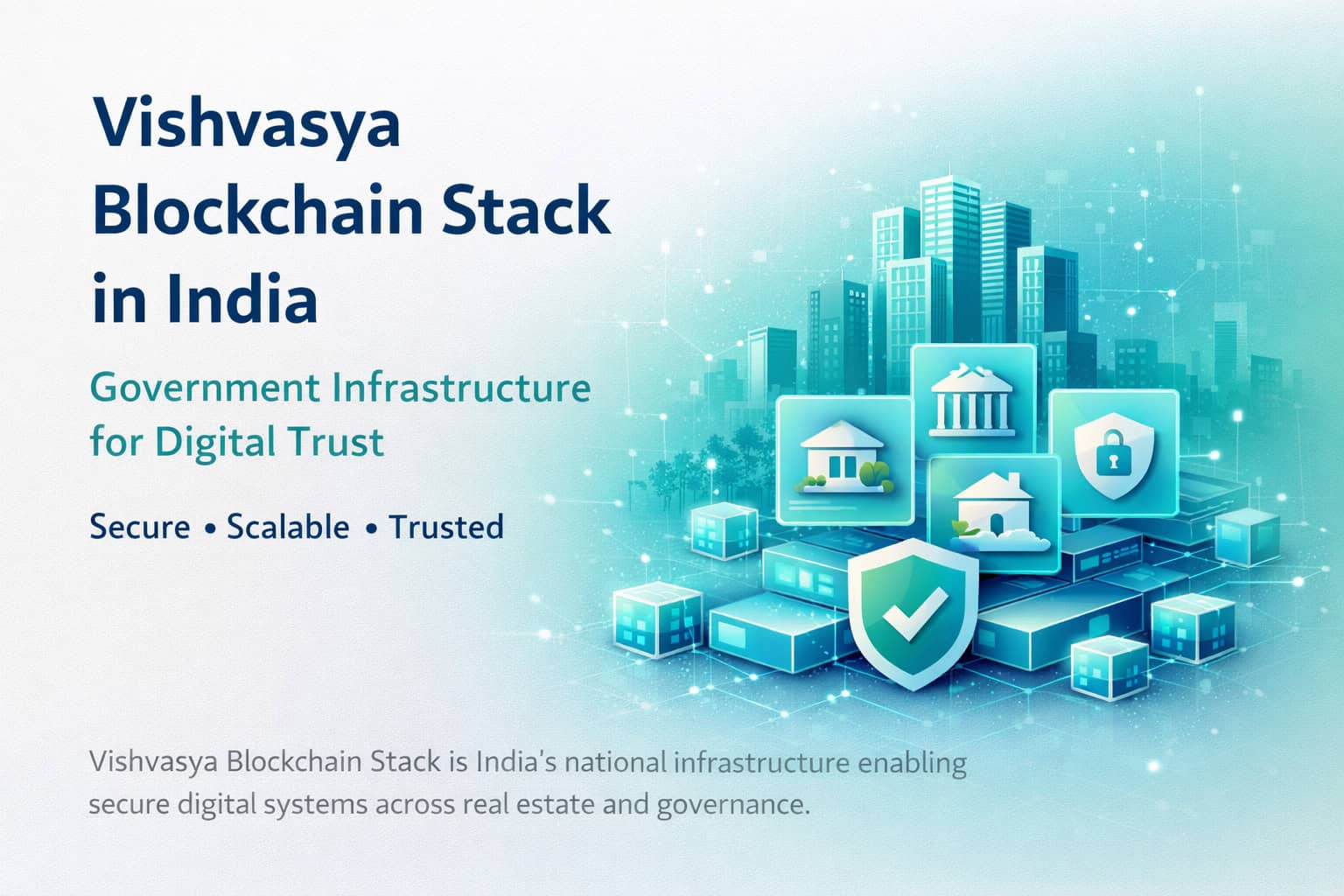
The Ministry of Electronics and Information Technology developed Vishvasya for a specific purpose: giving developers, enterprises, and government bodies a standardized platform for building blockchain-based solutions efficiently. Each new application doesn’t need to build its own blockchain infrastructure independently. Instead, Vishvasya focuses on three things: interoperability across different applications, scalability for genuinely large deployments, and consistent security standards. You can read the official documentation directly on MeitY’s blockchain portal.
Why did India build a shared national stack instead of letting each project build its own?
Centralized, traditional systems often hit real limits around transparency and independent verification. Blockchain offers a genuinely different alternative: a decentralized, tamper-resistant way to record data. But building that infrastructure properly takes serious technical investment. Duplicating it separately for every government use case wastes resources and creates inconsistent standards across projects. Vishvasya solves that by giving every project a shared, vetted foundation to build on. That also reduces dependency on fragmented, one-off systems and improves consistency across the board.
What are Vishvasya’s actual core features?
- Tamper-resistant data storage, designed for genuine national-scale use
- Infrastructure built to scale to large, demanding applications
- Interoperability that lets different platforms and use cases work together
- Government-backed validation, which carries real institutional weight behind it
Together, these features make Vishvasya a foundational layer other government digital-trust initiatives can build on, rather than a single application in its own right.
How does Vishvasya actually connect to land records and real estate?
Vishvasya provides the underlying technical infrastructure that supports applications like PropertyChain, India’s government blockchain system for land record management. Combine standardized infrastructure with a specific application like this, and you get a more robust framework for digital ownership verification. Either piece alone couldn’t deliver that on its own. For the specifics of how that particular application works, see our guide on PropertyChain India.
Does Vishvasya make blockchain-based land records legally conclusive?
No, and this is worth stating plainly. “Government-backed infrastructure” can sound like it implies more legal weight than actually exists, so it’s worth being direct about the limit. Vishvasya provides the technical foundation; it doesn’t change the legal status of any application built on it. Indian courts currently require specific certification for electronic records under the Evidence Act. Decentralized systems generally can’t provide that certification. That gap applies to anything built on Vishvasya just as much as it applies to standalone blockchain projects. The infrastructure layer and the legal-recognition question are genuinely separate issues. For more on that specific gap, see our guide on digital land records in India.
Can private platforms or startups actually build on Vishvasya?
Yes. The stack lets outside developers and enterprises build blockchain applications on a trusted, government-backed foundation — not just internal government projects. That matters because innovation here doesn’t have to start from zero on infrastructure. A startup or platform can build its specific application on top of shared, already-vetted technical groundwork instead.
How does this connect to structured real estate investment?
Better government infrastructure for land records and digital trust supports more reliable underlying property data over time. That benefits any investment model that depends on accurate due diligence. That said, a structured real estate platform’s own legal protections come from its specific legal framework instead — typically a Trust or SPV holding the property, with investors holding a beneficial interest. They don’t come from Vishvasya or any other infrastructure layer directly. For that structure’s actual mechanics, see our guide on real estate tokenization in India.
Frequently Asked Questions
What is Vishvasya?
India’s national blockchain infrastructure, developed by the Ministry of Electronics and Information Technology, designed to give government bodies and enterprises a standardized, interoperable foundation for blockchain applications.
Who developed Vishvasya?
The Ministry of Electronics and Information Technology (MeitY) developed it, as part of India’s broader digital infrastructure initiatives.
Does Vishvasya support real estate specifically?
Yes, indirectly. It provides the underlying technical infrastructure for applications like PropertyChain, which specifically handles land record management.
Can startups build on Vishvasya?
Yes. The stack supports outside developers and enterprises, not just internal government applications.
Does Vishvasya make blockchain records legally valid as land title proof?
No. Vishvasya provides technical infrastructure only. The legal status of any specific application built on it still depends on existing evidence and property law, which currently has a real gap around certifying decentralized blockchain records.