

TL;DR: Fractional land investment means multiple investors jointly hold a share of a land asset through a trust or SPV, instead of one person buying the whole plot. Returns come almost entirely from capital appreciation, not rent, since raw land typically doesn’t generate income — so this suits medium-to-long-term investors, not anyone looking for short-term cash flow.

Fractional Land Investment in India: The Complete Guide for Smart Investors
Land has long been central to how Indian families build wealth, but buying it directly comes with real friction: high upfront prices, slow legal checks, and documentation that can take months to clear. Fractional land investment exists because of exactly that friction — it lets investors participate in a land asset through a structured model with clearly documented ownership rights, instead of buying an entire plot outright.
What is fractional land investment in India?
It’s a structured way for multiple investors to jointly hold a share of a land asset, with each investor’s stake sized to what they put in. Unlike informal group-buying arrangements between friends or family, structured fractional models use legal entities — typically a Special Purpose Vehicle (SPV) set up as a trust — so rights and responsibilities are documented from day one rather than handled on a handshake.
The typical process:
- The platform identifies a land parcel in a growth corridor
- It completes legal and title checks
- An SPV, usually structured as a trust, acquires the land
- Investors become beneficiaries of that trust in proportion to their share
- They realize returns when the land sells
Raw land usually doesn’t generate rental income. As a result, this model is built around capital appreciation, which means it suits medium-to-long-term investors rather than anyone expecting monthly returns.
Why is this gaining traction now?
A few forces are converging. Infrastructure development — new highways, industrial parks, logistics hubs — keeps expanding across India, and nearby land values often follow improved connectivity. At the same time, investors are actively looking to diversify away from volatile equity markets and shifting fixed-income returns, and land is one of the more familiar real-asset options for doing that. Digital platforms have also made the documentation and governance side far easier to access and review than it used to be, lowering the practical barrier to participating without large capital.
How is this structured in practice?
A compliance-focused platform typically uses an SPV structured as a trust. The trust legally owns the land, and investors become beneficiaries according to their share. Ownership stays centralized under the trust, while investors clearly divide the economic rights among themselves. That gives you:
- A clear, centralized land title (held by the trust, not fragmented across individuals)
- Documented beneficiary rights
- Defined governance rules
- A pre-agreed exit process
Before acquiring any asset, a serious platform runs due diligence: verifying the title chain, checking for encumbrances, reviewing zoning rules, and confirming compliance under relevant state laws. In other words, that diligence is what you’re actually paying for when you choose a structured platform over buying informally.
What are the real benefits?
Lower capital requirement. You participate proportionally instead of needing the full purchase price of an entire parcel.
Access to growth corridors. Platforms identify locations tied to infrastructure plans that would be hard to evaluate and access individually.
Professional due diligence. Legal and regulatory checks happen before acquisition, which reduces — though never eliminates — avoidable risk.
Structured governance. The trust deed sets decision-making rules upfront, so disagreements about exit timing or asset management have a framework to resolve within.
Portfolio diversification. Land can serve as a real-asset component alongside equities and debt — though how much to allocate depends entirely on your own risk profile.
How are returns generated?
Mostly through appreciation, not income. Land value tends to move with:
- Infrastructure expansion
- Urban growth
- Improved road connectivity
- Nearby industrial development
When the land sells, the trust distributes proceeds among beneficiaries by ownership share. However, what you actually get depends on location fundamentals, your entry valuation, how long you hold, and overall market conditions — none of which are fixed or guaranteed.
What are the risks?
Market risk. Land prices fluctuate, and if development slows, appreciation can take longer than projected.
Liquidity risk. Land is far less liquid than listed securities, so exit timelines vary and aren’t guaranteed.
Legal risk. Weak due diligence can lead to title disputes — this is exactly why structured verification matters before any acquisition.
Governance risk. With multiple investors involved, disagreements can arise. However, a trust structure with rules set in advance reduces this risk, even if it doesn’t remove it entirely.
In short, structure and transparency can manage risk here. They can’t eliminate it.
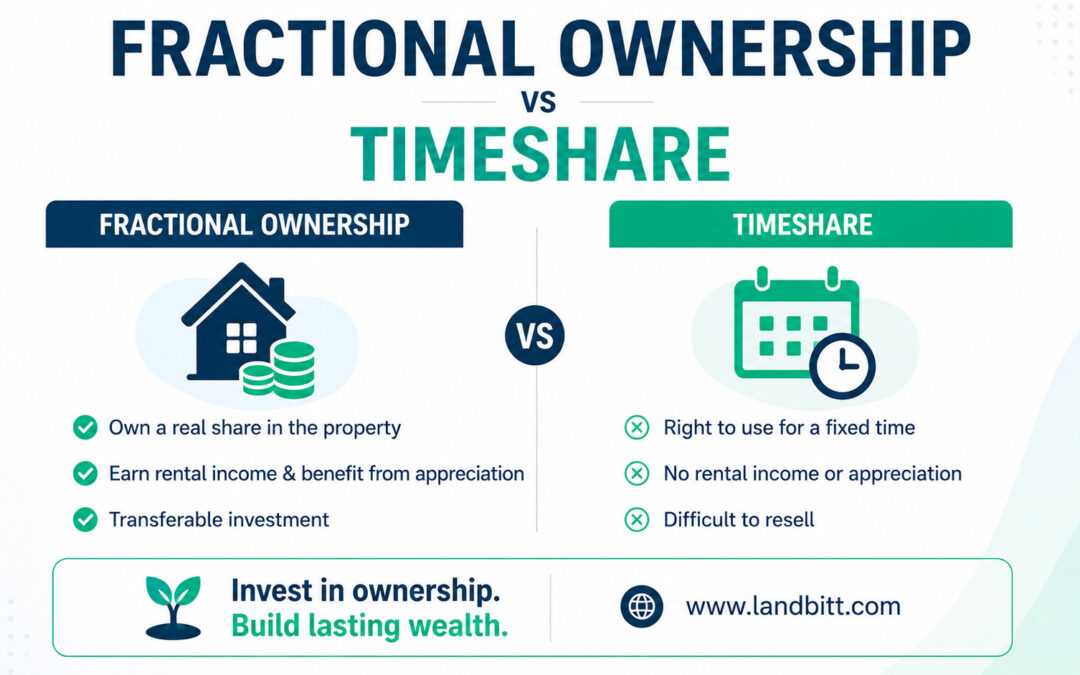
Fractional investment vs. direct purchase
Direct land purchase: full control over the asset, high capital requirement, individual legal responsibility, limited diversification.
Fractional land investment: lower capital commitment, shared exposure to risk, structured governance, limited individual control.
Which one fits depends on your goals, experience, and how much liquidity you actually need.
Who should consider this?
- Investors seeking real-asset exposure without full-plot capital
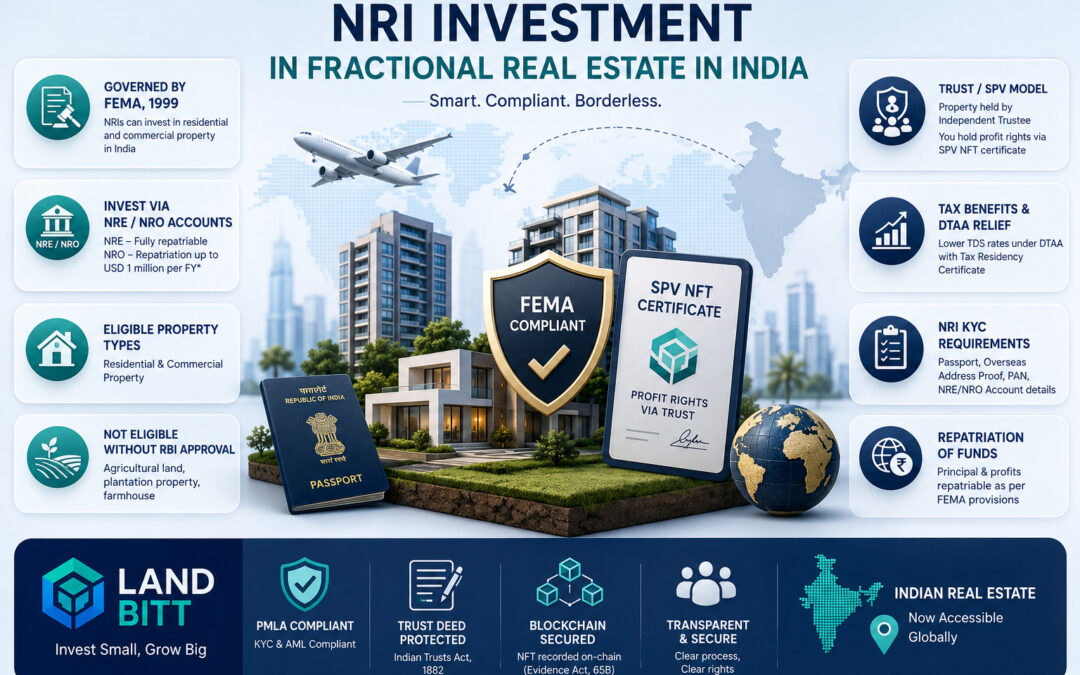
- NRIs wanting structured access to Indian land
- First-time land investors who want documented governance over informal arrangements
- Diversification-focused investors
- Financial advisors exploring alternatives to direct land purchase
Complete Topic Map: Fractional Land Investing in India
Use this guide as your starting point, then go deeper on any part of the topic:
- Definitions: Glossary of fractional land & tokenization terms
- How the structure works: Fractional ownership in India, how a structured participation platform works
- Tokenization & blockchain: Real estate tokenization in India, blockchain benefits & risks
- Legal, safety & risk: Platform verification checklist, fractional vs REITs, how resale/liquidity works, free platform safety scorecard, and how an SPV structure works
- Where to invest: Dholera SIR guide, best places to invest in land (2026)
- How to start: Step-by-step beginner guide, SIP in land investing
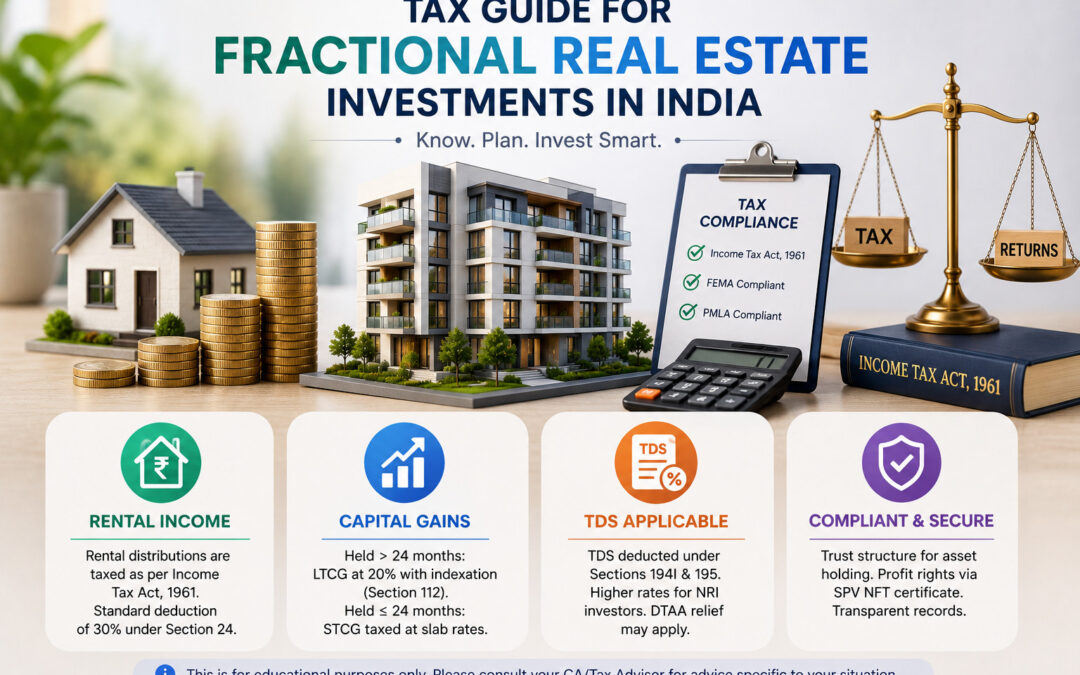
- Regulation & tax: Asset Tokenisation Bill explained, Budget 2026 & crypto tax
Further reading
Think you know fractional land investing? Take the Landbitt Weekly Knowledge Quiz — 7 questions, weekly leaderboard, with a Landbitt-branded gift for the top scorer each week.
Frequently Asked Questions
Is fractional land investment in India legal?
Yes, when structured through compliant entities like trusts or SPVs with proper documentation.
How is ownership structured?
Through a trust-based SPV model, where investors become beneficiaries in proportion to their investment.
What returns can investors expect?
Returns depend on land appreciation and market conditions — they vary and are never guaranteed.
What’s the typical holding period?
Medium to long-term, aligned with infrastructure and development cycles rather than short-term trading horizons.
Who should consider fractional land investment?
Investors seeking real-asset exposure and structured participation, depending on their own risk tolerance and broader portfolio goals.